





 English
  Francês
  Alemão
  Italiano
  Japonês
  Norueguês
  Portuguese
  Spanish
  4 min of reading
  0 comments


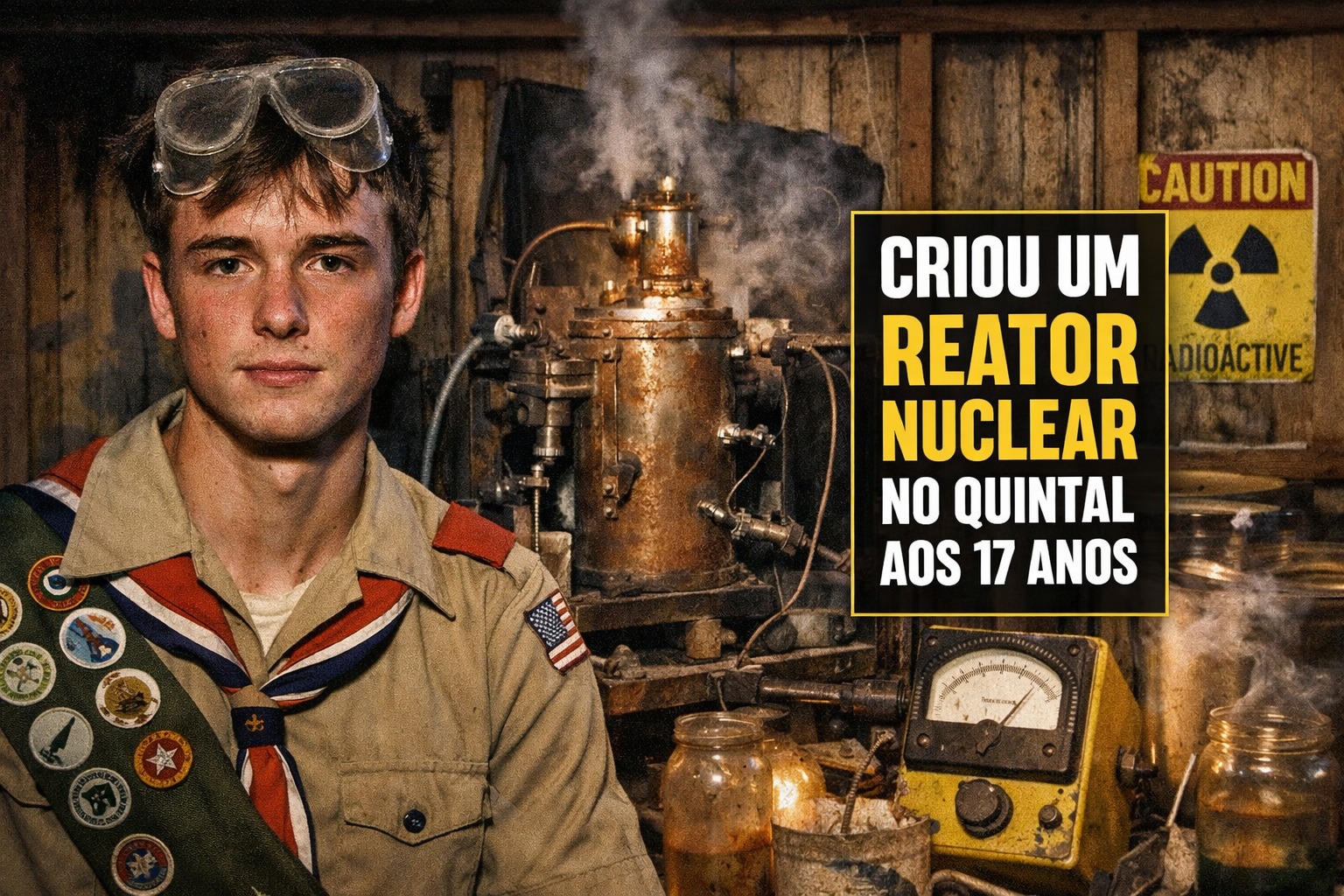
In 1995, In The United States, A 17-Year-Old Boy Set Up A Home Nuclear Lab, Triggering Police, Federal Agencies, And Environmental Authorities
In 1995, a 17-year-old scout from Commerce Township, Michigan, caught national attention after police found radioactive materials in his car, revealing a homemade experiment that exposed an entire neighborhood to nuclear risks.
The young man was David Hahn, a resident of a suburb near Detroit, whose scientific curiosity crossed domestic boundaries and got onto the radar of federal authorities.
The discovery occurred during a routine police stop, when officers located suspicious substances in the trunk of the vehicle driven by the teenager at that time.
-
Fukushima Marks A Turning Point In Japan’s Energy Policy: After The Disaster, The Country Shut Down Its 54 Nuclear Reactors And, 15 Years Later, Only A Small Portion Have Returned To Operation

-
How Japan Overcame The Nuclear Bomb And Now Houses Millions In Hiroshima, While Ukraine Lost Chernobyl?

-
Bill Gates Receives Historic Approval to Build Giant 345 MW Nuclear Plant in the U.S. and Promises to Generate Up to 500 MW of Energy with Innovative Technology
-
India Opens Nuclear Energy to Private Capital to Accelerate Projects and Attract Billions, While Brazil Remains Stalled at Angra 3 and Discusses Who Will Foot the Bill for Completion


When questioned about the cargo, Hahn told the officers that the materials were radioactive, a statement that triggered an immediate and thorough investigation.
The inquiries revealed that the young man was maintaining an improvised lab in his stepmother’s backyard, where he conducted nuclear experiments without any technical supervision.


An Improvised Lab In A Residential Area
In the shed set up in the backyard, Hahn attempted to build a homemade nuclear reactor, specifically a breeder reactor, using materials collected from household sources.
Although he did not achieve the technical goal of generating nuclear fuel, he managed to create a rudimentary source of neutrons, sufficient to spread detectable radiation throughout the neighborhood.
The radiation reached neighboring homes, generating immediate concern about the unintentional exposure of residents and possible consequences for local public health.
The extreme experiment transformed a youthful scientific curiosity into a national security case followed by multiple government agencies.
Early Interest And Self-Taught Path
Since childhood, Hahn showed an unusual interest in science, self-studying chemistry and conducting increasingly complex experiments at home.
By the age of ten, he was already researching advanced topics, and at 14 he even made nitroglycerin, leading his parents to restrict where experiments could be conducted.
Initially conducted in his bedroom, the tests were moved to the basement and later to the shed in the backyard due to recurring damage.
A frequent visitor to public libraries, Hahn spent hours studying technical manuals, delving into nuclear topics that were little accessible to the general public.
The Goal Of Building A Breeder Reactor
The main goal of the teenager was to build a nuclear breeder reactor, a project considered complex even in professional scientific environments.
At the same time, Hahn sought to collect all elements of the periodic table, including radioactive substances, a personal challenge that guided his research.
In 1991, this interest earned him a scout merit badge in atomic energy, formal recognition within the scouting movement.
To advance, he contacted the U.S. Nuclear Regulatory Commission, using pseudonyms to obtain sensitive technical information.
Collection Of Materials And Increasing Risks
Hahn gathered radioactive materials from everyday objects, such as old flashlights, smoke detectors, glow-in-the-dark sights, and household batteries.
The thorium came from flashlights, americium from detectors, tritium from sights, and lithium from batteries, with an approximate expenditure of one thousand dollars.
Coffee filters, pickle jars, and common utensils were used in the chemical manipulation, highlighting the improvisation and lack of safety protocols.
Personal protection was basically limited to a gas mask, significantly increasing physical risks and the likelihood of radiological contamination.
Accidents, Contamination, And Authorities’ Response
During the experiments, Hahn suffered chemical burns, fainted during tests, and accidentally dyed his hair green from toxic exposure.
Despite the accidents, he persisted until creating a functional source of neutrons, radioactive enough to be detected several houses away.
After locating the shed, authorities alerted federal agencies, including the Environmental Protection Agency, due to the identified collective risk.
The site was classified as a Superfund area, requiring a special decontamination operation due to an estimated potential exposure of around 40,000 residents.
Personal Consequences And Outcome Of The Nuclear Experiment Case
Even after the laboratory was dismantled, Hahn refused medical evaluations and continued with his life, eventually achieving the rank of Eagle Scout.
In an interview with Harper’s Magazine in 1998, he stated that the experiments helped him cope with emotions and seek recognition.
In the following years, he faced instability marked by a failed relationship, his mother’s suicide, and persistent mental health challenges.
In 2007, he was arrested again for attempting to steal smoke detectors containing americium, leading to the temporary evacuation of a condominium.
Hahn was sentenced to 90 days in jail for attempted theft and died about a decade later, at 39 years old, after a combination of alcohol, diphenhydramine, and fentanyl, closing a case that marked the history of amateur science in the United States.
With information from Aventuras na História.









-

Uma pessoa reagiu a isso.