





 Portuguese
  English
  Spanish
  6 min of reading
  34 comments


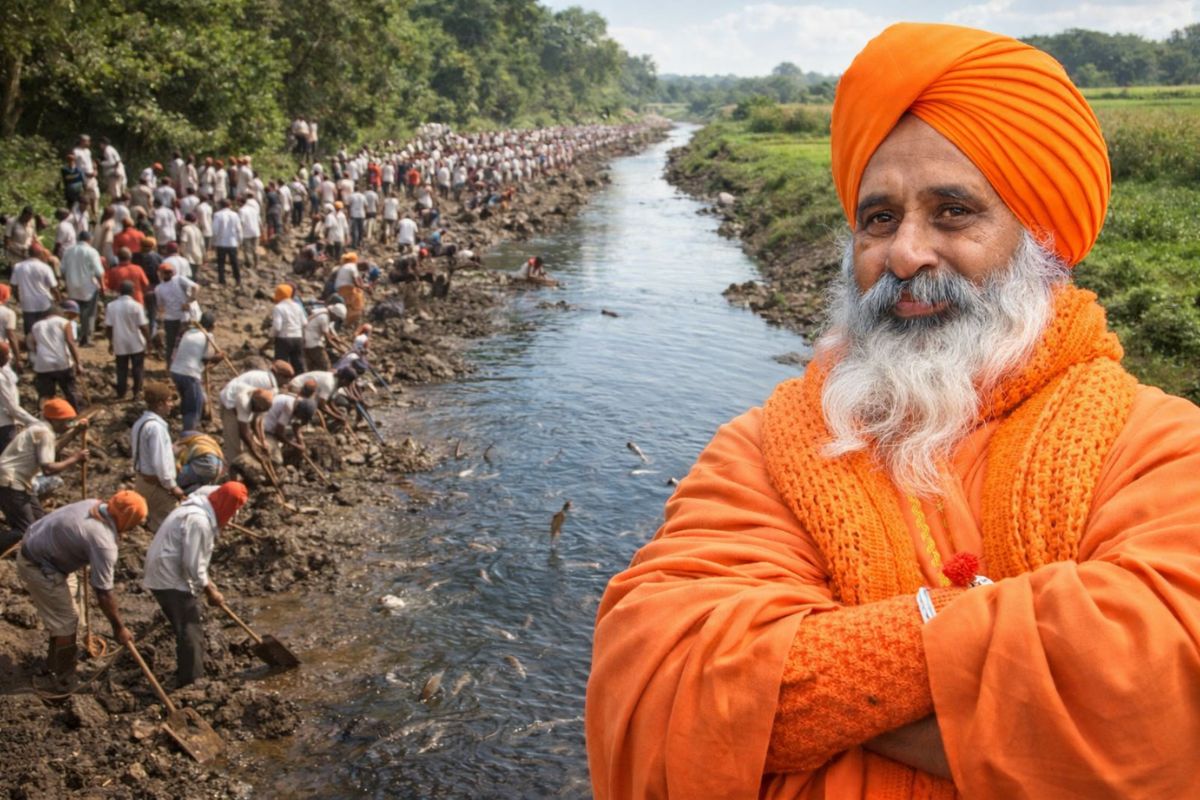


In Punjab, India, The Recovery of a River Degraded by Domestic Sewage, Industrial Waste, and Invasive Plants Advanced Without Public Funding: 3,000 Volunteers Cleared 160 km, Opened Canals, Diverted Effluents, Saw Wells Return After Four Decades and Reintegrated Thousands of Hectares Into the Local Productive Cycle With Lasting Social Impact.
The Kali Bein River spent decades synonymous with neglect: dark water, constant foul smell, disappearance of fish, and banks taken over by sludge and invasive vegetation. Instead of a robust official intervention, the turnaround began with local mobilization, manual labor, and a simple logic: restore the flow to recover the entire system.
At the center of this change, a monk Balbir Singh Seechewal in Punjab gathered volunteers from entire villages and turned frustration into a continuous field operation. No Million-Dollar Contract, No Heavy Machinery and without waiting for new promises, the community paved the way for the return of water, agricultural production, and aquatic life.
From Spiritual Heritage to Environmental Collapse

Along the banks of the Kali Bein, the river carried not only water but also historical and religious significance for Sikh communities.
-
Friends have been building a small “town” for 30 years to grow old together, with compact houses, a common area, nature surrounding it, and a collective life project designed for friendship, coexistence, and simplicity.

-
This small town in Germany created its own currency 24 years ago, today it circulates millions per year, is accepted in over 300 stores, and the German government allowed all of this to happen under one condition.

-
Curitiba is shrinking and is expected to lose 97,000 residents by 2050, while inland cities in Paraná such as Sarandi, Araucária, and Toledo are experiencing accelerated growth that is changing the entire state’s map.

-
Tourists were poisoned on Everest in a million-dollar fraud scheme involving helicopters that diverted over $19 million and shocked international authorities.

The region associated its waters with faith practices, pilgrimage, and belonging. When the canal lost quality, the rupture was dual: environmental and cultural. What dried up was not just a watercourse; it was also a social bond spanning generations.
Over time, the river began receiving domestic sewage from dozens of villages, industrial effluents, and agricultural runoff.
The surface became covered by invasive plant mass, oxygen levels dropped, and aquatic fauna disappeared. In several stretches, the riverbed alternated between cracked mud and stagnant puddles. The smell of decomposition drove residents away from the banks, and farmers saw local water security collapse.
Thirty Years of Promises and the Breaking Point
Before community cleaning took place, there was a long cycle of studies, surveys, and announcements. Official reports identified pollution sources and called for urgency, but concrete execution did not follow the diagnoses.
Audit records mentioned in the local process reported resources reserved for decades, especially between the 1970s and 1990s, with low practical application in the territory. The paperwork advanced; the river did not.
The turning point came in July 2000, when Sant Balbir Singh Sichualal decided to start cleaning with a shovel, publicly, on the bank.
The gesture had a political and symbolic effect: it replaced waiting with direct action. The message was clear: if the river was vital for all, recovery would need to be collective.
This point is central to understanding the “who” and the “why” of the transformation: local leadership with social legitimacy, faced with a prolonged crisis.
How 3,000 People Cleared 160 km of River Without Public Funding

The mobilization grew from observers to permanent teams. Farmers entered before dawn, students helped during off-hours, women coordinated food and logistics, and the elderly supported community organization.

In a short time, the effort reached about 3,000 volunteers, with groups of 30 to 40 people per section, in a rotating system. The scale came from consistency, not a one-time effort.
In the field, the work combined sludge cleaning, removal of invasive plants, widening of the canal, and adjustments in depth. Records show sections widened by about 3 meters and deepened by approximately 1 meter.

Additionally, the community dug diversions for effluents and built low-cost settling ponds, allowing sedimentation and natural infiltration before the water reached agricultural areas. Where necessary, banks were reinforced with local stone and earth to reduce erosion and monsoon damage.
Without relying on complex technology, the method utilized gravity, retention time, and continuous human maintenance. The technical gain was direct: river with free flow, less surface blockage, more self-purification capacity, and less immediate pressure on the bed.
The social gain was equally decisive: each village began to recognize itself as co-responsible for the outcome.
What Happened Underground When the River Began to Flow Again
One of the most cited effects was the return of water in hand pumps that had been dry for about 40 years. In hydrological terms, this makes sense: when a river regains flow and quality, it recharges aquifers through infiltration in the bed and banks.
Previously, the combination of siltation, excessive organic matter, and stagnation compromised this connection between surface and subsurface.
With the canal cleared, percolation increased and the water table rose in some areas, with reports of over 1.5 meters.
It’s not “water magic”; it’s reconnection of the water cycle. This change alters the supply routine, reduces capture costs, and improves predictability for irrigation. In rural communities, predictability is as valuable as volume: it allows decisions about planting, scheduling, and risk.
From Ecological Recovery to the Return of Agricultural Production

With the improvement of flow, the river ceased to function as a contaminated drain and began to support an active ecosystem. Fish reappeared, birds returned to the banks, and community-use areas were resumed.
The return of fauna serves as a practical indicator of quality: when there is food, oxygen, and less toxic load, the ecological chain begins to restructure. The landscape changes when the water changes.
In the local economy, the effect was felt on the land. About 6,000 acres previously compromised by waterlogging and degradation returned to cultivation (approximately 2,400 hectares). The productivity of crops such as wheat and rice showed an increase, with reports of up to 30% in some areas.
Families that had abandoned areas returned to planting, and agricultural income gained stability. In rural contexts, this reduces indebtedness, decreases forced migration, and improves household food security.
Community Governance After Cleanup
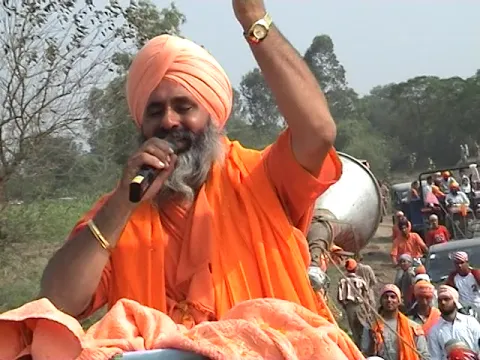

The restoration of the river didn’t end when the water cleared. Residents created vigilance committees to prevent further illegal dumping of garbage and sewage, imposing community fines when necessary.
The practical rule was simple: those who participated in the recovery also participate in the protection. Without a routine of local oversight, any recovered river can quickly regress.
This point helps explain why the model garnered attention outside of Punjab.
In 2008, Time magazine recognized Sant Balbir Singh Sichualal as an environmental hero, and delegations began visiting the experience to understand the method. More than 50 villages adopted similar decentralized treatment systems with settling and natural infiltration.
The value of the initiative lies in its replicability: low cost, understandable technique, and close social control.
A Replicable Model, With Real Limits
The experience of Kali Bein showed that community action can surpass institutional inertia when there is reliable leadership, territorial organization, and a common goal. It also demonstrated that “without a public penny” does not mean absence of cost: there was enormous investment of time, physical effort, coordination, and collective discipline. The main resource was continuous social work.
At the same time, replicating requires minimum conditions: local adherence, agreement among villages, discipline to maintain rules, and willingness to confront polluting interests.
Not all territories will possess the same cohesion. Hence, the case teaches two lessons simultaneously: the community can initiate and accelerate river recovery; and public power remains necessary for scale, regulation, and prevention of new liabilities.
The Kali Bein case responds, without slogans, to the central questions: who drove the change were residents led by Sant Balbir Singh Sichualal; how much was mobilized includes 3,000 volunteers, 160 km of river, and thousands of hectares recovered; where it happened was in Punjab; and why it worked was because of persistent collective action with a simple technical method and social oversight after the project.
Now it’s worth bringing the discussion to your reality: in the place where you live, which river, creek, or canal most symbolizes abandonment today, and what concrete measure do you believe the community could start in the next 90 days without relying on official promises?










Ainda existe pessoas preocupados com o sistema ecológico e sobre as suas consequências na face da terra. Se a tivéssemos mais pessoas com o o espírito de reconstrução do nosso planeta. Teríamos um planeta equilibrado, sustentável e com dias melhores para a nossa geração. Parabéns
Realmente, nós humanos temos que reagir a esses tipos de coisas. Unir_se, em mutiráo e cuidar dos nossos bens. Observo que o nosso dinheiro público,chega dificilmente, para o nosso bem. Entáo vamos administrar, em comunidade e o mundo será melhor, para todos nós. “Eu sou Luz e trabalho para a Luz”.
Monge Ancap. Governos no mundo todo, são ineficientes, gastam horrores em dinheiro de impostos pra não fazer ou fazer mal feito, enquanto iniciativas particulares e descentralizada resolvem o problema de forma mais rápida e barata. Agora só falta o governo querer multar os participantes por danos ambientais, pra poder justificar a sua existência, não tem o carimbo de burocrata no papelzinho por isso toda essa bem feitoria e irregular e vão querer penalizar, no Brasil isso acontece facilmente.