





 Português
  Inglês
  Espanhol
  6 min de leitura
  1 comentário


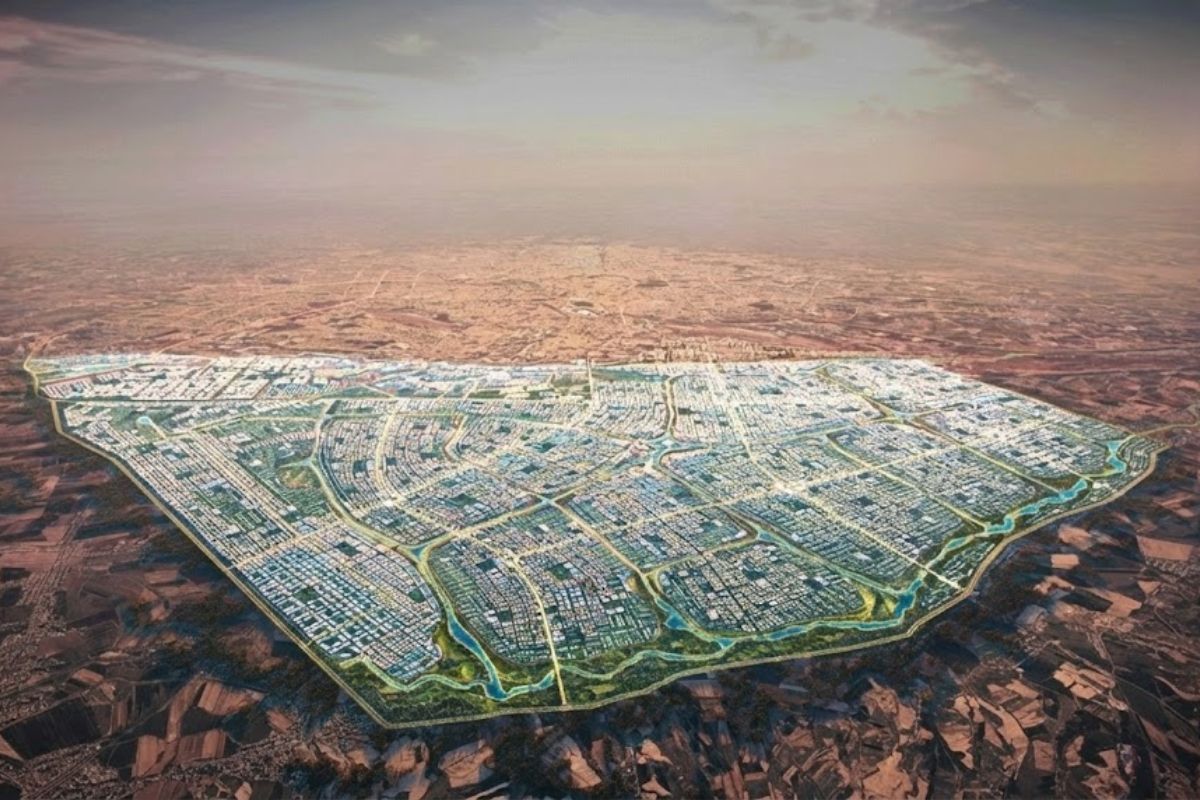


With 37 Million Inhabitants, Uzbekistan Bets on a Megacity of US$ 30 Billion 20 km from Tashkent, on 25,000 Hectares, to House Another 2.5 Million. The Plan Includes Canals, 23% Green Areas, Renewable Energy with 400 MW Solar and 1,200 MW Hydroelectric, and 575 m Towers.
A country that almost no one can name a city is trying to change its status with a US$ 30 billion megacity built from scratch, with canals inspired by Amsterdam, large-scale renewable energy, and a skyscraper planned to be among the tallest in the world.
The bet arises from a recent political and economic turnaround: since 2016, Uzbekistan has opened its economy, reformed its currency, and started attracting foreign investment, creating the cash and urgency for a capital that communicates a new phase to the world.
Why Uzbekistan Decided to Build a New Capital

Uzbekistan is located in Central Asia, between Russia, Iran, China, and the Middle East, and was an important part of the Silk Road, the trade route that connected Europe and Asia for about 1,500 years.
-
A megaproject worth R$ 89 billion is advancing in Iraq and promises to change the game in global trade by creating a new corridor between Asia and Europe, reducing traditional routes and repositioning the country as a logistics powerhouse.
-
Goodbye bedside table: floating shelves become a trend in 2026 by freeing up space in the bedroom, improving circulation, bringing visual lightness, and integrating technology without taking up floor space.

-
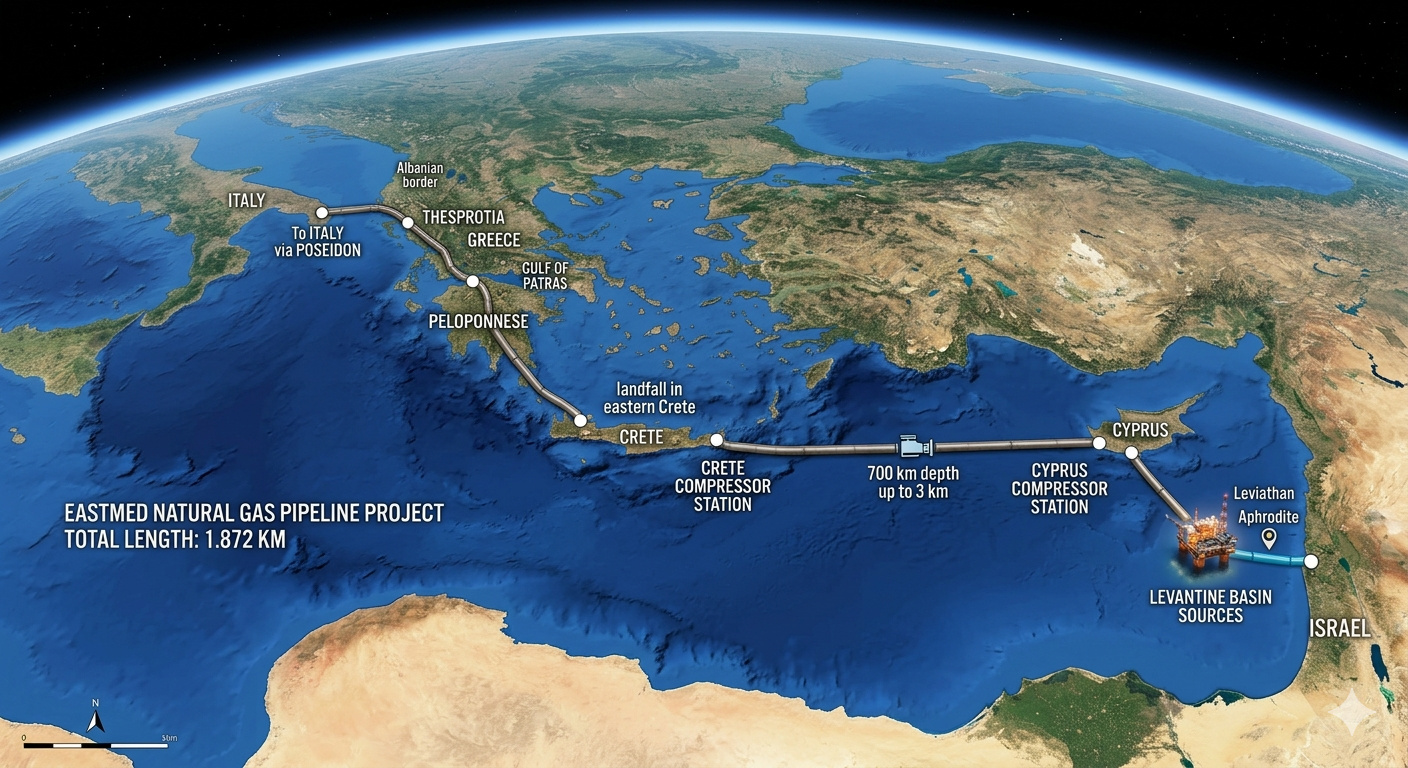
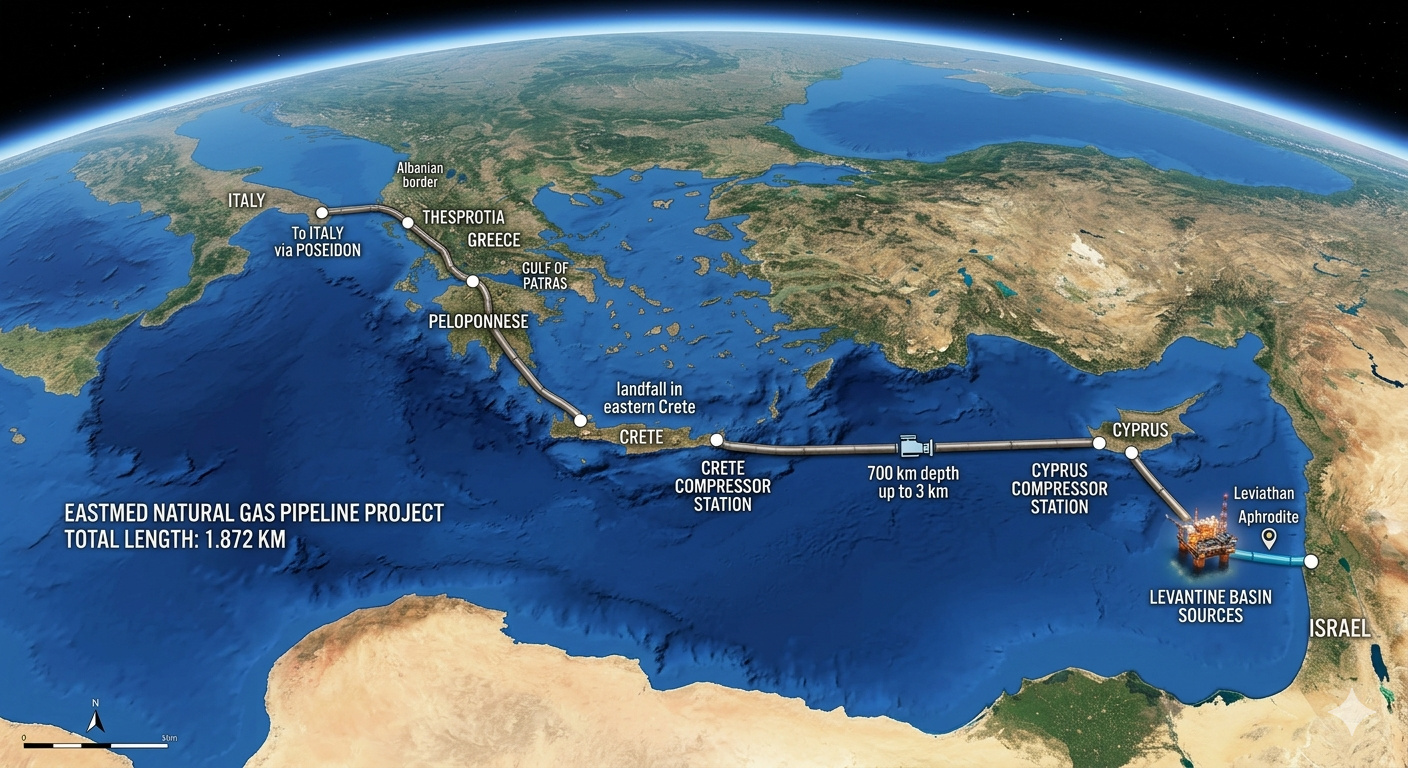
Israel, Greece, and Cyprus signed an agreement in 2020 to transport gas from the Mediterranean to Europe via a 1,872 km pipeline, but Turkey claimed sovereignty over part of the maritime route, and the project never materialized.
-
Israel, Greece, and Cyprus signed an agreement in 2020 to transport gas from the Mediterranean to Europe via a 1,872 km pipeline, but Turkey claimed sovereignty over part of the maritime route, and the project never materialized.

Even with this history, the country spent decades isolated, first under Soviet control and then under an authoritarian government that kept the economy away from investment and trade.
Starting in 2016, the strategy changed: the new president opened the economy, reformed the currency, and began to welcome foreign investors.
Foreign investment skyrocketed from practically nothing to over US$ 4 billion per year, providing the country with momentum to attempt a reputation leap with a US$ 30 billion megacity.
Overcrowded Tashkent Became the Central Argument of the Project
The plan is based on a tough internal diagnosis. Tashkent is described as old and overcrowded, with a population density nearly doubled since 1991.
Every year, the city needed to build over 20,000 new apartments, 40 schools, and dozens of hospitals just to keep up with demand.
In 2023, Tashkent ranked 157th out of 173 cities in a livability index, only 16 positions above the bottom.
The declared ambition is to place Tashkent among the 50 most livable cities in the world by 2030, and the US$ 30 billion megacity serves both as a showcase and a mechanism for urban relief.
Where the New City Will Be Built and What the Actual Size Will Be
The new capital is positioned as a monumental expansion. The core of the US$ 30 billion megacity will be about 20 km east of Tashkent, in an area of 25,000 hectares between the Turk and Karasu rivers.
This is equivalent to approximately one-third the size of Singapore and, in practice, almost doubles the size of the current capital.
Tashkent currently has just under 3 million inhabitants, and the expansion is planned to accommodate another 2.5 million.
The projection is that, in the next 20 years, Tashkent as a whole will reach around 7.4 million.
It’s like “releasing” a population the size of Chicago into empty agricultural land, according to the comparison presented in the project itself.
15-Minute City and Super Mahalas to Reduce Car Dependency
The master plan adopts the principles of the so-called 15-minute city, with an urban design aimed at short commutes and neighborhood life.
The US$ 30 billion megacity will be organized into Super Mahalas, an updated version of traditional neighborhoods known for labyrinthine alleys and houses around courtyards.
Each Super Mahala should be about 400 meters wide, allowing residents to cross the neighborhood in about five minutes on foot.
The plan sets a school to be located less than 500 meters from every home, with kindergartens even closer, at 300 meters. Stores and clinics will also serve as walkable services.
The logic is clear: cars will not be allowed to cut through these neighborhoods.
Vehicles will remain at the edges, freeing the interior for people, bicycles, and calmer circulation, in a concept compared to Barcelona’s “super blocks.”
Streets with Diagonals, Real-Time Digital Twin, and a Monitored City
The urban design also seeks to avoid the “grid city” effect that forces commutes at 90-degree angles.
The proposal maintains the grid logic but includes diagonals to enable more direct routes, reducing the sense of rigidity.
The technological layer is one of the most ambitious differentiators: the US$ 30 billion megacity aims to operate with a complete and real-time digital twin, a live replica of the city that updates continuously.
Each building, street, and water pipe would be monitored, with the promise of detecting problems early, as seen in similar applications cited in Singapore to reduce flood damage.
Canals in the Style of Amsterdam and 23% Public Green Space
The visual identity was chosen to be memorable. A network of canals runs throughout the city, allowing for walking through parks and following the water to the other side without touching a main road.
The comparison to Amsterdam appears as a declared intention, to the point of the city being called the “Amsterdam of Central Asia.”
The environmental design is also aggressive: about 23% of the entire city is expected to be public green space, not counting private courtyards and university campuses, which have their own requirements.
100% Renewable Energy with 400 MW Solar and 1,200 MW Hydroelectric
The US$ 30 billion megacity has been planned to operate on 100% renewable energy. The energy package includes 400 megawatts of solar panels and modernized hydropower plants that would add 1,200 megawatts.
Additionally, the plan envisions burning cotton waste in tri-generational boilers, which can produce electricity, heating, and cooling simultaneously.
The regional scale is also reflected in the timelines: by the end of 2028, the entire Tashkent region is expected to have 23 renewable energy projects with a combined capacity of about 2.4 gigawatts, clean energy estimated to be enough to supply approximately 5 million homes.
The new city was designed for 2 million people, and the energy will not only be for it, but also part of a broader green transformation that includes old Tashkent and the surrounding areas.
575-Meter Skyscraper and Signature Architecture to Become a Global Symbol
The symbolic heart of the project is vertical. The Twin Towers are designed to reach 575 meters and, when completed, will rank as the sixth tallest building in the world.
The goal is impossible to disguise: to build something too large to be ignored.
In addition to the towers, there is the Alisher Navoy Center, designed by Zaha Hadid Architects, featuring locally made bricks and cooling systems inspired by traditional Central Asian wind towers, reinterpreting ancient Silk Road techniques with modern engineering.
The attraction package also includes a planned investment of US$ 250 million in a water park and tourist complex, raising the inevitable question about water supply in an already stressed region.
What Has Already Been Realized and What Is the Timeline
The first major phase is District 1. Government approval is expected by June 2024 and covers the first 6,000 hectares, where agricultural land begins to be transformed.
Lot sales have already occurred in the first thousand hectares, and infrastructure work is underway.
The construction of the metro has already begun to connect the new city to the existing lines in Tashkent. Temporary buildings have already been installed for the Minister of Energy to operate in the new city, and full university campuses are being erected, with dormitories and classrooms, expected to welcome students starting in 2027.
The presented forecast is that the initial 6,000 hectares will be completed in the next 8 to 10 years, within a longer expansion plan.
Employment, Youth, and the Social Pressure for Quick Results
The US$ 30 billion megacity is not just urban planning; it’s a policy of social survival. Uzbekistan faces a deteriorating employment crisis: nearly 55% of young people finish school and then find themselves without work or further study.
Today, 90,000 university graduates cannot find employment in their own field.
Every year, more than 250,000 people reach working age, a volume that the economy has not absorbed, as the country creates only about 1% more jobs per year.
The majority of the population is under 30, and the project arises as an attempt to create careers and retain talent in the country.
The Most Delicate Point: Water in a Country Under Water Stress
The most sensitive structural risk is water supply. Uzbekistan is described as one of the countries most affected in the world by water stress.
Most of the water is already used in agriculture; the country does not control its own supply, and the numbers continue to worsen.
The cited projection is a possible shortfall of 15 billion cubic meters by 2030, a volume compared to water sufficient to supply New York for nine years.
Do you think the US$ 30 billion megacity can become a reality with canals and 23% green space without worsening Uzbekistan’s water stress?









Sim, com certeza. 😃