





 Portuguese
  English
  Spanish
  5 min of reading
  10 comments


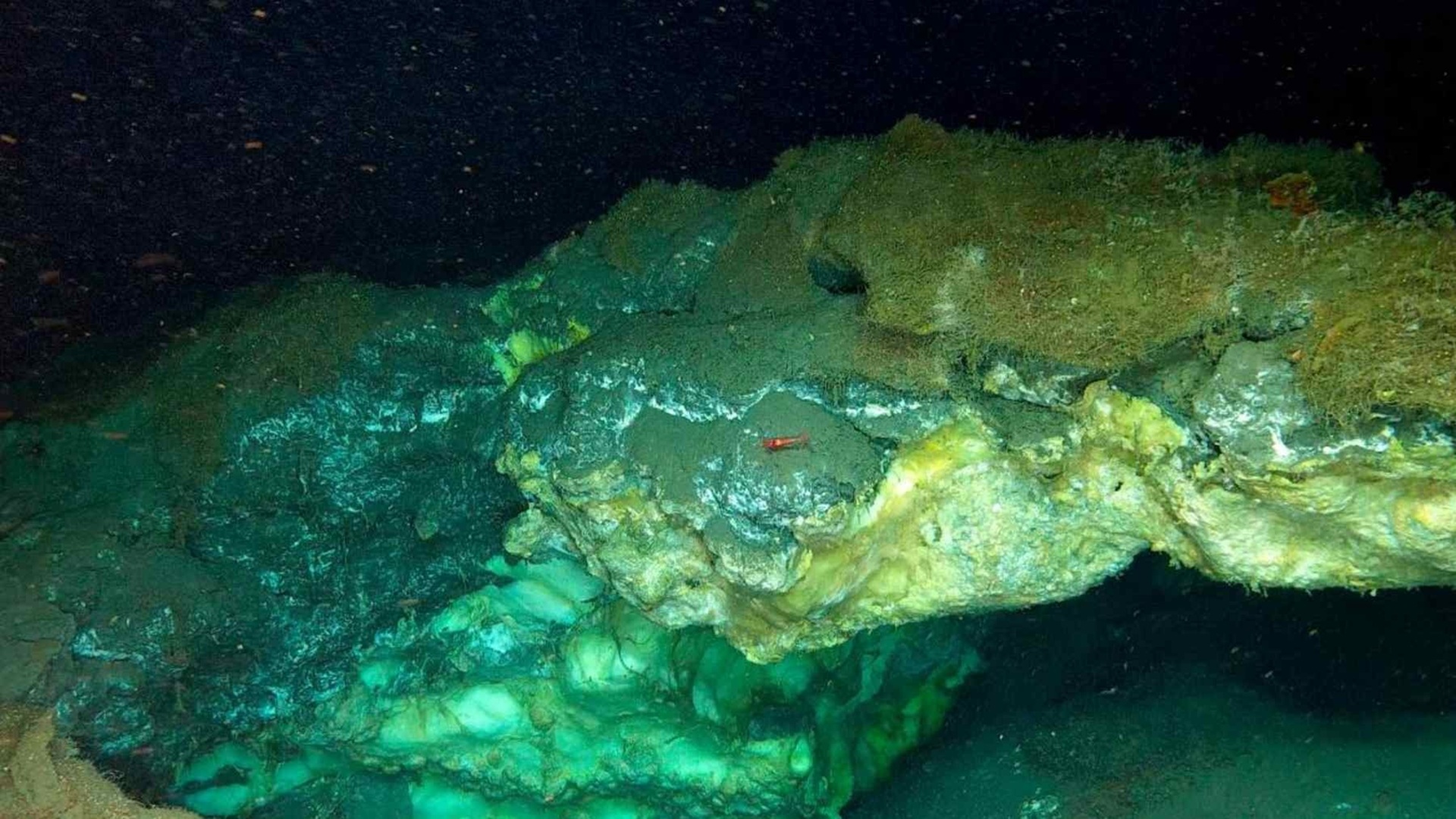


The Discovery of the Freya Gas Hydrate Mounds, at 3,640 Meters Deep in the Greenland Sea, Reveals the Deepest Cold Gas Seep Ever Recorded, with Intense Biological Activity, Methane Emission, and Direct Implications for the Global Carbon Cycle and Deep Arctic Biodiversity
A remotely operated vehicle descended nearly four kilometers deep in the Greenland Sea and identified, at 3,640 meters, the Freya Gas Hydrate Mounds, the deepest cold gas seep ever recorded, changing the understanding of ecosystems, carbon, and life at the bottom of the Arctic.
The discovery occurred at the Molloy Ridge during the Ocean Census Arctic Deep expedition, conducted in May 2024, using the Aurora vehicle.
The mapping revealed a biological oasis in an area previously considered nearly sterile, with exposed gas hydrate deposits and associated living communities.
-
Buried under China, a colossal machine weighing 20,000 tons began operating as the largest neutrino detector on the planet and, in just 59 days, surpassed results that science took half a century to achieve.

-
Iran enters the center of a climate alert after the war emitted 5.6 million tons of CO2 in two weeks, surpassing the annual pollution of entire countries.

-
Lunar exploration may change after a Chinese probe finds a “cavity” of radiation that reduces the impact on astronauts by up to 20% at certain times on the Moon.
-
Artemis 2 sends four astronauts on a historic mission to the Moon after 50 years, with a launch on April 1 and a record flight to the far side of the Earth’s natural satellite.


The Discovery at the Molloy Ridge
The Freya Gas Hydrate Mounds were identified 3,640 meters below the surface in the Greenland Sea, in a high-pressure and low-temperature environment.
The site was described in Nature and announced by UiT, The Arctic University of Norway, after detailed analysis of data collected by the international team.
Observations indicate that gas hydrate deposits can form and persist at depths close to 1,800 meters, contrasting with the known pattern of cold seepage, typically recorded at less than 2,000 meters on continental slopes. At Freya, the presence of these hydrates at extreme depths expands the known limits of these systems.
Giuliana Panieri, chief scientist of the expedition, emphasized that the discovery redefines the paradigms of Arctic deep-sea ecosystems and the carbon cycle. According to her, Freya is geologically unstable and teeming with life in a part of the ocean that was treated as nearly devoid of organisms.

Photo: UiT / Ocean Census / REV Ocean
The Deepest Gas Hydrate Infiltration Ever Recorded
Gas hydrates, known as fire ice, are crystalline solids that trap gases such as methane in water molecule structures. They remain stable only under high pressure and low temperature, conditions present in the deep ocean floor.
Global scientific estimates indicate that these hydrates store between 500 and 2,500 gigatons of carbon, representing one of the largest hidden reservoirs of a potent greenhouse gas. At Freya, these hydrates emerge directly from the seabed, forming visible structures.
The Aurora’s cameras identified three conical mounds, with diameters between four and six meters and up to four meters in height. Additionally, collapse craters and low ridges were observed across an area of approximately 100 by 100 meters, composing a complex geomorphological field.
The onboard sonar tracked methane-rich plumes rising more than 3,300 meters through the water column, reaching about 300 meters from the surface. These plumes rank among the largest gas flames ever documented in deep marine environments.

Chemical Composition and Origin of the Gases
Chemical analyses conducted indicate that the hydrates contain a gas mixture dominated by methane, accounting for about two-thirds of the total identified. The remainder includes ethane, propane, and butane, suggesting the presence of thermogenic hydrocarbons.
This composition suggests that the gases originate from sediments of the Miocene era, located at greater depths in the Earth’s crust.
The ascent of these compounds to the seabed highlights the connection between deep geological processes and the chemical dynamics observed at Freya.
The results reinforce the notion that the system is active and unstable, with continuous gas release and direct interaction with deep ocean water, influencing both local geology and associated ecosystems.

For: Martin Hartley / The Nippon Foundation–Nekton Ocean Census.
Life at the Extreme Limit of the Ocean
Despite the total absence of sunlight, more than twenty types of fauna have been recorded in the mounds and their surroundings. The foundation of this community lies in chemosynthesis, rather than photosynthesis, using chemical reactions as an energy source.
Notable among the observed organisms are dense forests of Sclerolinum, formed by siboglinid tube worms that host bacteria capable of using methane and sulfide as fuel. These worms structure the habitat and support other forms of life.
Snails, amphipods, polychaetes, and small crustaceans circulate among the tubes, feeding on chemosynthetic microbes or other organisms.
This food web persists in waters with temperatures around -0.63 degrees Celsius, slightly below the normal freezing point of seawater.
For researchers monitoring deep-sea biodiversity, the finding reinforces that Arctic basins, often labeled as empty on global maps, actually harbor complex communities linked to the underlying geology, countering old perceptions of the sterility of these environments.
Ecological Connections with Other Deep Systems
Comparisons between Freya and the Jøtul hydrothermal vent field, located about 3,020 meters deep in the Knipovich Ridge, revealed significant similarities. At the family level, the community associated with the methane seep is closer to this hydrothermal system than to shallower cold seeps in the Arctic.
This proximity suggests strong ecological links between distinct but geographically close deep habitats. Jonathan Copley, responsible for the biogeographic analysis, assesses that Freya may be just the first of several similar systems yet to be identified in the region.
According to him, the organisms inhabiting these environments may play a vital role in the overall biodiversity of the deep Arctic, functioning as ecological nodes in a fragmented and extreme landscape.
Mineral Exploration and Political Decisions
The Freya Mounds are located in an area of the Arctic seabed between Jan Mayen and Svalbard that was opened by Norway for marine mineral exploration in early 2024. At that time, companies were invited to indicate blocks for future mining licenses aimed at obtaining metals used in batteries, wind turbines, and other technologies.
After public pressure and legal challenges, the country agreed not to issue new mining licenses in deep Arctic waters. It also decided to suspend public funding for seabed mapping of minerals until at least the end of 2029.
United Nations experts considered the measure consistent with the precautionary principle and with obligations to protect the ocean and the climate system. For the scientists involved in Freya, this pause is crucial to ensure the integrity of the site.
Copley describes these ecosystems as island-like habitats, vulnerable to intense industrial activity. Panieri defines the Freya mounds as living geological formations, sensitive to tectonics, deep heat flow, and changes in the waters of the Fram Strait.
Global Relevance of the Finding
Though located four kilometers deep, the Freya system integrates the global carbon cycle through the methane stored in the hydrates. The associated food webs also contribute to the network of ocean biodiversity protection.
The site provides a natural ultra-deep laboratory to observe how methane moves through the water column and how cold seep ecosystems respond to the gradual warming of the Arctic Ocean. Future decisions on deep-sea mining and climate policies will directly influence the fate of this newly documented oasis.
The study detailing the discovery was published on the UiT website, consolidating Freya as one of the deepest and most relevant findings ever recorded in the Arctic marine environment.







Por isso Trump quer invadir e colonizar
Achei que ia mostrar uma sereia, Aquaman, megalodonte …
Estou em Matrinchã em goias, Brazil o lugar mais quente do mundo. Espero que esse lugar esteja habital na década de 2030, em face das mudanças climáticas.