





 Portuguese
  English
  Spanish
  4 min of reading
  0 comments



A Forgotten Inventor, Official Documents and Old Images Reveal How Electroculture Promised to Revolutionize Agricultural Production by Harvesting Invisible Energy from the Atmosphere, Before Disappearing Silently
In 1926, a French inventor presented the world with a proposal that seemed too simple to be real: tripling agricultural production using only a copper wire, without chemical fertilizers, pesticides, or heavy machinery. The promise, at first glance, sounded improbable. However, official records, historical photographs, and even government investigations from the time indicate that the results were considered, at the very least, impressive. This information was released through European patent records and later analyzed by British agricultural committees, according to documentation preserved in institutional archives.
This inventor was Justin Christofle Lil, a French farmer born in 1865, far from major academic centers and without ties to universities. Still, he dedicated his life to studying a bold hypothesis: that plants could develop better by harvesting natural electric energy present in the atmosphere. On October 26, 1925, he registered the patent CH18.648A in Switzerland, describing a “celestial absorption electromagnetic device,” constructed with copper and magnetized steel sheets, designed to capture electricity from the air and transfer it to the soil.
According to the patent documents, tests indicated oats exceeding 1.5 meters in height, corn stalks reaching over 3 meters, previously dried trees coming back to life, and pumpkins the size of barrels. Photographs from the time, published in French agricultural periodicals, show vegetables and cabbages reaching nearly the height of an adult, images that continue to astonish to this day.
-
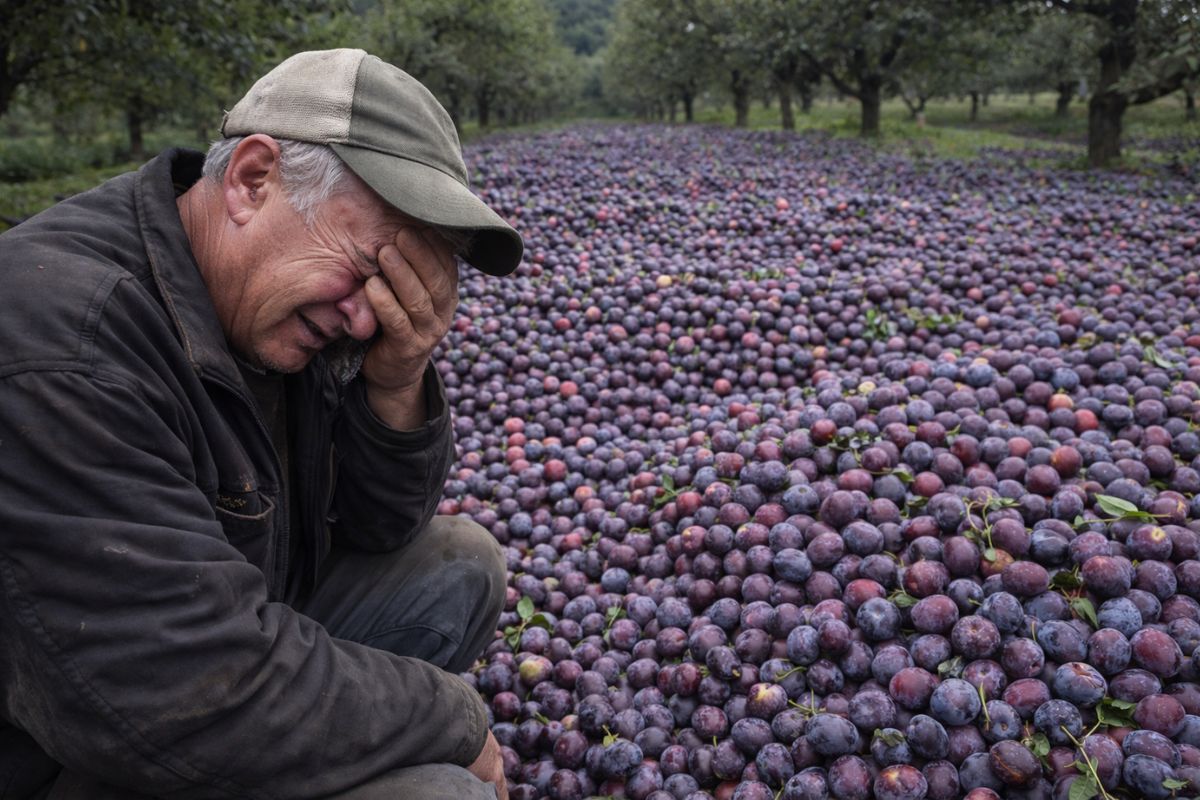
A rural producer from Urubici cries as he shows 50 tons of plums thrown on the ground because no one wanted to buy them, and in desperation, he records a video asking anyone to come to the property to pick the fruits before they rot.
-
Unable to pass through Hormuz, Brazil activated a plan B that uses Turkey as a gateway to the Middle East: the route through Gibraltar and the Mediterranean is longer and more expensive but ensures that chicken, beef, and corn continue to reach Arab markets.

-
You grew up hearing that the good coffee from Brazil goes all abroad and the bad coffee stays for Brazilians, but this story has completely changed, and the numbers show that in the 1980s, thirty percent of the coffee sold here was adulterated with corn and barley.
-
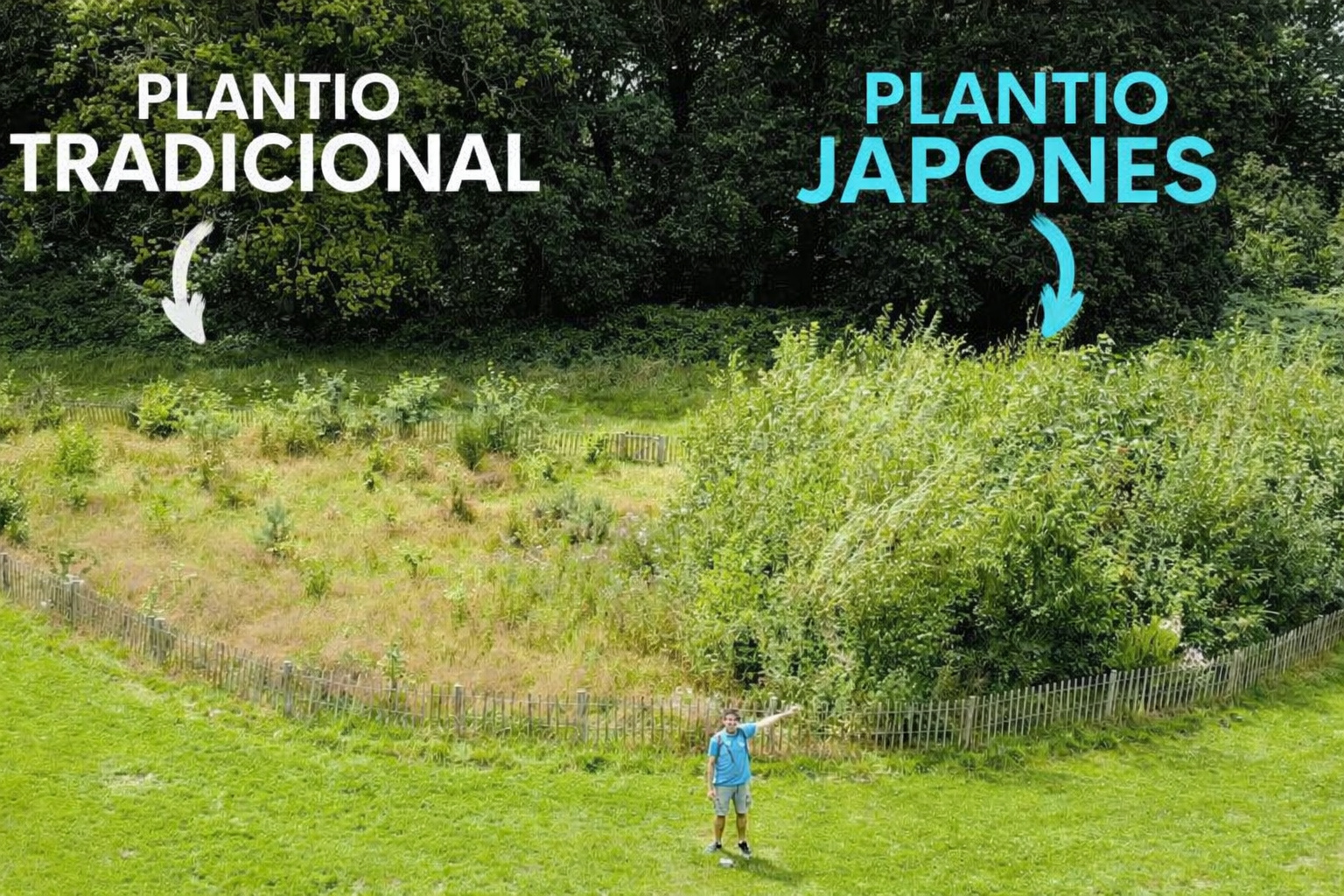
Engineer creates reforestation method that transforms small plots into dense forests in a few years using local biomass and can reduce environmental recovery costs.

The British Committee, Invisible Electricity, and the Scientific Basis of the Method

The impact of these demonstrations did not go unnoticed. In 1918, the UK Ministry of Agriculture created the British Electroculture Committee, which for nearly 20 years collected technical reports, photographs, and testimonies about experiments conducted in France and other European countries. Part of this material was classified as confidential, further feeding the mystery around the subject.
From a physical perspective, the principle was not fantasy. The Earth’s atmosphere maintains an electric potential gradient, with a positive charge at higher altitudes and a negative charge close to the ground. On cloudless days, this difference can reach about 100 volts per meter of altitude. It is a continuous, silent, and constant voltage, known in physics as the atmospheric potential gradient.
Plants, in turn, already operate naturally in this electric environment. Leaves and branches function as conductors, while the roots make direct contact with the negative charge of the soil. Modern studies show that roots and leaves transmit electrical impulses, called action potentials, which regulate growth, pest defense, and stress responses. When a tomato leaf is damaged, for example, an electric wave travels through the stem and activates defense mechanisms in other parts of the plant.
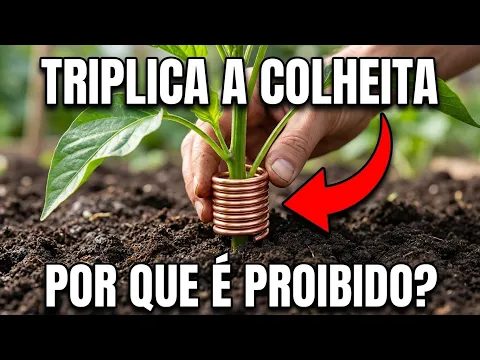
Christofle believed that copper, due to its high conductivity, could amplify this natural process. Copper spirals buried near the plants would function as passive antennas, capturing energy from a larger area and concentrating it in the root system. The spiral shape, present in natural structures like snails and sunflowers, was also seen as essential for optimizing capture.

Chemical Fertilizers, Economic Interests, and the Disappearance of Electroculture
Despite the empirical evidence, electroculture began to lose ground starting in the 1920s. During this period, the chemical industry advanced rapidly with the Haber-Bosch process, which allowed large-scale production of synthetic ammonia for fertilizers. Global production jumped from 1 million to around 20 million tons annually by 1960, while prices fell from US$ 100 to less than US$ 30 per ton.
More than efficiency, the new model created a system of recurring dependency. Farmers began purchasing fertilizers each season, turning fertilizer into a subscription product. Techniques that promised permanent gains at low cost, such as electroculture based on copper wires, became economically inconvenient.
The agricultural press of the time began to frame the subject as eccentricity, using terms like “fantastic promises” and “crazy procedures.” Christofle was associated with ideas of infinite energy, and articles submitted to rural periodicals ceased to be published. Scientists avoided publicly defending the topic, fearing damage to their academic reputation. Thus, electroculture was labeled as pseudoscience, and by the 1930s, it had been reduced to a rural legend.
Decades later, however, the topic returned to the agenda. Researchers from the Chinese Academy of Agricultural Sciences conducted an experiment on 3,600 hectares, an area equivalent to over 6,000 soccer fields. Utilizing suspended wires to explore atmospheric electricity, without fertilizers or pesticides, the results indicated an average productivity increase of nearly 30% in crops like wheat, rice, and vegetables. Furthermore, the use of pesticides fell between 70% and 100%, according to data released in recent scientific reports.
Today, the planet consumes over 185 million tons of fertilizers per year, while soils lose biodiversity and costs increase. In this context, simple, cheap techniques based on free energy are reviving interest. The question that remains is not just whether electroculture works, but why low-cost solutions continue to face so much resistance.







-

-

-

-

-

35 pessoas reagiram a isso.