





 Português
  Inglês
  Espanhol
  5 min de leitura
  0 comentários


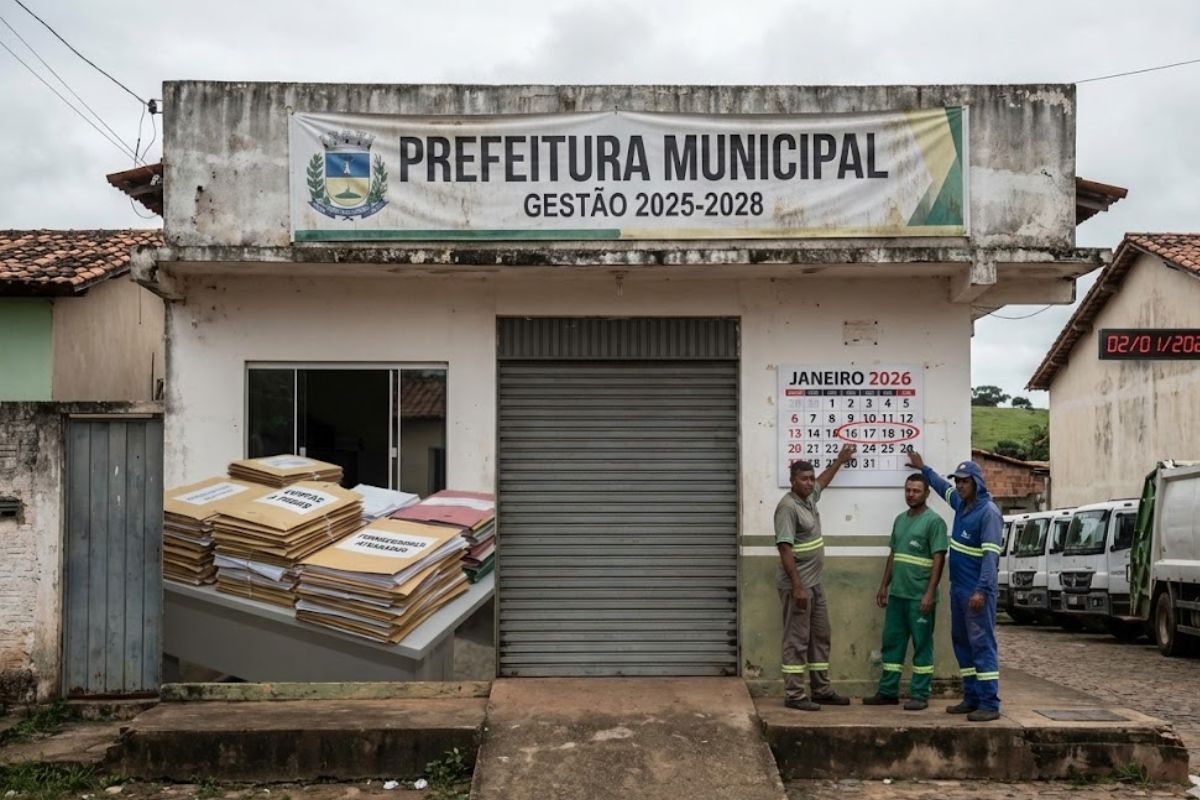
Research by CNM with 4,172 Municipalities Reveals That Nearly 30% Are Already Late on Suppliers and 31% Will Push Debt to 2026 Without a Source of Funds, While New Federal Programs Pressure Budgets and Threaten Basic Services Precisely in the Most Vulnerable Cities in the Country with Increasing Risk of Local Fiscal Collapse
According to the ESTADÃO portal, Congress approved an additional 1% of the Municipal Participation Fund, paid every December to strengthen the cash flow of municipalities. Even so, one third of municipalities will enter 2026 late on suppliers and without money to settle all bills that should have been paid this year.
A survey by the National Confederation of Municipalities, covering 4,172 cities that represent 75% of the total, shows that 31% of municipalities will push expenses to 2026 without a funding source, despite the PEC approved in 2022. For the entity, the increase in new obligations and benefits creates a fiscal bomb that threatens basic services and is set to explode during the term of whoever is in power until 2027.
Survey Reveals Red Accounts in Thousands of Municipalities
The CNM survey details the extent of the financial squeeze on local public accounts. Among the 4,172 municipalities interviewed, 1,202 city halls, equivalent to 28.8%, admit to being late with suppliers.
-
Brazilian city gains industrial hub for 85 companies that is equivalent to 55 football fields.

-
Peugeot and Citroën factory in Argentina cuts production by half and opens a layoff program for more than 2,000 employees after Brazil drastically reduced purchases of Argentine vehicles.

-
A Brazilian city gains a factory worth R$ 300 million with the capacity to process 200 thousand tons of wheat per year, a mill of 660 tons/day, silos for 42 thousand tons, and an industrial area of 276 thousand m².

-
Havan will leave the shopping mall in Blumenau to inaugurate something that the chain has never done before: a megastore in half-timbered style in the Historic Center of the city, which is expected to be completed in May and change the landscape of local retail.


Another 2,858, or 68.5%, claim to be up to date, and 112 (2.7%) did not respond to the question, which increases the sense of uncertainty about the real magnitude of the problem.
Looking ahead to 2026, the situation becomes even more concerning. A total of 1,293 municipalities, or 31%, will carry over expenses from this year to the next without having a funding source to cover them, the so-called unpaid bills without coverage.
On the other hand, 2,623 (62.9%) state that they will not leave any unpaid bills without funding, while 256 (6.1%) did not respond.
In practice, this means that a significant portion of the municipalities will enter 2026 starting the year in the red, even before facing new salary increases, contractual adjustments, and funding pressures. The CNM warns that, if nothing changes, the combination of delays and unpaid bills tends to create a snowball effect that impacts essential services.
Payroll Up to Date, but New Programs Strangle Municipalities
Despite the constraints, the vast majority of municipalities still manage to keep payroll up to date. According to the CNM, 98% of municipalities report no delays in paying public servants, including the 13th salary.
The problem is that, at the same time, new obligations have been assumed without a corresponding increase in revenue.
The president of the entity, Paulo Ziulkoski, cites three central examples: the nursing salary floor, the Mais Médicos program, and the implementation of full-time schools.
All of these policies increase expenses related to personnel, infrastructure, and operational costs, but have not come with sufficient transfers to municipalities.
“The federal government keeps creating headaches for municipalities, and the mayors go along with it. It’s not the mayor who is suffering.
It’s the poorest population that is paying for this,” says Ziulkoski. For him, municipal revenues are growing slowly, while expenses explode due to new salary floors and pension pressures, especially in smaller cities that rely almost entirely on federal transfers.
Minas, São Paulo, and Rio Grande do Sul Concentrate Part of the Delays
State data shows that the crisis is not distributed evenly across the map. Minas Gerais has 196 municipalities overdue with suppliers, closely followed by São Paulo, with 168 city halls in this situation.
When focusing on the lack of money to pay expenses that will be carried over to 2026, the scenario remains serious.
There are 213 municipalities in Minas Gerais, 192 in São Paulo, and 114 in Rio Grande do Sul that state they have no funding source to cover all unpaid bills.
These figures help explain why, in May 2025, during the Mayor’s March in Brasília, the atmosphere among municipal managers was one of strong pressure on the federal government and Congress.
Mayors of medium and small municipalities report that the bill is already arriving in areas such as school transportation, basic health, and urban maintenance, with silent cuts being felt at the grassroots level.
PEC of 2022, New Laws, and the Retirement That Becomes a Fiscal Bomb
In 2022, Congress approved a Constitutional Amendment Proposal that, in theory, prohibits the creation of new programs impacting municipalities without indicating the funding source.
In practice, however, the CNM claims that several laws have been approved that bypass this requirement, undermining the spirit of the PEC.
“All this impact is very serious. It accumulates more and more,” warns Ziulkoski. According to him, expenditures related to personnel and pensions are rising, many municipalities grant increases without the capacity to pay, and the margin for investing or maintaining services is getting smaller.
One of the biggest current concerns is the proposal approved in the Senate that grants full and equal retirement for community health agents and agents combating endemic diseases, with an estimated impact of 69.9 billion reais for municipalities. Ziulkoski labels the measure as a “future bomb.”
He recalls that the vote took place in a pre-election atmosphere: “Since it’s election season, which politician will vote against it and lose votes?” he questions.
In the CNM’s assessment, the toughest adjustment will fall on whoever assumes the presidency in 2027 and on mayors who will be in the middle of their term, with the bomb exploding over already strained budgets.
Financial Crisis Leads Ranking of Problems and Threatens Basic Services
Besides the numbers from public accounts, the CNM survey captured managers’ perceptions. Eight out of ten respondents, or 80.2%, point to the financial crisis and lack of resources as the main challenge today.
Following that are political and economic instability (67.5%), health management (63.4%), and salary adjustments (62.2%).
Recently, Congress approved a PEC that limits the payment of court orders by municipalities based on revenue and allows the renegotiation of municipal debts with the Union.
For Ziulkoski, this change provides some relief, but it is far from resolving the pressure caused by new programs and ongoing benefits.
The entity’s strategy, moving forward, will be to try to hold back the increase in expenses in Congress and denounce projects that shift the bill to municipalities without ensuring new funding, especially where the population depends almost exclusively on SUS, public schools, and basic services maintained by municipalities.
Technicians’ evaluations suggest that if this movement is not contained, the risk is to witness a progressive collapse of essential services in the poorest cities, with longer lines in healthcare, schools lacking adequate structure, and delays in contracts for cleaning, transportation, and social assistance.
In your city, have you already noticed signs that the services provided by municipalities are worsening due to the lack of funds?









Seja o primeiro a reagir!