





 Portuguese
  English
  Spanish
  5 min of reading
  9 comments


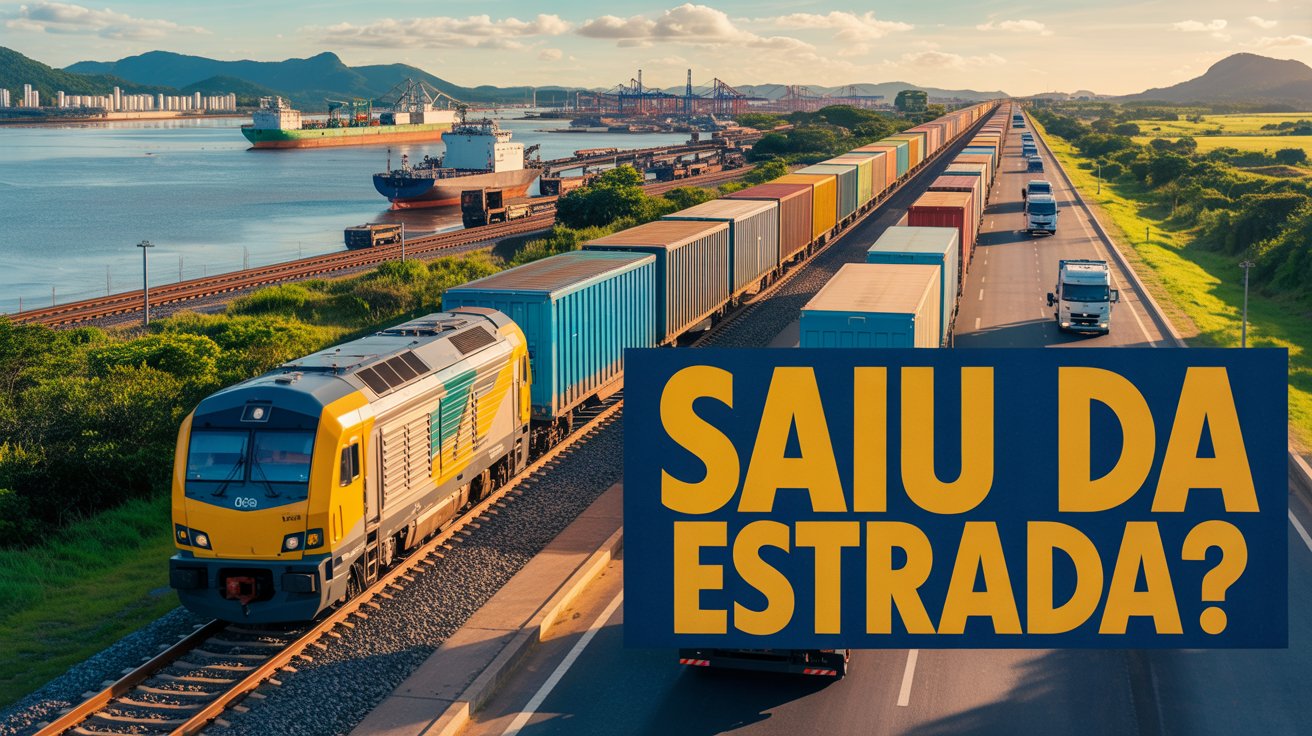


With the start of operations scheduled for October 2025, Transnordestina promises to transform freight transport in the Northeast, reducing the number of trucks on the roads and optimizing agricultural drainage in the region.
After almost two decades of anticipation, the Transnordestina railway, a project considered strategic for the transportation of grains and other agricultural loads from the interior of Piauí to the coast of Ceará, is about to begin operations in October 2025.
Composed of trains of up to 126 cars, the railway promises to replace the equivalent flow of about 380 trucks on each trip, according to data from Transnordestina Logística S.A. (TLSA), responsible for the project, and information revealed by the newspaper Diário do Nordeste.
The route, approximately 1,200 km long, directly connects producing regions of Piauí to the Port of Pecém, one of the main export gateways in northeastern Brazil.
-
In A European City, The Country’s Largest Railway Junction Was Modernized Without Closing Its Doors, Kept Trains Running During Years Of Construction, Now Serves Up To 60,000 Passengers Per Day, And Installed Solar Panels That Generate About 30% Of Its Energy
-
Famous Brazilian Railway May Become a Parking Lot
-
The Country of “Punctual As a Train” Admits It Has Lost Control: High-Speed Trains Delay, Stop, Disappear from the Map and Turn 6-Hour Trips into 10, While Deutsche Bahn Promises Restructuring in 2026 But Faces 19th Century Infrastructure, Staff Shortages and Sections Closed for Months
-
With an Investment of R$ 700 Million in One of the Country’s Main Rail Networks, VLI Reinforces Infrastructure, Receives 8 New Locomotives, and Expands the Corridor Connecting 7 States, Boosting Jobs and the Transportation of Grains, Ore, and Oil Products to the Port of Santos
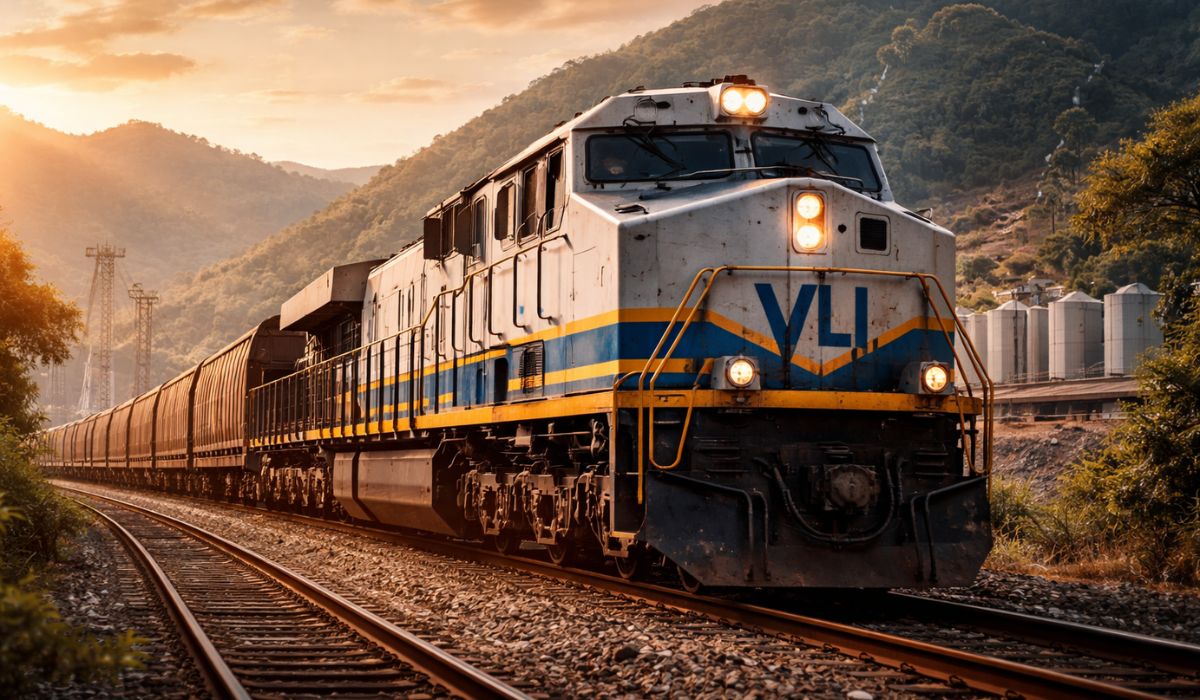

The logistical magnitude of Transnordestina is striking when analyzing its transport capacity.
Each car is designed to carry the same volume as up to three traditional trailers, forming a set that, in a single trip, can remove hundreds of heavy cargo vehicles from the roads.
This change represents not only an advance in logistical efficiency but also a potential reduction in truck traffic and the environmental impacts associated with long-distance road transport.
Advantages of Rail Transport for Freight Drainage
Although the load capacity of a Transnordestina locomotive is significant, experts point out that transport time is still a central issue in the debate between the two modalities.
While a truck covers medium- and long-distance routes in up to six hours, the train, in the commissioning stretch between Bela Vista do Piauí and Iguatu, is expected to take about 12 hours to complete the journey, not counting loading and unloading periods.
When the railway is fully operational, the expectation for the stretch between Eliseu Martins (PI) and the Port of Pecém (CE) is 32 hours, still not considering logistical processes at the terminals.
Despite this, TLSA emphasizes that the energy efficiency of rail transport is superior.
Data from the concessionaire points out that the average train fuel consumption is around 2.6 liters of fuel per ton transported, compared to 7 liters per ton for trucks.
This positions the railway as a more economical and sustainable alternative, especially for large volumes of cargo and long distances, in addition to directly contributing to the reduction of pollutant emissions and total logistical costs.
Historical Comparison and Challenges of the Railway Network in the Northeast
In the regional context, the comparison with the existing railway network highlights the historical challenges faced by the railway modal in Brazil.
In 2022, the locomotive of the Transnordestina Logistics Railway (FTL), which connects Fortaleza (CE) to São Luís (MA), took an average of 10 days to cover the 1,237 km of the route.
By road, the same distance between the capitals, reduced to about 900 km, was covered in up to three days by trucks.
The FTL, currently undergoing a concession renewal process until 2027, expects that, with the remodeling of infrastructure and the adoption of more modern technologies, the time between the Port of Pecém and Teresina could drop to 39 hours, while the route from Teresina to São Luís is expected to reduce to 20 hours.
The new Transnordestina is being built with a wide gauge of 1.60 meters between rails, different from traditional rail lines with a narrow gauge of 1 meter, which date back to the 19th century.
Saturated Roads and Sustainable Potential of the Northeast Railway
Rail transport currently accounts for just over 25% of the cargo handled in Brazil, according to a survey from 2024 by the Federal Government and the National Association of Railway Transporters (ANTF).
The predominance of the road modal, responsible for 75% of cargo, leads to the saturation of roads, which often do not keep pace with the increase in weight and flow of vehicles, exacerbating structural and logistical problems.
Experts, such as Heitor Studart, coordinator of the Infrastructure Nucleus of the Federation of Industries of the State of Ceará (FIEC), emphasize that the construction of railways is a long-term investment, unlike roads, which can be expanded or repaired in less time and at lower costs.
However, the railway modal stands out in load capacity: a train set with 70 cars, for example, equates to the removal of 280 trucks from the roads, with a tonnage transported up to 10 times greater than that of a conventional truck.
Logistical Integration and Intermodal Terminals in the Northeast
The complementarity between rail and road modalities becomes essential in a country of continental dimensions like Brazil.
The efficient operation of Transnordestina depends on strategic connections with dry ports and intermodal terminals, where trucks play an essential role in the final distribution of goods.
Ceará already has dry ports in cities like Iguatu, Missão Velha, and Quixeramobim, ensuring the logistical integration necessary to enhance the railway’s potential.
Additionally, the model adopted for Transnordestina includes at least five dry ports along its route, with the possibility of expansion as demand grows.
The development of these intermodal terminals is expected to attract new investments and boost the economic growth of the regions benefiting from the railway, creating opportunities for the logistics and agricultural sectors.
Movement Projections and Economic Impact of Transnordestina
The projections for the transport capacity of Transnordestina are robust.
The expectation is that the railway will transport, when fully operational, about 33 million tons of cargo per year between the interior of Piauí and the Port of Pecém.
This volume represents a significant logistical transformation for agribusiness and for the export of products from the Northeast, with the potential for doubling in future phases of the project.
The experience with the Fortaleza-São Luís railway serves as a benchmark: in 2024, the line transported approximately three million tons, with plans for expansion to 10 million tons, signaling the growing relevance of railways in the Brazilian logistical matrix.
The replacement of road transport with rail contributes to reducing costs, decreasing road accidents, and improving transportation infrastructure in the country.
Future of Logistics and Expansion of the Northeast Railway
The implementation of Transnordestina places Brazil at a new logistical level, making it possible to remove hundreds of trucks from the roads on each trip and consolidating the railway as a competitive, sustainable, and efficient alternative.
Do you believe that Transnordestina will really change the logistical landscape of the Northeast, or will integration challenges still prevent the full potential of this railway?









A Transnordestina já está transformando a configuração econômica do nosso estado. Estamos em fase de construção do Terminal Logístico de Iguatu (TLI) e, naturalmente, haverá a contratação de caminhões para o transporte dos grãos, desde as fazendas até o terminal de partida, localizado no Piauí. A partir da chegada ao terminal de Iguatu, outros caminhões serão contratados para realizar a entrega dos produtos até o destino final.
ESTÁ MAIS DO QUE NA HORA DO BRASIL INVESTIR PESADO NAS FERROVIAS. QUANTOS CAMINHÕES SERÃO
380 pais de família desempregados mais borracheiro mais frentista de posto fechamento de restaurantes fechamento de postos de gasolina fechamento de oficinas de caminhão e por aí vai quando as multinacionais vem para o Brasil investindo pesado para Lucrar e gerando desemprego para dar comentário atrás do celular é fácil mas quem vive o dia a dia das estradas são bem o tamanho da cadeias de emprego que gera o trasporte rodoviária fica dica vamos pensar nos brasileiros desempregados ou nas multinacionais
os 380 caminhoneiros que vão ser tirados da rota feita pela ferrovia não vão necessariamente perder o emprego. como diz a matéria, o modal rodoviário será importante para curtas distâncias, entregando o produto dos trens ao destino final. portanto não há a eliminação de tais empregos, apenas a mudança em sua operação.
Meu caro, vc e motorista caminhão ou não tem nenhum conhecimento logístico, pois os caminhões vai fazer a reentrega dos produtos, ou seja, pegar a mercadoria do porto e entregar ao comprador meu caro , Carlos , Natal RN