





 Português
  Inglês
  Espanhol
 4 min de leitura
  3 comentários


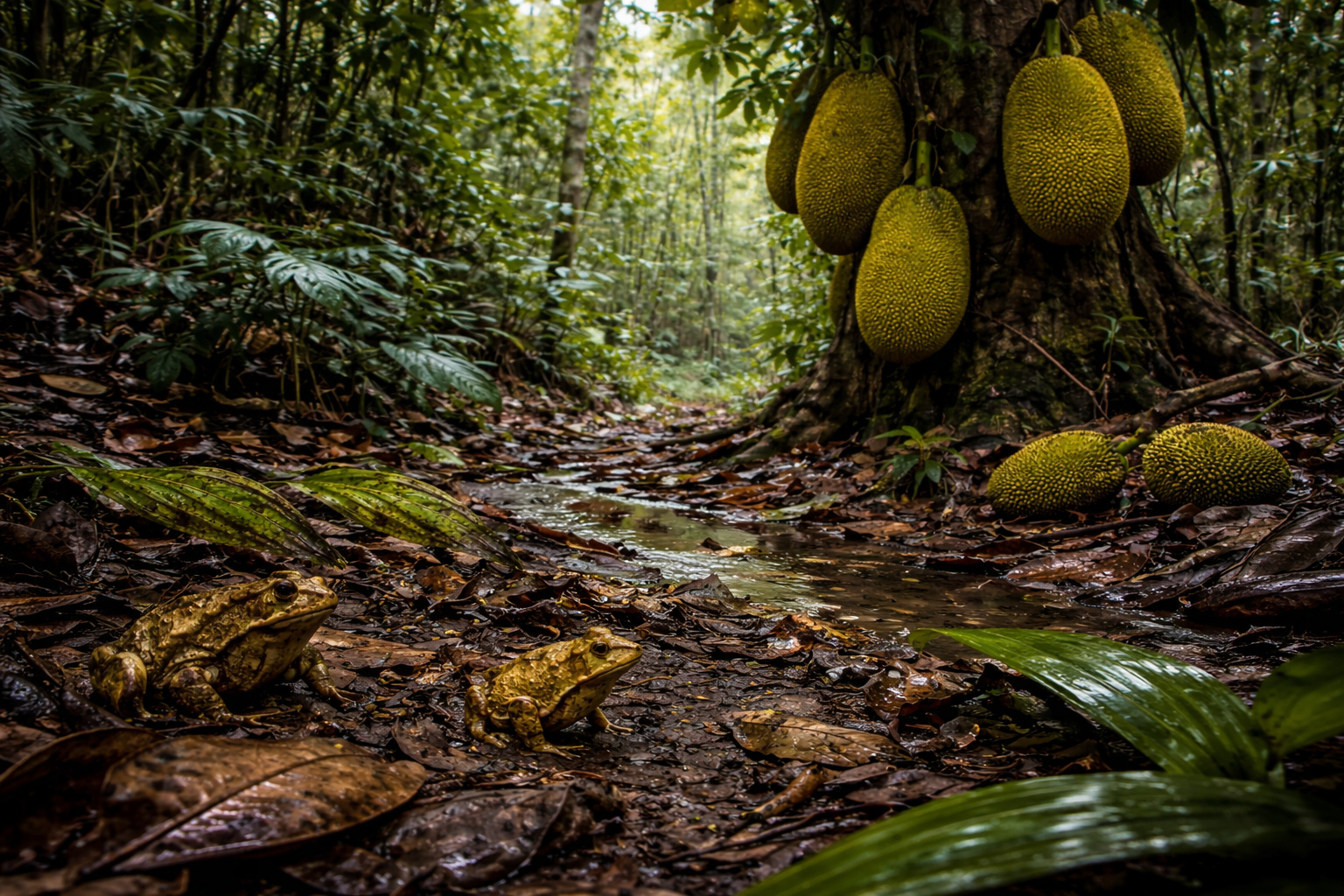


Study Shows How Jackfruit Expansion Modifies Forest Habitat and Causes Cascading Effects on Amphibians and Soil Organisms
The presence of the invasive jackfruit tree in the Atlantic Forest has been associated with soil depletion and reduced amphibian diversity, according to a scientific study conducted in Brazil.
This environmental transformation was observed especially in the Duas Bocas Biological Reserve in Espírito Santo, where researchers investigated the effects of the exotic tree on soil fauna.
The study reveals that the expansion of the jackfruit tree modifies the structure of the terrestrial environment and alters the survival conditions of various species.
-
Found in one of the most radioactive places on Earth, this Chernobyl fungus may be doing something with radiation that no one has been able to explain to this day.
-
A bright yellow mushroom imported from Asia escaped from a cultivation farm in the United States in 2010 and is now aggressively spreading across 25 states, destroying entire communities of native fungi in American forests.

-
Buried under China, a colossal machine weighing 20,000 tons began operating as the largest neutrino detector on the planet and, in just 59 days, surpassed results that science took half a century to achieve.

-
Iran enters the center of a climate alert after the war emitted 5.6 million tons of CO2 in two weeks, surpassing the annual pollution of entire countries.


According to the researchers, the invasion of this non-native tree causes changes that go beyond vegetation.
These alterations directly affect organisms that depend on the leaf litter and ecological dynamics of the forest soil.
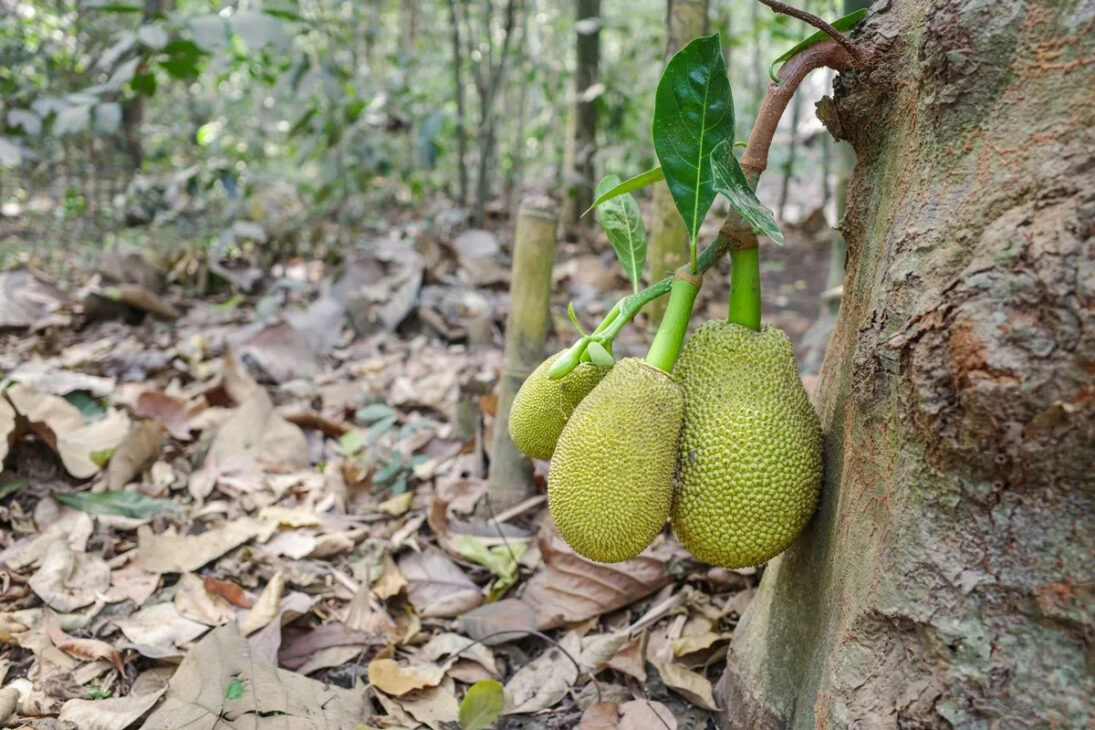
Research Reveals How Jackfruit Alters the Habitat of the Atlantic Forest
The introduction of exotic species into natural ecosystems can create significant ecological imbalances.
In the Atlantic Forest, the jackfruit tree stands out as one of the invasive species that most transform the forest environment.
Although it is known for its fruits, the tree was introduced in different regions and began to expand into areas of the forest.
With the advance of the species, there is a significant alteration in soil structure and habitat dynamics.
One of the main effects appears in the leaf litter, a layer formed by leaves, twigs, and debris that covers the forest floor.
This layer performs essential functions.
It maintains soil moisture, contributes to nutrient cycling, and creates microhabitats for various organisms.
However, when the jackfruit tree dominates certain areas, the leaf litter becomes simpler and less diverse.
This simplification of the soil reduces the abundance of arthropods, organisms fundamental to the functioning of tropical ecosystems.
Furthermore, these animals are part of the base of the food chain for various species in the fauna.
Scientific Study Investigates Effects of Invasion on Frogs
To better understand these ecological changes, researchers from the State University of Rio de Janeiro (UERJ) conducted a detailed study at the Duas Bocas Biological Reserve in Espírito Santo.
The research analyzed the effects of the presence of the jackfruit tree on three species of frogs that inhabit the forest soil.
Each of these species has different ecological needs.
Therefore, the scientists were able to observe how habitat alteration affects amphibians in distinct ways.
Among the main results observed, the following stand out:
Cururuzinho Frog (Rhinella crucifer)
This species is considered generalist.
Therefore, it shows greater tolerance to altered environments.
Consequently, the cururuzinho frog was found more frequently in areas dominated by the jackfruit tree.
Leaf Frog (Haddadus binotatus)
This species depends on humid and stable microhabitats.
For this reason, it showed a significant decline in regions where the jackfruit tree dominates the environment.
Horned Frog (Proceratophrys schirchi)
This species is not directly affected by the presence of the tree.
However, its occurrence depends on the quality of the leaf litter and the presence of arthropods.
As these organisms are reduced in invaded areas, there is an indirect impact on the species.
These results indicate that the invasion of the jackfruit tree causes cascading ecological changes, which affect not only vegetation but also soil fauna.
Ecological Consequences of Jackfruit Expansion
The dominant presence of the jackfruit tree can lead to a process called biological homogenization.
In this scenario, more resistant species come to occupy the space previously dominated by specialized species.
This results in a reduction of the functional diversity of the ecosystem.
This environmental simplification also decreases the ecological complexity of the forest.
Furthermore, specialists point out that less diverse environments tend to be less resilient to environmental changes.
This means that the forest may become more vulnerable to future climatic and ecological pressures.
Challenges for Atlantic Forest Conservation
In light of this scenario, researchers emphasize that managing invasive species requires integrated conservation strategies.
Simply removing the jackfruit tree is not enough to restore ecological balance.
It is also necessary to recover the leaf litter and native understory vegetation, which are essential for biodiversity.
These actions help to rebuild the complexity of the natural habitat.
In addition, they contribute to ensuring the survival of more sensitive species.
Among them are the amphibians, often used as indicators of environmental health.
Therefore, understanding the impacts of the invasive jackfruit tree in the Atlantic Forest becomes essential to guide conservation policies and protect Brazilian biodiversity.
In light of this scientific evidence, an important reflection arises: will the ecosystems of the Atlantic Forest be able to recover from the expansion of invasive species without more intense environmental management actions?








Precisamos manejar nossas florestas . Onde acha que ela se recupera sozinha. Já a auteramos , e temos agora que conduzí-la
Ora , o humano truxe e pode tirar em manejo. Madeira é muito boa. Quase todos os bichos comem. O manejo humano é necessário. Se esta ameaçando diminuamos a quantidade. Mas é bem vinda em nossa floresta.
The fruit is edible just eat