





 Portuguese
  English
  Spanish
  5 min of reading
  0 comments


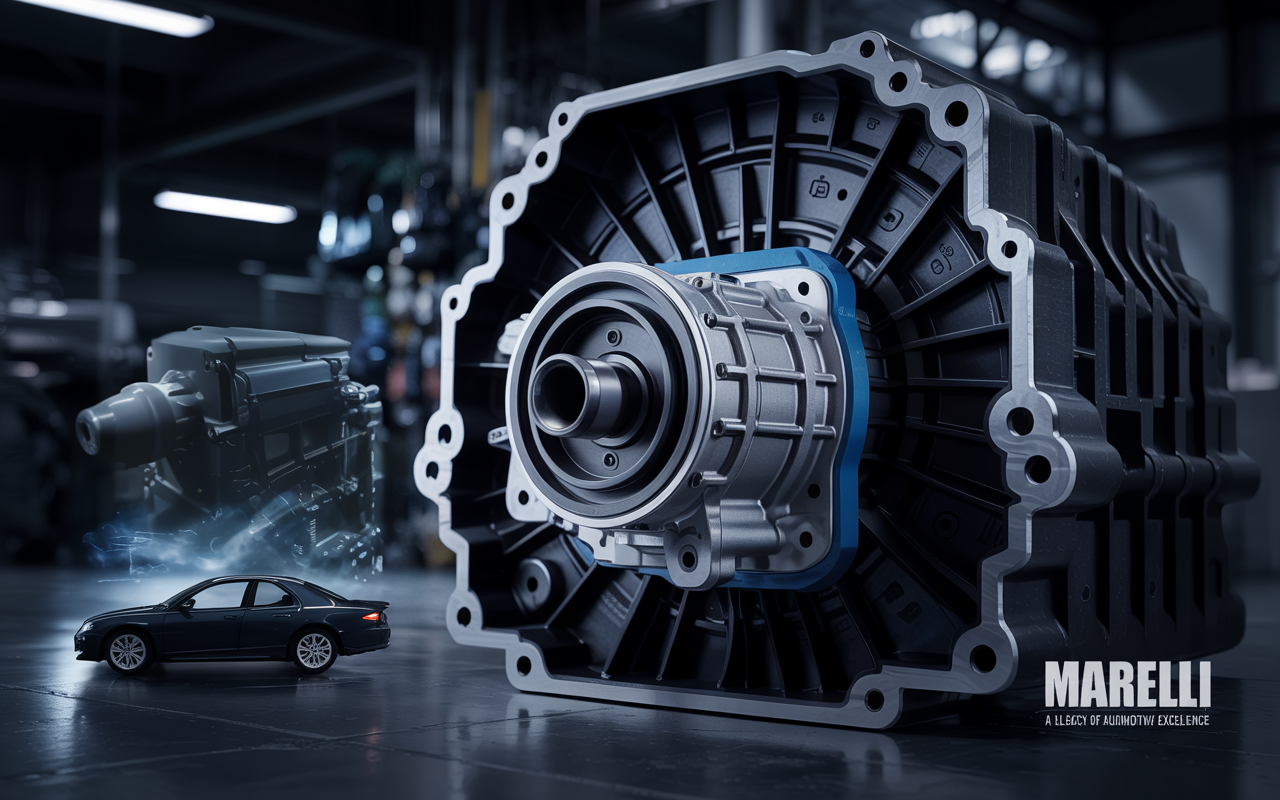
With Global Presence and Contracts with Automakers such as Stellantis and Nissan, Marelli Faces an Unprecedented Crisis. Understand the Reasons That Led One of the Largest Auto Parts Suppliers in the World to File for Bankruptcy and the Impacts on the Automotive Sector
Marelli, one of the largest auto parts suppliers in the world and a direct partner of automakers such as Stellantis and Nissan, has filed for judicial protection against bankruptcy in the United States. The announcement, made on June 11, 2025, revealed an accumulated deficit of approximately US$ 5 billion, caused by a series of economic, geopolitical, and sectoral factors that eroded the company’s financial health.
With a global presence and more than 170 operational units across various continents, Marelli had been facing difficulties since the Covid-19 pandemic. The company, which provides electronic components, lighting systems, and automotive modules, is now seeking to ensure its survival through a restructuring plan, which includes debt conversion and the entry of new investors. The proposal has the support of about 80% of senior creditors and aims to maintain part of its operations.
Factors That Led to the Financial Collapse of the Auto Parts Supplier
Marelli has become an example of the difficulties faced by automotive suppliers in a scenario of technological transition, logistical challenges, and global trade tensions. Three major factors were decisive for its crisis:
-
Engineers propose a fourth traffic light for intersections – the change promises to affect crossings, queues, and waiting times.

-
Chevrolet Suburban Z71 lands in Brazil with a V8 engine, off-road design, air suspension, seven seats, and colossal size, a rare version imported for around R$ 1.3 million with luxury and exclusivity.
-
The Chevrolet Onix 1.0 turbo achieves 17.7 km per liter on the highway and ranks among the three most economical cars in Brazil in 2026, alongside two more expensive Toyota hybrids available at dealerships.
-
Little sister of the Hilux: Toyota launches Land Cruiser FJ with 4 radical versions, 2.7 engine with 166 hp and 4×4 traction with locking.

First, the global pandemic severely impacted the automotive sector. The disruption in supply chains, semiconductor shortages, and rising transportation costs profoundly affected the company’s operations. With industrial units spread across Asia, Europe, and America, Marelli faced a significant increase in its operational costs, while demand for components fell.
The second factor was the impact of trade tariffs imposed by countries like the United States. The company was particularly affected by import tariffs implemented in recent years, which severely impacted automotive components manufactured outside the U.S. This drastically reduced the competitiveness of its products in strategic markets, directly affecting its contracts with automakers.
Finally, the slowdown in the transition to electric vehicles compromised much of the company’s medium and long-term strategy. Although several manufacturers announced ambitious electrification plans, mass adoption took longer than expected. Many companies, including Stellantis, reduced or postponed orders for electronic components for electric vehicles, which directly impacted the volumes ordered from Marelli.
Global Structure and the Weight of Debt for Nissan and Stellantis Partner
Marelli was born from the merger, in 2019, between Calsonic Kansei from Japan and Magneti Marelli, then owned by Fiat Chrysler. Since then, it has operated under the Marelli name and has become a significant auto parts supplier in the global market.
However, the aggressive growth project was sustained by a high level of debt. Over time, this liability became unsustainable. The accumulated deficit of US$ 5 billion, disclosed in documents submitted to U.S. courts, reflected not only operational losses but also growing financial burdens from exposure to international loans.
According to sources interviewed by the Wall Street Journal, the company tried, over the last two years, to cut costs and renegotiate debts but without success. The deterioration of the business environment and the decline in investor confidence accelerated the collapse process.
Restructuring: Plan Calls for New Capital Injection
The request for judicial protection aims to allow Marelli to restructure its operations and finances without being immediately pressured by creditors. The plan, which has the support of approximately 80% of senior debt holders, includes the following main measures:
- Conversion of part of the debt into equity, with reconfiguration of the company’s corporate structure;
- Raising up to US$ 1 billion in new funding from investment funds and strategic partners;
- Renegotiation of supply contracts with clients such as Stellantis and Nissan, with revisions of deadlines and volumes;
- Sale of non-essential assets, such as underperforming production units or idle real estate;
- Adjustments to the operational structure, including possible layoffs and relocation of activities to more advantageous regions.
The goal is to allow the company to continue operating, fulfilling commitments to clients and maintaining a relevant part of its productive base and jobs.
Impacts for Nissan, Stellantis, and the Global Automotive Supply Chain
The collapse of Marelli raises important concerns in the global automotive industry. The company was an essential supplier for several automakers, and its bankruptcy could cause cascading impacts on the supply chain.
Stellantis, which relies on various modules and systems supplied by Marelli, is already exploring alternatives to minimize the risks of supply shortages. Nissan, for its part, is also monitoring the developments and evaluating ways to protect its production in markets such as Japan and the United States.
With Marelli facing uncertainties, other auto parts suppliers may fill the void left by it, especially Asian companies with strong production capabilities and lower costs. However, the process of approving new suppliers can be lengthy, and there is no guarantee that the quality standard will be maintained.
Furthermore, the situation creates a new pressure point on component prices, which may affect the final costs of vehicles and, consequently, consumers.
What Marelli’s Bankruptcy Teaches About Industry Risks
Marelli’s bankruptcy is more than an isolated case: it serves as a warning about the growing risks faced by companies in the automotive sector, especially those acting as auto parts suppliers.
The current scenario requires companies not only to have financial solidity but also operational flexibility, strategic vision, and capacity for innovation.
The excessive dependency on contracts with large automakers, combined with vulnerability to economic and geopolitical fluctuations, has become a risky equation for companies like Marelli.
The case shows that even large groups with a global presence and decades of history can succumb to an unfavorable combination of external factors and poorly calculated strategic decisions.
Long-Lasting Impact and Changes Ahead
Marelli’s bankruptcy filing is expected to have lasting effects on the sector. In addition to the adjustments required in the production chain of automakers, there will also be a redesign in supply and production strategies for critical components.
Companies like Stellantis and Nissan are likely to accelerate supplier diversification processes and may invest in their own verticals to reduce exposure to external risks. Other players in the sector will need to more cautiously assess their leverage levels, cost structures, and responsiveness to crisis scenarios.
The bankruptcy of Marelli sends a clear message: in a rapidly transforming sector, survival depends not only on scale but on strategic intelligence, constant innovation, and adaptability. This case will become a reference in the coming years — and a mandatory study for leaders and analysts in the automotive industry.








-

Uma pessoa reagiu a isso.