





 English
  Francês
  Alemão
  Italiano
  Japonês
  Norueguês
  Portuguese
  Spanish
  5 min of reading
  0 comments


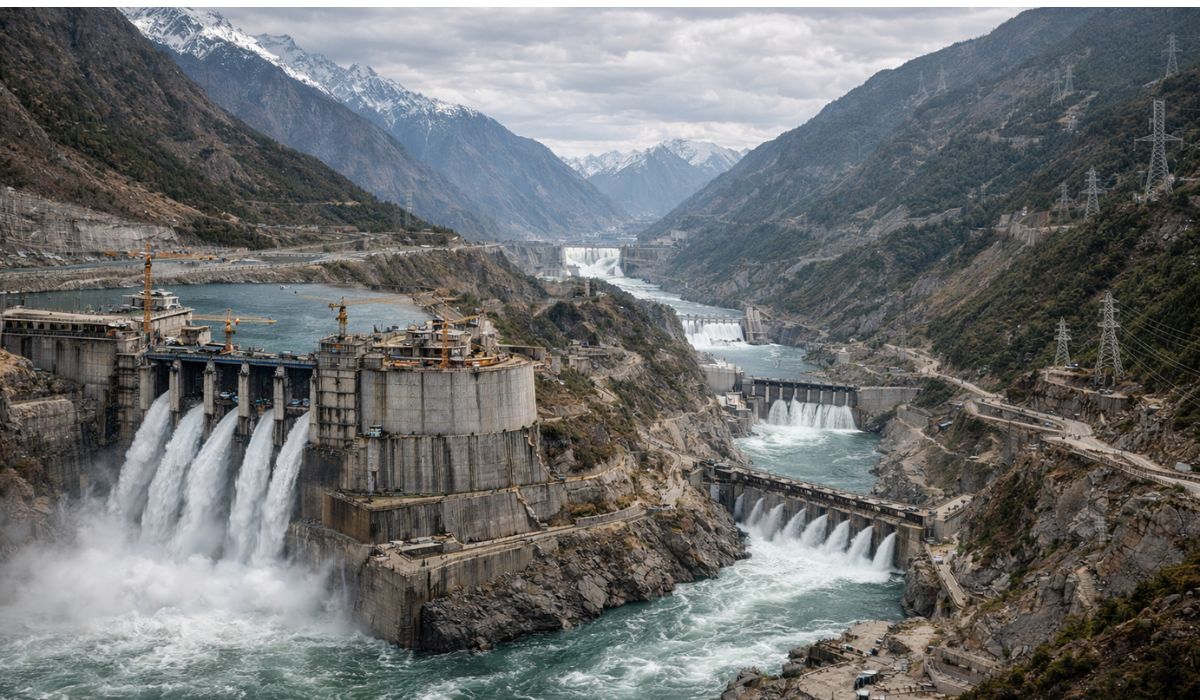
A Hydroelectric Megaproject In Tibet Puts China Back In The Center Of The Global Debate On Energy, Environmental Impacts And Extreme Physical Effects, When Compared To The Three Gorges Dam And Scientific Calculations On The Redistribution Of Large Masses Of Water On The Planet.
China has begun a hydroelectric megaproject on the Yarlung Zangbo River in Tibet, which is set to consist of five cascading power plants and generate around 300 billion kWh per year, according to information released by the Chinese state agency Xinhua and reproduced by international media.
The project, estimated at around US$ 170 billion, a value that in widely reported conversions corresponds to about R$ 875 billion, has once again attracted global attention due to its scale and comparisons with the Three Gorges Dam, which is still considered the largest in the world.
The discussion has also brought back to the debate an effect associated with large dams: the redistribution of large masses of water, which, according to scientific calculations, can cause extremely small changes in physical parameters of the planet, such as the length of the day and the position of the rotation axis.
-
Equatorial adopts new national number for consumer units on electricity bills starting in April, following ANEEL standards and modernizing energy bills in several states.

-
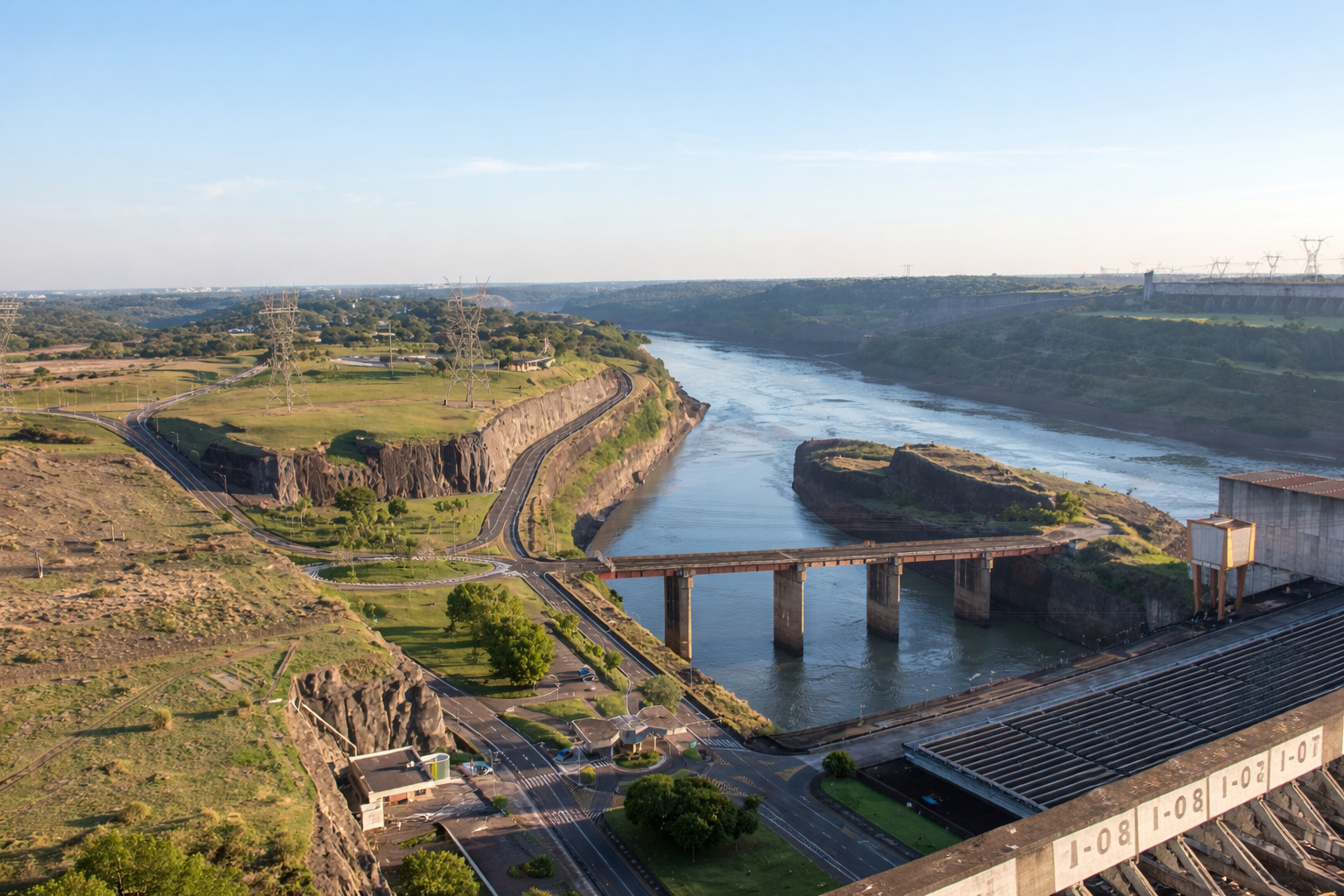
Itaipu Impresses the World: Hydroelectric Plant with 20 Turbines and 14,000 MW Generates Over 2.9 Billion MWh and Leads Global Clean Energy Production
-
Aneel Revokes CMAA Thermal Power Plants After Network Restrictions and Excess Energy in the System

-
13-Year-Old Scientist Creates Clean Energy Device For Just R$ 16, Wins $25,000 Prize And Surprises The World With Affordable Solution


Three Gorges Dam And Earth Rotation
The link between mega-dams and the rotation of the Earth is often associated with the Three Gorges Dam, built on the Yangtze River.
The physical principle cited by researchers is that the concentration of large volumes of water in a single reservoir alters the planet’s moment of inertia, which can result in minute variations in rotation.

In 2005, geophysicist Benjamin Fong Chao from NASA’s Goddard Space Flight Center estimated that, with the reservoir fully filled, the Three Gorges could increase the day length by about 0.06 microseconds.
In calculations later released in scientific outreach materials, the same phenomenon was associated with an approximate shift of 2 centimeters on the Earth’s axis, a value considered imperceptible in everyday life.
These estimates do not refer to an observable measurement in day-to-day life but to theoretical calculations based on mass redistribution.
Experts explain that this type of variation can occur whenever large volumes of water, ice, or rocks are displaced, whether by human action or natural processes such as earthquakes and glacier melting.
Reservoir Capacity And Known Impacts
The reservoir of the Three Gorges Dam has a capacity of around 39 billion cubic meters of water, according to technical data widely disseminated in international studies and reports.
This volume helps explain why the work is often cited as a reference when discussing the global physical impact of structures built by humans.
In addition to theoretical discussions about the planet’s rotation, the dam is also known for direct and widely documented effects, such as the displacement of populations, environmental changes along the Yangtze River, and geological concerns in surrounding areas.
These impacts, however, are mainly concentrated in the region of the work and have no practical relation to the microscopic variation in the Earth’s rotation time.
New Hydroelectric Power Plant In Tibet And Regional Tensions
The new hydroelectric complex announced for the Yarlung Zangbo River is located in a strategically considered area.
The watercourse originates in the Tibetan plateau and, upon crossing borders, is called Brahmaputra, supplying millions of people in India and Bangladesh.


For this reason, authorities and specialists from these countries have expressed concern about possible impacts on the river’s flow, sediment transport, and water resource management.
International reports also highlight that the region has a history of seismic activity, which reinforces attention to safety and engineering standards adopted in the project.
The Chinese government claims that the work is part of its strategy to expand the clean energy matrix and that environmental and cross-border impacts will be controlled.
Still, analysts consulted by news agencies point out that the lack of detailed information about the project contributes to the caution of downstream countries.
Project Scale, Energy Generation And Timeline
Described by Chinese authorities as the largest hydroelectric project ever planned in the country, the complex in Tibet is expected to surpass the installed capacity of the Three Gorges.
The announced target is to produce around 300 billion kWh per year, a volume sufficient to serve large urban centers and reduce the use of fossil sources, according to official data.
Despite the announced magnitude, public information about the detailed timeline, the number of potentially displaced people, and complete environmental studies is still limited in international reports.
What is known, based on official statements, is that completion is expected in the next decade, following the pattern of long construction periods observed in similar projects in China.
Scientific Debate On Global Physical Effects
When the topic of the planet’s rotation arises in connection with the new undertaking, experts often emphasize that the most cited data to date refers to estimates made in the context of the Three Gorges Dam.
There is currently no release of specific and official calculations indicating what the potential impact of the new Tibet reservoir would be on the same parameters.
Researchers explain that, in scientific terms, any significant mass redistribution on the Earth can generate measurable effects on extremely small scales.
Still, these variations remain theoretical and do not produce perceptible changes in the duration of days or in the daily lives of the population.
Given the project’s magnitude and its location on an international river, the debate tends to focus less on microseconds on the clock and more on practical issues such as safety, transparency, and cooperation among countries that share the same watercourse.









-

-

-

-

-

-

64 pessoas reagiram a isso.