





 Portuguese
  English
  Spanish
  5 min of reading
  2 comments


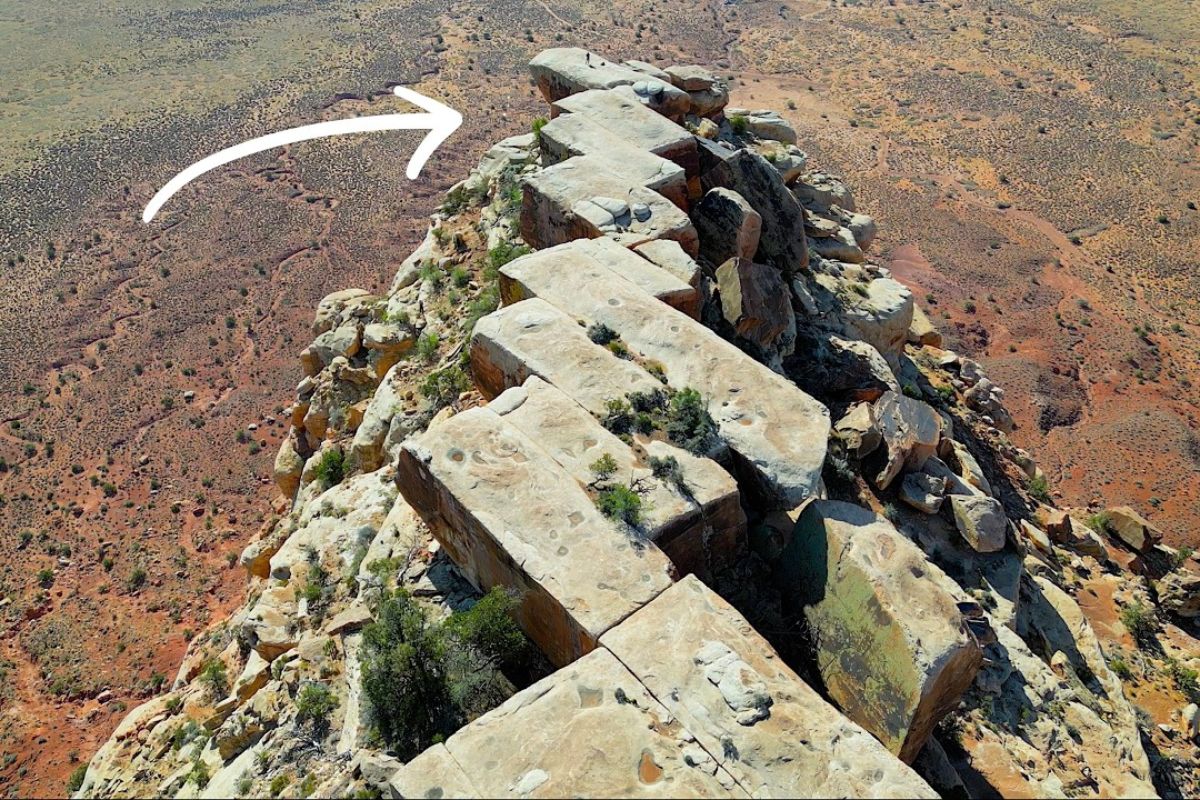


On The Edge Of A Cliff, The Rock Formation Appears As A Zigzag Of Rectangular Blocks Projected Into The Void. Improvised Measurements Indicated Sides Between 20 And 22 Feet And Height Near 18. With Navajo Sandstone At 135 Pounds Per Cubic Foot, The Block Reaches 1.1 Million Pounds Alone
The rock formation drew attention for an unusual reason: viewed from above, on Google Earth, it looked like a sequence of almost perfect rectangles jutting out from the cliff, as if the landscape had “broken” on the map. Upon approaching, the impression of “error” turned into geological surprise, with marked corners, flat faces, and a pattern that deceives the eye at first glance.
On site, the rock formation was observed from various angles, with details recorded that the satellite does not deliver: blocks with slightly bulging tops, edges broken at fracture points, and a scale large enough to require a 100-foot tape measure, improvised adaptations, and weight estimates based on the density of Navajo sandstone.
The “Bug” That Was Not A Bug: The Rectangular Pattern Seen From Above

The scene begins with a search on Google Earth for a specific section of the cliff, where a zigzag pattern composed of rectangular blocks seemed to hover in space. The contrast was so strong that the first visual hypothesis was simple: it looked “too perfect” to be natural.
-
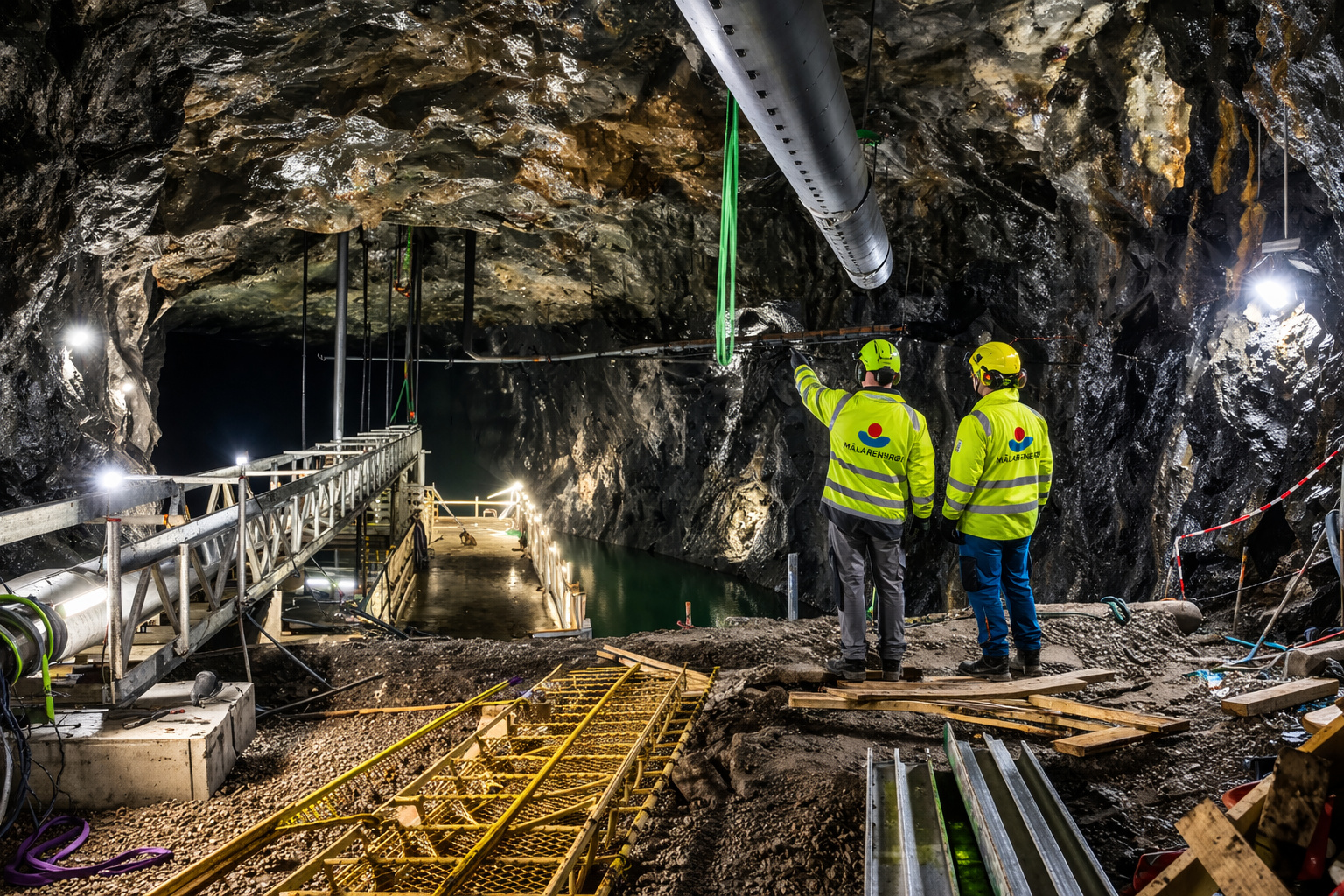
With a volume of 300,000 cubic meters, an old oil depot is transformed into a giant thermos, heating an entire city in Sweden and potentially changing the way energy is stored worldwide.
-
Brazil is chosen as a global laboratory against plastic waste in a project that could last up to 7 years with tens of millions of dollars in investment to prove that the circular economy works on a continental scale.

-
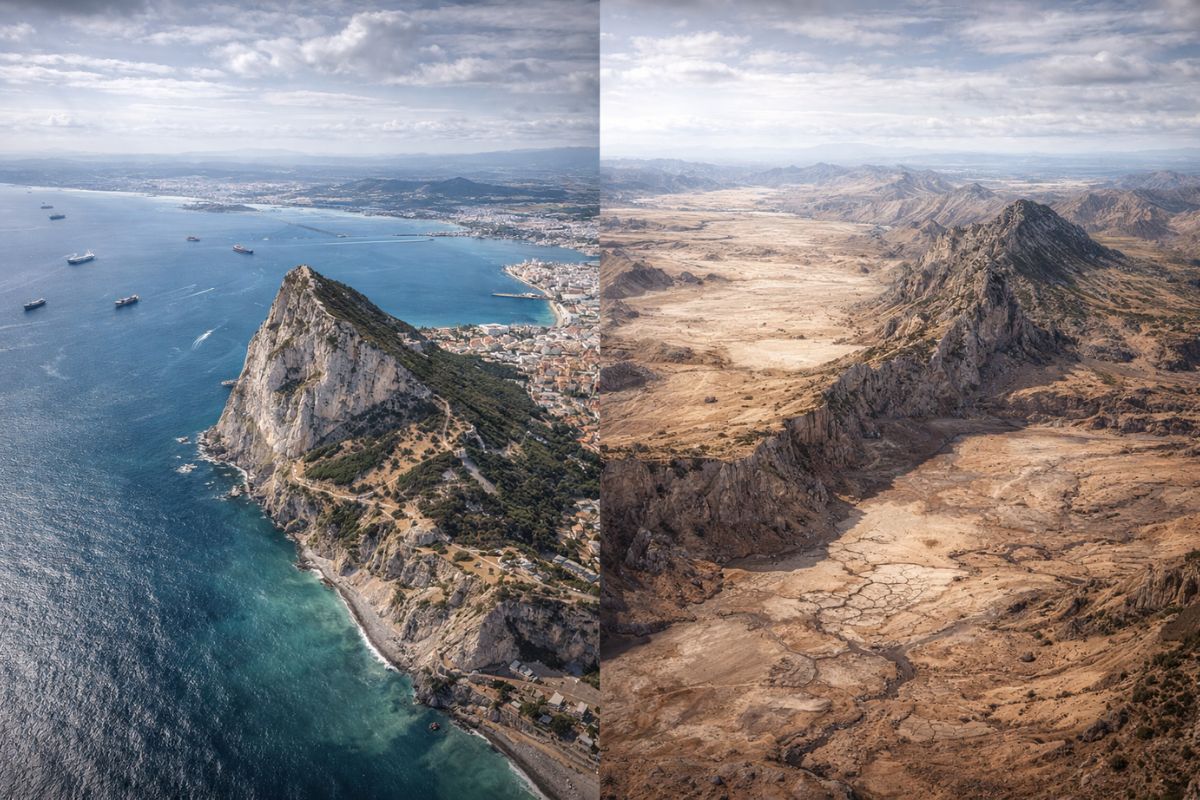
A new study suggests that the Strait of Gibraltar may disappear because the rocks beneath it are triggering a subduction process that could reshape the entire Atlantic Ocean in the next 20 million years.
-
There is a little-known function that allows you to earn a salary in dollars working from home without knowing anything about programming, and Brazilians are already making up to R$ 35,000 per month organizing inventories and routes for American companies.


When the approach happened on foot, the expectation of the perfect rectangle was adjusted by the reality of the terrain. The blocks were very rectangular, but not “mathematically” perfect: there was a slight “bump” on top and small deformations and breaks on the edges, the kind of detail that only appears when looking at the rock up close.
The Arrival At The Cliff And The Shock Of Scale To The Naked Eye

The journey to the observed point required crossing partially abandoned dirt roads and accessing a different section of the cliff, described as greener and more “alive” than other areas seen before. From there, the target became visible from a distance: a sequence of blocks with marked edges and faces reminiscent of giant puzzle pieces.
The visual impact is in the proportion. The edges “jump out” from the wall, and the edge of the cliff delivers a particularly eye-catching block, where the interest lies not in the apparent upper layer, but in what supports the geometry underneath. It was there that the attempt began to find something even rarer: a “perfect cube” hidden along the escarpment.
On-Site Measurement: Tape, Improvisation And Numbers That Nearly Close A Cube

The size check was made with what was available. The 100-foot tape, which would be the ideal instrument, did not work as expected. The alternative was to use a 10-foot pole associated with visual reference and support points to estimate the length of the faces.
The results came close to a nearly cubic block on a gigantic scale. The reported measurements indicated walls in the range of 20 and 22 feet, with readings like 20 feet on one side, 21 on another, 20 on another and 22 on another, while a later review suggested that the height could be closer to 18 feet. The detail that reinforces the impression of “almost cube” is that the difference preventing perfection comes from small distortions and a bump in a lower corner, something that, if it “disappeared”, would bring the shape even closer to that of an ideal cube.
How Much Does A Block Like This Weigh And Why The Comparison To An Airplane Makes Sense

With the dimensions in hand, the weight estimate was built from an objective parameter: the density of Navajo sandstone, indicated as about 135 pounds per cubic foot. With that, the mass of the block was estimated at approximately 1.1 million pounds.
To convey the scale, the comparison was direct: heavier than a fully loaded Boeing 747, and equivalent to the approximate weight of 14 fully loaded semi-trucks. Here, the point is not laboratory accuracy, but rather the size of the physical problem that a single block represents when it is suspended and wedged on the edge of a cliff.
The Risk Of Fall: 1200 Feet Of Elevation And Impact Energy
The scenario becomes even more extreme when the inevitable hypothesis in an unstable wall comes into play: fall. The projection considers a tumble with a displacement of about 1200 feet to the bottom, with impact energy estimated at 1.8 billion joules.
This energy has been described as comparable to half a ton of explosives, or the energy associated with a “bunker buster” type device, a way to scale the impact without relying on abstract numbers. The technical message is simple: a block of this mass, falling from a height of this size, becomes a destructive physical event by definition.
The Geological Explanation: Why Nature Produces “Giant Rectangles”
Despite the “impossible” appearance, the interpretation pointed out is geological and recurring: natural joining, a pattern of fractures that can generate flat surfaces and marked angles, repeating geometries along entire cliffs. In this case, the visual effect is reinforced by perspective, by the alignment of the blocks and by how the fractures segment the sandstone into large “pieces”.
The result is a landscape that seems artificial because the mind associates rectangles and sharp corners with human construction. However, the pattern is attributed to natural processes that, when acting for a long enough time and under the right conditions, can produce repetition, alignment, and relatively flat faces on a monumental scale.
The Search For The “Perfect Cube” And What Is Still Missing To Find
Even with a nearly cubic block documented, the search was not concluded. The on-site assessment indicated mild frustration for being “so close” to the perfect cube, but still having one face longer than the others and a relief that breaks symmetry.
The final promise is objective: to return and continue looking for another point on the cliff where the geometry is even cleaner. What has been seen indicates that the pattern repeats, and that the chance of finding a block even closer to the cube exists, especially on an extensive escarpment with many rectangular segments.
In your view, should a rock formation like this be treated as a controlled tourist attraction or as a restricted access area due to real fall and instability risks?









Incrivel
Assim