





 Portuguese
  English
  Spanish
  3 min of reading
  0 comments


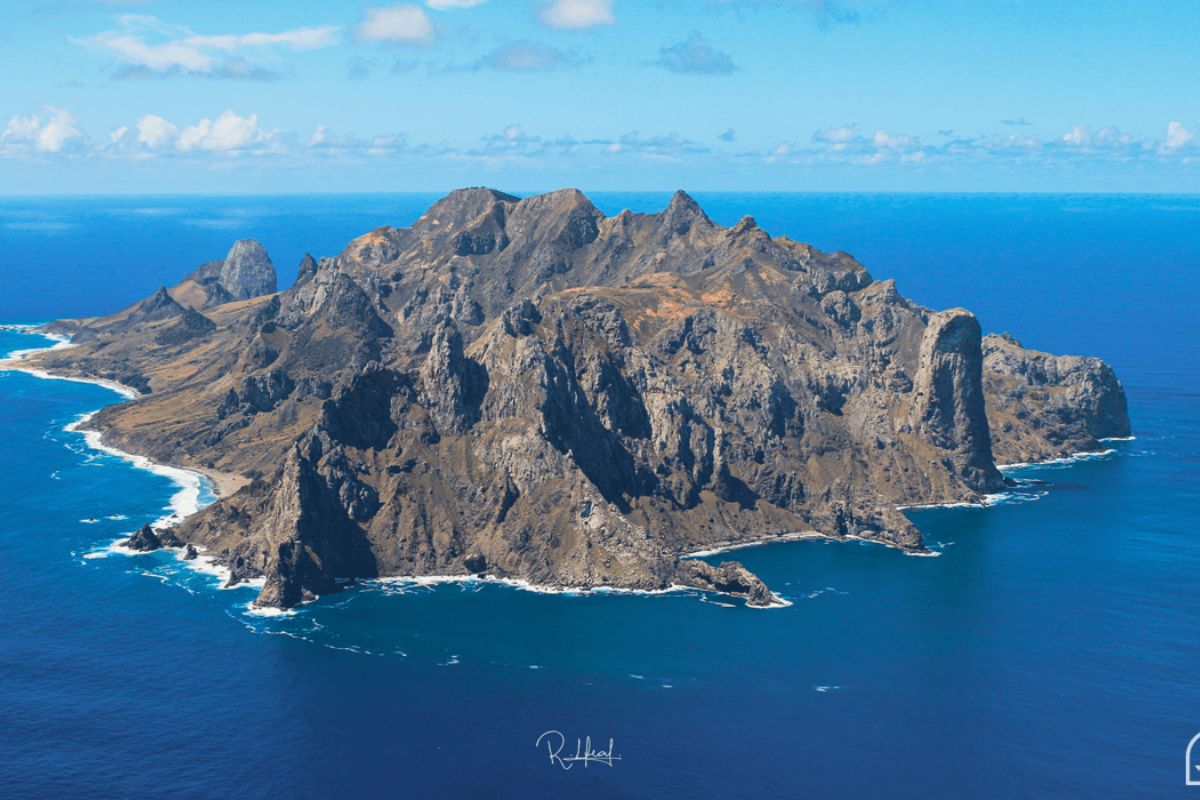
Legends Speak of a Brazilian Magnetic Island Capable of Disorienting Compasses and Diverting Aircraft. We Investigate Trindade Island and the Science Behind These Alleged Extraordinary Phenomena.
The idea of a Brazilian magnetic island, a mysterious place that drastically interferes with navigation, fills the popular imagination. Reports of compasses “going crazy” and planes diverting from their routes create an aura of enigma. But, would such an island exist in national territory capable of such feats?
Scientific investigations point to Trindade Island, a remote volcanic formation in the Atlantic, as the likely candidate for this fame. This article explores the geology of Trindade and the facts behind the legend of the Brazilian Magnetic Island.
Brazilian Magnetic Island

Located approximately 1,100-1,200 km from the coast of Espírito Santo, Trindade Island is the youngest volcanic manifestation of the Vitória-Trindade Chain. Its geological formation is complex, a result of multiple volcanic episodes, the most recent occurring around 300,000 years ago. The predominant rocks are alkaline, such as phonolites and nepheline syenites, and studies have confirmed a significant presence of ferromagnetic minerals, such as magnetite and titanomagnetite.
-
A couple buys an old chalet, breaks the kitchen floor for renovation, and finds over a thousand coins of gold and silver hidden since the English Civil War over 4 centuries ago.

-
Rigid bags with their days numbered: new trend prioritizes comfort in 2026.

-
YouTuber creates an excavator equipped with a giant 4.5-meter sword to challenge his brother to a rematch, and the invention quickly goes viral on social media.

-
The U.S. Army surprises the world by presenting the UH-60MX Black Hawk helicopter capable of flying without pilots, controlled by a tablet, featuring the MATRIX system, smart sensors, and full autonomy in real combat and rescue missions.


These minerals give the island’s rocks the ability to generate or alter the local magnetic field, mainly through the thermoremanent magnetization acquired during the cooling of the lavas. This is the geological basis for Trindade’s potential to be considered a Brazilian Magnetic Island.
Earth’s Magnetic Field
The Earth’s magnetic field, generated in its core, can present local variations in the crust, known as crustal magnetic anomalies. A volcanic island like Trindade is naturally expected to be a source of such anomalies. It is crucial, however, to distinguish these local disturbances from the South Atlantic Magnetic Anomaly (SAMA).
The SAMA is a vast area of weakening of the primary magnetic field, originating from the Earth’s core, primarily affecting satellites. Although Trindade Island is located in the SAMA region, the magnetic effects that could be felt locally would primarily be due to its own geology. Paleomagnetic studies and magnetic susceptibility anisotropy (MSA) studies on the island confirm the magnetic nature of its rocks.
Compasses “Going Crazy” and Diverted Aircraft
Theoretically, strong local magnetic anomalies can affect magnetic compasses, causing deviations or erratic behavior. However, modern navigation systems like GPS are not directly affected by crustal magnetic fields, although geomagnetic storms (potentially more intense in the SAMA) can cause inaccuracies in GPS signals.
A rigorous investigation of the available data does not reveal official reports from the Brazilian Navy or DECEA documenting serious navigation incidents unequivocally attributed to magnetic anomalies of Trindade Island. Nautical and aeronautical charts of the region indicate the standard magnetic declination, but there are no specific alerts about extraordinary disturbances that would make Trindade a dangerous Brazilian Magnetic Island for routine navigation.
Pirate Treasure at the “Brazilian Magnetic Island”
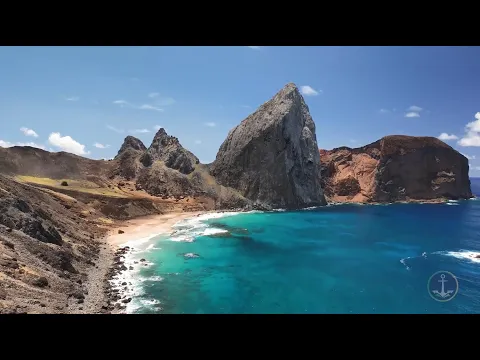

Trindade Island, remote and volcanic in appearance, is fertile ground for legends. Stories of hidden pirate treasures, such as the “Treasure of Trindade”, are famous and contribute to its aura of mystery. It is possible that navigation difficulties faced by past navigators, with more rudimentary instruments, were attributed to mysterious forces and incorporated into folklore.
The narrative of the Brazilian Magnetic Island may be a modern manifestation of these legends, where real volcanic geology and the existence of the SAMA provide a “scientific” veneer to older tales of an “enchanted” island.










Seja o primeiro a reagir!