





 Portuguese
  English
  Spanish
  7 min of reading
  0 comments


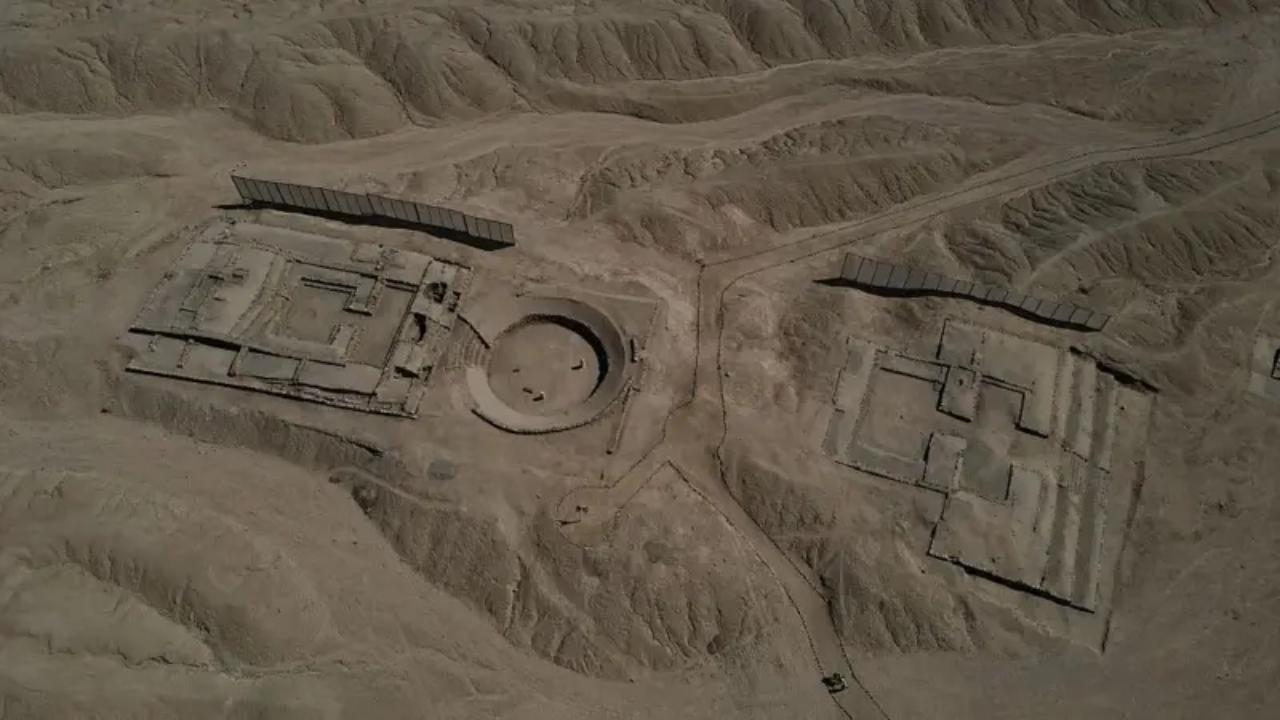
After A 130-Year Drought That Collapsed Caral, A Group Is Said To Have Climbed The Valley And Founded Peñico At 600 Meters Above Sea Level, Closer To Glacial Water, And The Change Suggests Survival By Adaptation Without Signs Of Warfare
Four hours north of Lima, the Supe Valley appears to be an unwelcoming place. The ochre-hued slopes, wind-swept plains, and crumbling adobe walls give a feeling of abandonment. In the desert heat, the air shimmers above the sand, making it hard to imagine that, at another time, this landscape supported one of the oldest urban experiences on the planet.
Even so, it was precisely from there that a discovery emerged capable of shaking the narrative about the origins of civilization on the American continent.
In July 2025, Peruvian archaeologist Ruth Shady announced the finding of Peñico, a city about 3,800 years old, attributed to the ancient Caral civilization. The recently excavated site contains 18 structures, including temples for ceremonies and residential complexes.
-
Friends have been building a small “town” for 30 years to grow old together, with compact houses, a common area, nature surrounding it, and a collective life project designed for friendship, coexistence, and simplicity.

-
This small town in Germany created its own currency 24 years ago, today it circulates millions per year, is accepted in over 300 stores, and the German government allowed all of this to happen under one condition.

-
Curitiba is shrinking and is expected to lose 97,000 residents by 2050, while inland cities in Paraná such as Sarandi, Araucária, and Toledo are experiencing accelerated growth that is changing the entire state’s map.

-
Tourists were poisoned on Everest in a million-dollar fraud scheme involving helicopters that diverted over $19 million and shocked international authorities.


More than expanding Peru’s archaeological map, Peñico also offers a noteworthy data point: new evidence that the Carals responded to a severe climate crisis with adaptation, and not warfare. For researchers, this choice of survival seems as remarkable today as it must have been millennia ago.
“Peñico continues the Caral vision of a life without conflicts,” says Shady, who has been studying the Supe Valley for about three decades.
The Peaceful Cradle Of The Americas
In pre-Columbian history, long before the Incas, Mayans, and Aztecs dominated popular imagination, the arid coastal strip of Peru was home to the Caral people, often described as one of the oldest and least warlike societies known in the Americas.
The main core of this tradition, Caral-Supe, is viewed by many archaeologists as a founding milestone of civilization on the continent. The site received recognition from UNESCO in 2009 and thrived about 5,000 years ago, at a time comparable to the emergence of urban centers in Egypt and Mesopotamia.
“Caral was occupied between 3,000 B.C. and 1,800 B.C.,” explains Shady. But in contrast to cities of the Old World, the site does not exhibit the same defensive pattern: there were no robust walls and, as far as is known, there is a lack of clear evidence of weapons.

When Shady began excavating Caral in 1994, she started advocating for the image of a society organized around trade, music, collective rituals, and decisions based on agreements.
Research suggests that around 3,000 people lived in Caral, along with a network of small villages in the vicinity. The position of the Supe Valley helped connect the Pacific coast to fertile Andean valleys and beyond to the Amazon, forming routes for the exchange of goods, ideas, and cultural practices.
The Carals cultivated cotton, sweet potatoes, pumpkins, fruits, and peppers, exchanging part of this production for ores from the mountains and for animals and artifacts from distant regions. There are reports that squirrel monkeys and Amazonian macaws were even kept as pets. On the coast, their diet was supplemented with shellfish, seaweed, and fish.
“They connected with people from the forest, mountains, and even areas that today would be Ecuador and Bolivia — and, it seems, without resorting to violence,” says Shady. For her, this contrasts with later societies, such as the Incas, Mayans, and Aztecs, which structured themselves as militarized states and often expanded power through campaigns against neighbors.
Music, Architecture, And Exchange Networks
The Caral creativity was not limited to agriculture and trade; it was also evident in how they constructed and celebrated.
An amphitheater identified in Caral, for example, is thought to have been designed to withstand tremors, a relevant detail in a region influenced by the Pacific Ring of Fire. Moreover, the design of the space favored acoustics, allowing for collective performances.
Previous excavations revealed 32 transverse flutes, some made from pelican bones, others adorned with figures like monkeys and condors. For Shady, this collection is not merely artistic: it indicates long-distance contacts and cultural diversity.
“These instruments seem to have been used to welcome people from the coast, mountains, and forest in rituals and ceremonies,” she says.

Collapse In The Desert
Despite its sophistication, Caral had to deal with an adversary that no social organization can fully control: the climate.
About 4,000 years ago, a period of drought is said to have lasted about 130 years, associated with broader environmental changes that also affected regions of the Middle East, North Africa, and Asia.
The impact on the Supe Valley was devastating. With weaker rivers and fields, agricultural production collapsed, famine spread, and many inhabitants left behind pyramids and monumental squares.
“Climate change triggered a crisis in Caral,” says Shady. “The rivers and farming areas dried up. It was necessary to abandon urban centers, something that also occurred in Mesopotamia.”
For years, Shady’s team maintained that survivors migrated to the coast, where food could still be obtained through fishing and gathering. Work in Vichama, in the neighboring Huaura Valley, seemed to reinforce this hypothesis.
But Peñico adds nuance to this story.
Survive By Changing, Without Waging War
Located upstream from Caral, about 600 meters above sea level and approximately 10 km from the Caral-Supe center, Peñico suggests that part of the population opted for another solution: moving to areas closer to water sources supplied by glacial melt.
In a scenario where waterways dried up, being closer to the melting of the mountains could mean the difference between disappearing and continuing to exist.
The most surprising aspect, for the archaeologists, is not just the change of location — but how it happened. So far, no evidence of wars, weapons, or fortifications have emerged in Peñico, something unusual for societies in times of scarcity.
“Peñico maintains the Caral tradition of living in harmony with the environment and relating to other cultures with respect,” says Shady.
The excavation also revealed a set of objects associated with rituals and artistic expression: crafted clay dolls, bead necklaces, and carved bones, including one in the shape of a human skull. Among the pieces, one sculpture stands out, representing a female head with an elaborate hairstyle and red pigmentation on the face, made from hematite.
These findings indicate that, even with a smaller population, the community invested in symbols, ceremonies, and art as tools of cohesion and continuity.

An Open Site To The Public, And Still Revealing
Today, the archaeological site is open for visitors, who can walk among ceremonial temples and residential areas. A newly established visitor center, with interpretive exhibits, features a circular design that refers to one of Caral and Peñico’s most intriguing marks: the round plazas.
These plazas appear in specific sectors of the cities, which researchers associate with administrative areas. For some archaeologists, this may point to a model of organization based on negotiations and consensus, a type of collective functioning that vaguely resembles governance ideas that would only become known much later, as in ancient Greece.
Local guide Gaspar Sihue encourages tourists to visit Caral while the destination is still off the main circuit.
“I like to take people to the Supe Valley because it’s far from the traditional route,” he says.
Shady, in turn, gives a warning: excavations in Peñico are recent, and many structures remain covered by sand and sediment. “There is still much to learn,” she asserts.
Ancient Lessons For A Current Problem
Looking at the plazas and walls of Peñico, it is hard not to think about the response this society gave to an extreme crisis: reorganizing, changing places, preserving exchange networks, and maintaining ritual and cultural life, without turning scarcity into war.
It is a lesson 3,800 years old that resonates in the present. Peru still depends on the Andean glaciers for water supply, but data cited in the text indicate that the country has lost 56% of tropical ice in just under six decades.
“We have a lot of work ahead in light of climate change,” says Shady. “We need to change the way we view life and the transformations of the planet so that society can continue with quality and mutual respect.”
Even still partially buried in the desert, the newly revealed city seems to send a message beyond Peru: cooperation and adaptation can be as decisive as strength and conquest.
Photo Caption: The circular visitor center allows for guided tours and interpretative exhibitions
How To Visit Caral And Peñico
Caral operates daily from 9 AM to 5 PM. The last tour usually starts at 4 PM.
Tickets include the local museum and may also cover nearby sites like Áspero and Vichama, with support from guides in the region. Many of these guides speak only Spanish, so it might be worth considering someone who can assist with translation if needed.
It is also advisable to go with someone who knows the way: after leaving the Pan-American Highway, access via the Caral-Ambar road can be confusing, with limited signage.
Local guides have been trained by Shady’s team and usually explain in detail themes such as social organization, religion, astronomy, and agriculture.
Peñico is about 11 km beyond Caral and follows the same visiting hours.
To Know More About Pre-Inca Peru
To the north of the Supe Valley, near present-day Trujillo, the ancient city of Chan Chan emerged around 850 A.D., linked to the Chimú people, famous for their pottery and for sailing in cane boats.
In Lima, places such as Huaca Pucllana and Pachacamac preserve remnants of coastal cultures that flourished approximately between 200 and 700 A.D.
To the south of the capital, the Nazca Lines remain one of the most impressive testimonies of a civilization that lived in the desert between about 100 and 800 A.D. and are often best observed in panoramic flights departing from Pisco or Nazca.










-

-

-

-

-

-

48 pessoas reagiram a isso.