





 Portuguese
  English
  Spanish
  5 min of reading
  0 comments


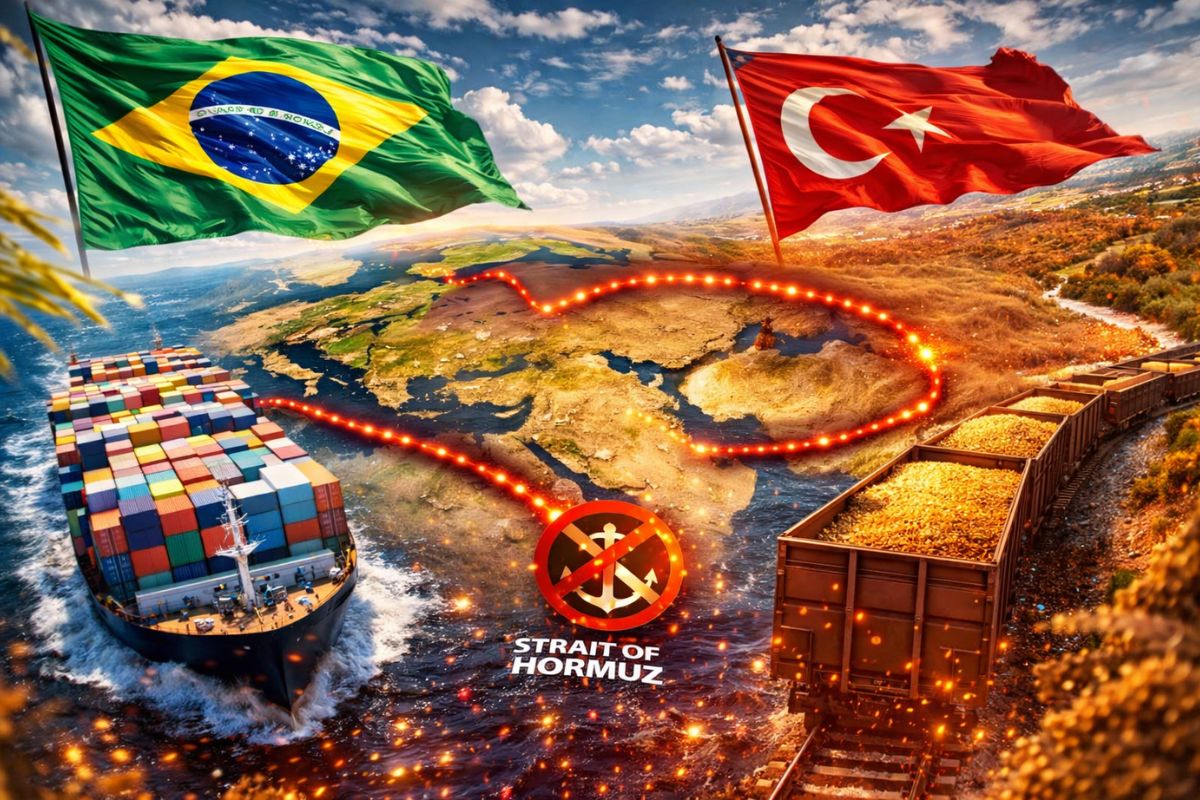
Brazil has reached an agreement with Turkey to create an alternative route that keeps meat and grain exports to the Middle East away from the Strait of Hormuz. The new route passes through Gibraltar and the Mediterranean, costs about 50% more, but ensures predictability for Brazilian agribusiness amid the conflict.
Brazil has activated an alternative route to keep its beef, chicken, and corn exports reaching the Middle East without having to pass through the Strait of Hormuz, where the conflict in the region has imposed logistical restrictions that threaten the flow of goods. The Ministry of Agriculture and Livestock has reached an agreement with Turkey that transforms the country into a distribution hub for Arab markets, receiving Brazilian products by sea and redistributing them via land and rail routes.
The new route has Brazilian ships passing through the Strait of Gibraltar, crossing the Mediterranean Sea, and docking at Turkish ports, from where the cargo continues by land or rail to the countries of the Middle East and Central Asia. The route is longer and approximately 50% more expensive than the conventional route through the Strait of Hormuz, but offers something that the traditional path cannot guarantee at this moment: price and market predictability for Brazilian agribusiness.
Why Brazil can no longer depend on the Strait of Hormuz
The Strait of Hormuz is one of the most strategic maritime passages in the world, through which a large part of global oil and goods trade destined for the Persian Gulf transits.
-
You grew up hearing that the good coffee from Brazil goes all abroad and the bad coffee stays for Brazilians, but this story has completely changed, and the numbers show that in the 1980s, thirty percent of the coffee sold here was adulterated with corn and barley.
-
Engineer creates reforestation method that transforms small plots into dense forests in a few years using local biomass and can reduce environmental recovery costs.
-
Alone, the producer applies 7,400 hectares with the T100 drone in an optimized structure, replaces the generator with a silent battery, and demonstrates how technology reduces costs, increases productivity, and even challenges the uniport in the field.

-
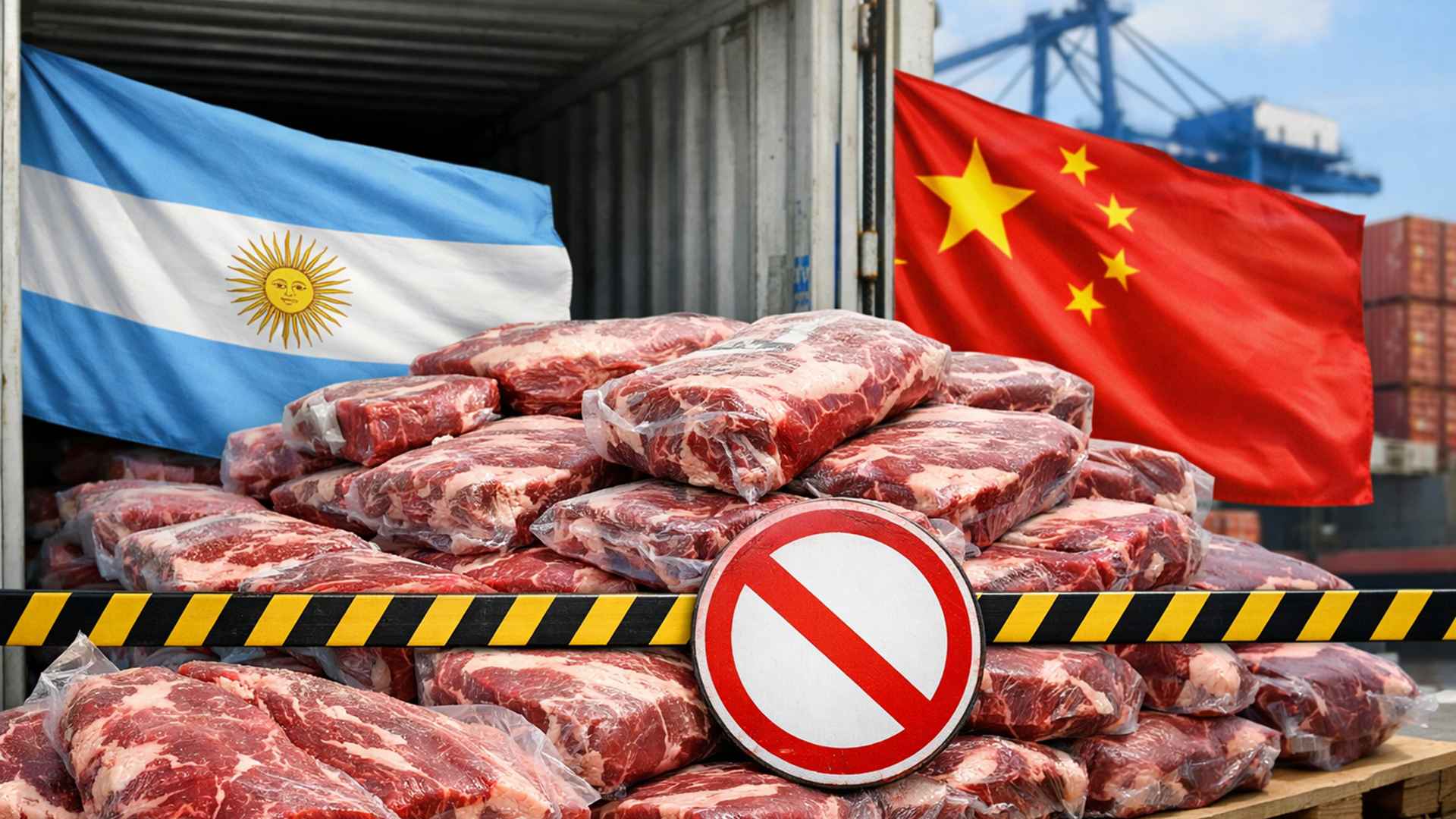
China banned the export of 22 tons of meat from Argentina.

The conflict in the region has made passage through the strait risky and unpredictable for commercial ships, forcing exporting countries like Brazil to seek logistical alternatives to avoid losing access to one of their largest markets.
For Brazilian agribusiness, the Middle East is not just any destination. The region absorbs between 30% and 40% of Brazilian corn exports and between 17% and 18% of meat exports, numbers that make it impossible to simply abandon this market while the crisis in Hormuz is resolved.
The decision to activate the route through Turkey was a measure to maintain trade flow even with high costs, preventing Brazilian producers from losing established customers.
How the new route from Brazil through Turkey works
The alternative route begins at Brazilian ports, goes through the Atlantic to the Strait of Gibraltar, enters the Mediterranean Sea, and ends at Turkish ports.
From Turkey, the products are redistributed via land and rail routes to countries in the Middle East and Central Asia, functioning as a regional distribution system that completely bypasses the passage through Hormuz.
This route already existed on a smaller scale; Brazil had been sending products to Turkey via this path. The novelty is the increase in volume and the transformation of the country into a redistribution platform for the entire region.
The agreement reached by the Ministry of Agriculture stipulates that Turkey will function as a logistics hub, receiving Brazilian cargo and ensuring the storage and forwarding of products to their final destinations in the Middle East.
The cost of 50% more and why Brazil decided to pay
The route through Turkey and the Mediterranean costs approximately 50% more than the conventional route through the Strait of Hormuz.
This increase is due to the greater distance, extended navigation time, and additional costs of transshipment and storage in Turkey. For Brazilian agribusiness, it is a high price, but it is justified in light of the alternative of losing access to markets that represent significant portions of national exports.
The logic is straightforward: if Brazil stops supplying Arab markets, other exporting countries will fill that space, and regaining it later would be much more difficult and expensive than keeping the alternative route operational now.
The price and market predictability that the route through Turkey offers allows Brazilian producers and exporters to plan their operations even in a conflict scenario, avoiding the sharp fluctuations that uncertainty in Hormuz would cause in commercial negotiations.
The special certification that Turkey requires for Brazilian meats
In addition to the logistical cost, the alternative route imposes an additional requirement: Turkey has required that the meats exported by Brazil undergo special certification to be accepted in its territory and redistributed from its ports. This is particularly relevant because meat, especially chicken, is the main Brazilian product that transits through this route.
The certification involves sanitary and quality standards that meet Turkish requirements and, by extension, the requirements of destination markets in the Middle East.
Turkey, as a Muslim country, has the capacity to certify and distribute halal products credibly to buyers in the region, which adds a layer of trust to the process. For Brazil, meeting these requirements is the cost of ensuring that its products continue to access a market that absorbs almost one-fifth of its meat exports.
What is at stake for Brazilian agribusiness
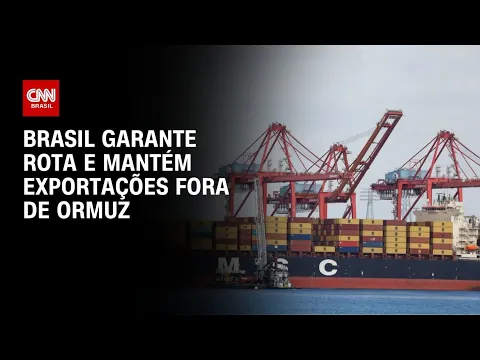

The scenario is clear: the Middle East is a market that Brazil cannot afford to lose. With 30% to 40% of corn exports and about 17% to 18% of meat exports directed to the region, any prolonged interruption in the trade flow would have a direct impact on the Brazilian trade balance, on the income of rural producers, and on prices in the domestic market.
The alternative route through Turkey is not a permanent solution; it is an emergency response to a geopolitical crisis that Brazil does not control.
But as long as the Strait of Hormuz remains unstable, Turkey serves as the gateway that keeps Brazilian agribusiness connected to its largest buyers in the Middle East.
The success of this route will depend on Turkey’s logistical capacity to absorb the volume of Brazilian cargo and efficiently redistribute it to the final destinations.
What do you think of Brazil’s decision to pay 50% more to maintain exports? Should agribusiness seek other markets or is it right to invest to avoid losing Arab buyers? Leave your opinion in the comments.






Seja o primeiro a reagir!