





 Portuguese
  English
  Spanish
  4 min of reading
  0 comments


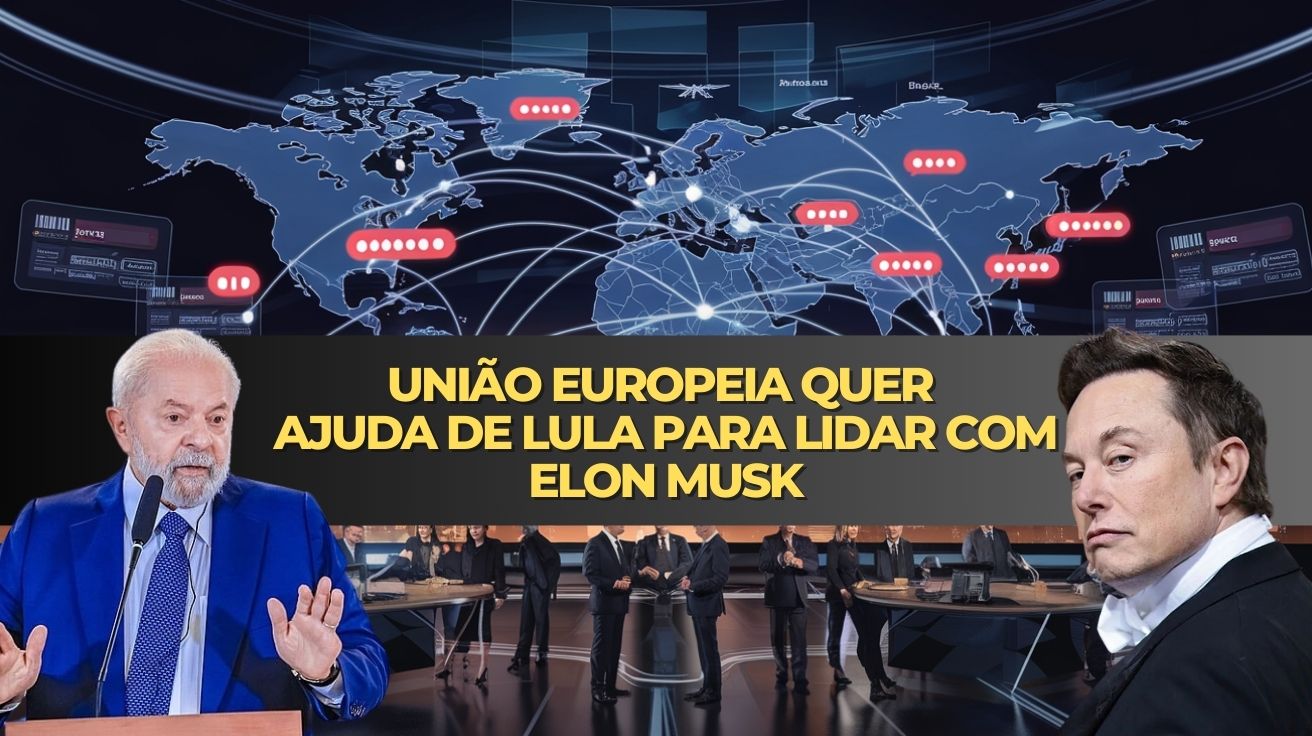
In a Unique Global Alliance, the European Union Turns to Brazil to Learn from Lula How to Combat Digital Disinformation. The Resistance of Big Techs, Elon Musk’s Attacks, and the Clash with the STF Highlight the Urgency of Regulation.
In a global scenario where digital disinformation has become a central concern, world leaders are seeking effective strategies to protect democratic integrity.
According to Bloomberg News, the European Union has turned its eyes to Brazil, interested in the measures adopted by President Luiz Inácio Lula da Silva against the spread of fake news and hate speech on social media.
Last year, Brazil temporarily suspended the platform X, formerly known as Twitter, due to the proliferation of hate speech and fake news.
-
Man builds functional 5-meter submarine in his garage using gas cylinders, PVC pipes, and a refrigerator motor, and navigates with the vessel on a lake in Colombia.

-
A couple buys an old chalet, breaks the kitchen floor for renovation, and finds over a thousand coins of gold and silver hidden since the English Civil War over 4 centuries ago.

-
Millions of people have been eating yam for centuries without knowing that this humble tuber contains a compound called diosgenin, which scientists have now discovered can improve memory and help control blood sugar levels.

-
Rigid bags with their days numbered: new trend prioritizes comfort in 2026.


Since then, the Brazilian government, under Lula’s leadership, has intensified its efforts to combat disinformation, deemed a direct threat to democracy.
This stance has drawn the attention of European leaders, such as French President Emmanuel Macron and European Council President António Costa, who sought to engage in dialogue with Lula on ways to preserve national sovereignty and face the challenges posed by social media.
International Dialogues with Lula
Lula and Macron have had several conversations on the topic, exploring areas where Brazil could share its experience.
According to Tiennot Sciberras, press advisor at the French Embassy in Brazil, “Brazil is encouraging us in this initiative to fight against disinformation in the climate area.”
These dialogues reflect a mutual concern for the integrity of information circulating online and its impact on public policy.
Confrontation with Big Techs
The actions of Elon Musk, owner of the platform X, have been a source of tension between governments and technology companies.
Musk has amplified conspiracy theories and clashed with political leaders in the UK, Germany, and the European Union.
The response to these actions may serve as a model for other countries or highlight the limits of governmental power over big techs.
Lula’s and Brazil’s Experience
Brazil has a long history of dealing with the challenges posed by social media platforms, mostly controlled by US companies.
Recently, a video generated by artificial intelligence circulated falsely, showing Finance Minister Fernando Haddad announcing new taxes.
Additionally, unfounded rumors, spread by opposition parliamentarians, claimed that the government would tax the Pix payment system, forcing the Planalto to reconsider plans to increase oversight in the financial sector.
Judiciary Positioning
Supreme Court Minister Alexandre de Moraes pointed out that “social networks are not lawless territory.”
In January, after Meta announced the end of fact-checking programs in the US, Moraes stated that the platforms can only operate in the country if they respect Brazilian laws, regardless of the bluster from irresponsible tech leaders.
Government Measures
The Brazilian government is developing proposals to tax big techs and regulate competition in the sector.
At the same time, the STF is discussing the responsibility of platforms regarding hate speech, fake news, and offenses posted by users.
In Congress, a regulation project for artificial intelligence has already been approved by the Senate and awaits a vote in the Chamber.
Resistance of Platforms
Big techs have shown resistance to Lula’s government initiatives.
In January, representatives from companies like Google, Meta, TikTok, and X were invited to participate in a public hearing on content moderation but did not attend or justify their absence.
This stance may escalate tensions with the US, especially considering the close relationship between Elon Musk and the administration of Donald Trump.
International Alliances
Lula seeks to transform his fight against disinformation into a global cause. In January, he and Macron discussed “the joint fight against disinformation and the regulation of social networks.”
The British government also stated that Brazil and the UK have launched “joint projects to strengthen public resistance against disinformation.”
Future Challenges
The urgency of the issue only grows.
Musk has promoted conspiracy theories, made personal attacks on British Prime Minister Keir Starmer, and supported the far-right party Alternative for Germany in the federal elections in February.
The European Union, in turn, has expanded an investigation into X to determine whether the platform violates its content moderation rules.
Lula’s and Brazil’s National Priority
For Lula, regulating social networks is a priority, especially after the attempted coup of January 8, 2023, which had social media as a main driver.
Disinformation continues to be used to undermine institutions like the electoral system and Pix, showing the gravity of the digital problem.
The Brazilian government attempted to pass regulation last year, but opposition from the right claimed censorship and blocked the debate.
Legislative Efforts
Now, Lula sees a new opportunity to bring the topic back. Jorge Messias, Attorney General of the Union, stated that “just as states created antitrust bodies to tackle monopolies and cartels in the past, they now need to organize to combat the enormous power of big techs.”
He emphasized that “governments around the world need to unite to face this new phenomenon.”





Seja o primeiro a reagir!