





 Portuguese
  English
  Spanish
 3 min of reading
  3 comments





More Than 35 Thousand Farms in Border Areas May Be Expropriated by the Government as Soon as 2025! The Deadline for Regularization Ends in October, and Landowners Are Racing Against Time to Avoid Losing Their Properties.
Land ownership is one of the pillars of the Brazilian economy, especially in strategic regions near the borders.
However, thousands of farmers in Mato Grosso do Sul risk losing their properties if they do not regularize property records by October 22, 2025.
This situation, which affects more than 35.9 thousand rural properties along the border with Bolivia and Paraguay, could lead to the expropriation of land by the federal government.
-
You grew up hearing that the good coffee from Brazil goes all abroad and the bad coffee stays for Brazilians, but this story has completely changed, and the numbers show that in the 1980s, thirty percent of the coffee sold here was adulterated with corn and barley.

-
Engineer creates reforestation method that transforms small plots into dense forests in a few years using local biomass and can reduce environmental recovery costs.

-
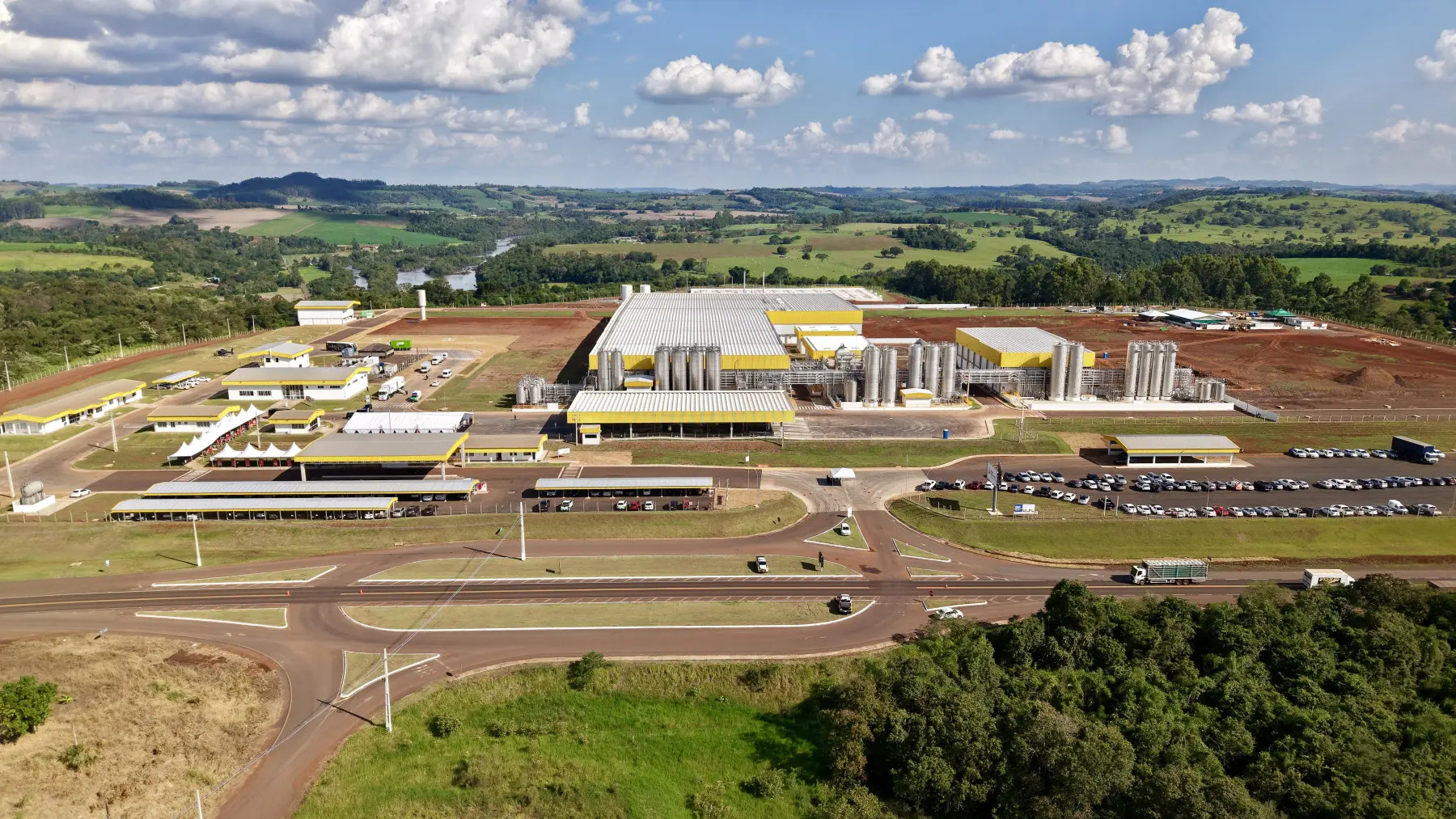
With an investment of R$ 612 million, a capacity to process 1.2 million liters of milk per day, Piracanjuba inaugurates a mega cheese factory that increases national production, reduces dependence on imports, and repositions Brazil on the global dairy map.
-
Alone, the producer applies 7,400 hectares with the T100 drone in an optimized structure, replaces the generator with a silent battery, and demonstrates how technology reduces costs, increases productivity, and even challenges the uniport in the field.


The reason for this requirement lies in Law No. 13.178/2015, which establishes rules for the ratification of property records in border areas.
Additionally, a new regulation was established on July 15, 2024, when the General Justice Corregedoria of the Mato Grosso do Sul Court of Justice (TJMS) issued Provision No. 309, determining the procedures that must be followed by owners to ensure the legality of the land.
Who Should Conduct the Ratification?
According to the portal Compre Rural, the need for regularization affects all rural properties located within 150 kilometers of the border that meet the following criteria:
- Properties with titles granted by the states;
- Land with an area greater than 15 fiscal modules and less than 2,500 hectares.
Landowners whose properties exceeded 2,500 hectares on October 22, 2015, need to request regularization directly from the National Congress.
Even properties smaller than 15 fiscal modules are subject to ratification, although in these cases there is no specific deadline for compliance.
How to Regularize the Situation
Ratification must be done at the property registry offices in the municipality where the property is located. To do this, farmers need to present a series of documents, including:
- Formal request for ratification, stating the current registration of the property;
- Complete property history, with previous and updated certificates and registrations;
- Map and technical report, prepared by a qualified professional, proving the exact location of the property in the border area;
- Public deed declaring the absence of judicial or administrative disputes over the property;
- Negative certificates from the State Justice;
- Updated Rural Property Registration Certificate (CCIR);
- Georeferencing, mandatory for properties over 15 fiscal modules.
Additionally, owners must present a declaration attesting that the property fulfills its social function, as required by the Federal Constitution.
What Happens If Regularization Is Not Done?
Failure to regularize within the deadline may bring severe consequences for the owners. Direct impacts include:
- Nullity of the property title, resulting in the legal loss of the land;
- Incorporation of the land into the Union’s assets;
- Difficulty accessing financing and government programs;
- Legal insecurity, hindering investments in the region.
In practice, this means that thousands of farmers may be expropriated if they do not regularize their documentation within the deadline.
Support for Rural Producers
Given the complexity of the process, agricultural sector entities are offering support and guidance to rural property owners.
The Federation of Agriculture and Livestock of Mato Grosso do Sul (Famasul), for example, is working in partnership with judicial and registry bodies to provide explanatory brochures and informational materials.
These resources can be accessed on the official websites of the entities involved and at the property registry offices in the affected municipalities.
Impacted Municipalities
The requirement for ratification affects 45 municipalities in Mato Grosso do Sul, including:
- Ponta Porã
- Corumbá
- Dourados
- Naviraí
- Bela Vista
- Aquidauana
- Porto Murtinho
- Maracaju
- Sidrolândia
- Itaquiraí
- Jardim
- Mundo Novo
These municipalities are located along the border area, being directly impacted by the current legislation.
What to Do Now?
With the deadline approaching, it is essential that farmers seek regularization as soon as possible. The bureaucratic process can take time, especially considering the need to present documents and technical reports.
Failure to comply with the requirements may result in the definitive loss of land ownership, directly affecting the economy of the region and the livelihood of thousands of producers.
Land regularization is not just a formality but a guarantee of legal security and stability for the Brazilian agricultural sector.







Luladrao **** as terras para dar de graça para o MST.
Presidente da ****
Críticar e ficar no ar… Realmente… Vivem no Mundo da lua…
Uma vez que a informação seja real e consolidada juridicamente as exigências para regularização dos imóveis, deverão os senhores ditos proprietários, mas que na verdade tem grande parte dos seus imóveis irregulares, correr e efetuar suas devidas obrigações com o Estado.
É fácil fazer críticas ao governo federal, dizendo-se componentes do tal do agronegócio, mas irregulares perante os governo estadual e federal.