





 Portuguese
  English
  Spanish
 4 min of reading
  0 comments


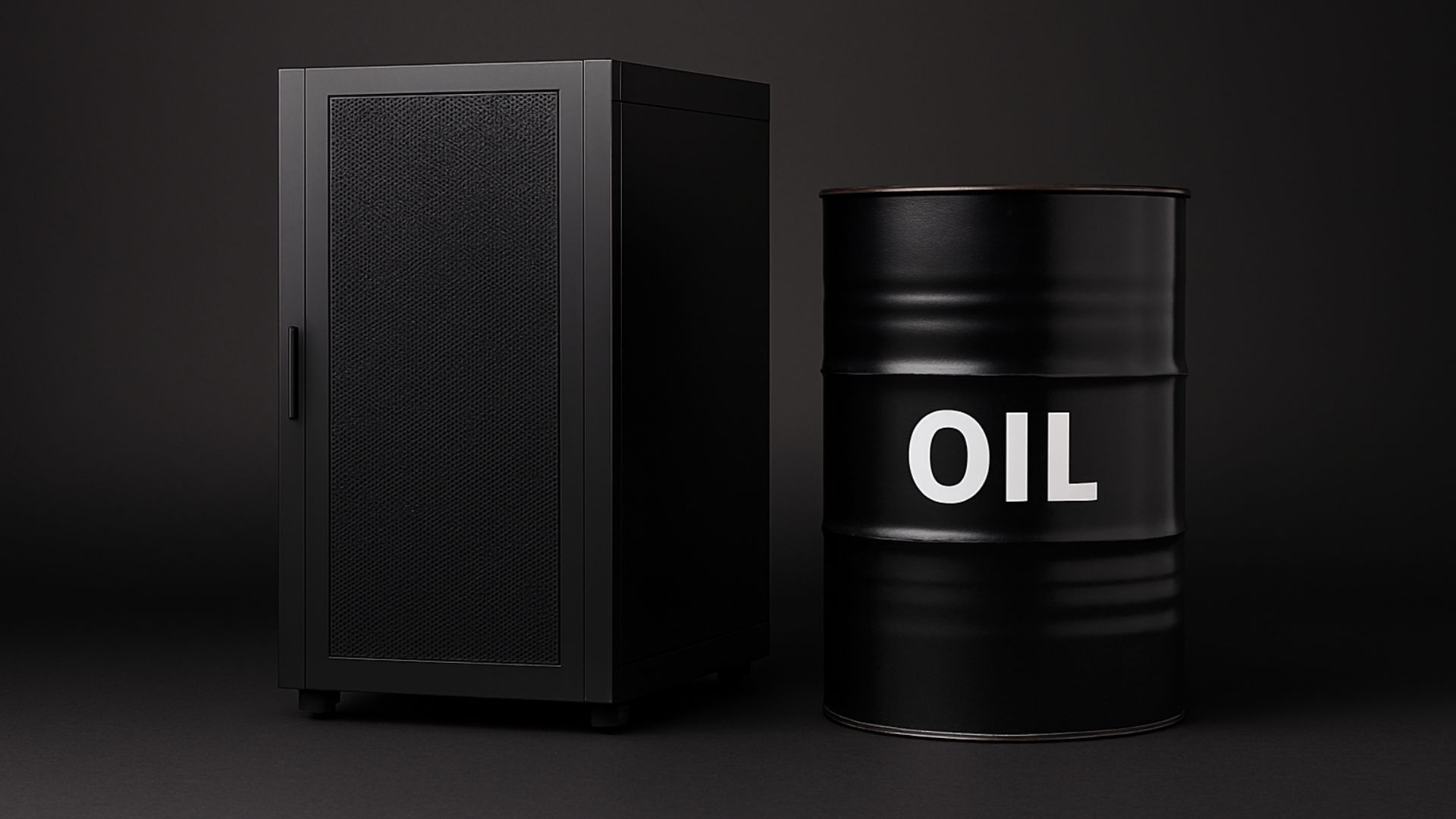
Unicamp Launches Supercomputer Abaporu, Expanding Capabilities in Artificial Intelligence and Advanced Solutions for the Oil Sector, Strengthening Strategic Research in the Country
The State University of Campinas (Unicamp) took a decisive step towards excellence in technological research with the inauguration of the supercomputer Abaporu. According to an article published by the Unicamp Journal on Wednesday (19), the equipment was installed at the Institute of Computing and will be used in projects that combine Artificial Intelligence and Oil, focusing on high-impact industrial and scientific applications.
Supercomputer Abaporu: Processing Power for Complex Challenges
The project was made possible through resources from Shell Brasil, via a Research, Development and Innovation (PD&I) clause from the National Agency for Oil, Natural Gas and Biofuels (ANP), within the scope of the Center for Energy and Oil Studies (Cepetro/Unicamp).
The supercomputer Abaporu consists of 28 next-generation GPUs, specifically NVIDIA H200 and L40 models. These graphics processing units are recognized for their exceptional performance in deep learning tasks, physical simulations, and computational modeling.
-
A “silent skill” is allowing Brazilians to earn up to R$ 22,000 per month without a degree and become indispensable for companies that rely on millions of data to survive.

-
Researchers at the Toyota Research Institute found that if a human uses robotic arms to flip a pancake 300 times in an afternoon, the robot learns to do it on its own the next morning, and this is currently the most promising method to solve the biggest bottleneck in modern robotics.

-
Goodbye iron: a common item in households is starting to lose space to technology that smooths clothes in minutes without an ironing board and with less energy consumption.

-
Antarctica reveals an unusual clue high in the Hudson Mountains, and what appeared to be just an isolated rock began to expose a secret hidden under the ice for ages.


The processing capacity of Abaporu is equivalent to thousands of personal computers operating simultaneously. This allows for the execution of large-scale AI algorithms with greater precision and agility, as well as essential geophysical and geochemical simulations for oil exploration in complex environments like the pre-salt.
Strategic Initiative from Unicamp: AI and Oil Engineering
The focus of Abaporu is on projects that integrate Artificial Intelligence with Oil engineering, aiming to optimize processes and reduce operational costs. Among the anticipated applications are:
- Reservoir modeling with deep neural networks;
- Seismic simulations with machine learning algorithms;
- Predictive analysis of failures in underwater equipment;
- Optimization of drilling and extraction of oil and gas.
These solutions are essential to increase the efficiency and safety of operations in the energy sector, in addition to contributing to environmental sustainability. The convergence between AI and oil engineering represents a promising frontier for technological innovation in Brazil.
Partnership between Unicamp and Shell Brasil Strengthens Applied Research
The acquisition of the supercomputer was made possible thanks to the partnership between Unicamp and Shell Brasil. The company allocated resources through the PD&I clause of the ANP, reinforcing its commitment to national scientific development.
This collaboration strengthens the role of Cepetro as a center of excellence in applied research and consolidates Unicamp as a reference in technological innovation in Latin America. Investments in cutting-edge infrastructure are essential to position Brazil as a leader in the digital transformation of the energy industry.
In addition to its strategic role in the industry, Abaporu will have a direct impact on the training of highly qualified human resources. Undergraduate, master’s, and doctoral students will have access to the infrastructure to develop cutting-edge projects in Artificial Intelligence, data science, and engineering.
The initiative expands opportunities for interdisciplinary research and stimulates the creation of technological solutions with high added value. The presence of a supercomputer like Abaporu at Unicamp elevates the level of academic training and attracts new talents to science.
International Comparison and Scientific Relevance at Unicamp
With the installation of Abaporu, Unicamp joins a minority group of institutions that operate high-performance supercomputers focused on AI research. According to the Top500 ranking, the largest clusters in the world are concentrated in countries like the United States, China, and Japan.
The use of NVIDIA H200 and L40 GPUs places Abaporu among the most modern systems in the Southern Hemisphere, with the potential to attract international collaborations and new investments in research. The infrastructure positions Brazil at a new level of scientific and technological competitiveness.
Symbolic Name: Abaporu and the Valuation of Brazilian Culture
The name “Abaporu” was chosen in homage to the work of Tarsila do Amaral, an icon of Brazilian modernism. The word, of Tupi origin, means “man who eats,” and has been reinterpreted in the context of the supercomputer as “data devourer.”
The metaphor translates the computational power of the system and its mission to transform data into knowledge. The choice of the name also reinforces the national identity of the project, valuing Brazilian culture in a high-tech environment.
The expectation is that, in the coming years, the infrastructure of Abaporu will be expanded with new processing and storage units. Unicamp also plans to integrate the system into national and international research networks, such as RNP (National Education and Research Network), expanding access to data and scientific results.
This integration will allow collaboration with other institutions and the sharing of computational resources, strengthening the innovation ecosystem in the country.
Supercomputer Abaporu and the Future of Artificial Intelligence Research
The supercomputer Abaporu represents a milestone in the history of Unicamp and Brazilian science. By uniting Artificial Intelligence and Oil, the project inaugurates a new era of innovation, with a direct impact on the industry, talent development, and knowledge production.
The initiative demonstrates that it is possible to align technology, sustainability, and economic development through science.
The partnership between academia and the productive sector, as exemplified by the collaboration with Shell Brasil, shows that investment in applied research is a viable and strategic path for the country’s progress.
With Abaporu, Unicamp reaffirms its role as a protagonist in digital transformation and energy transition, opening new possibilities for the future of science in Brazil.






Seja o primeiro a reagir!