





 Portuguese
  English
  Spanish
  4 min of reading
  0 comments


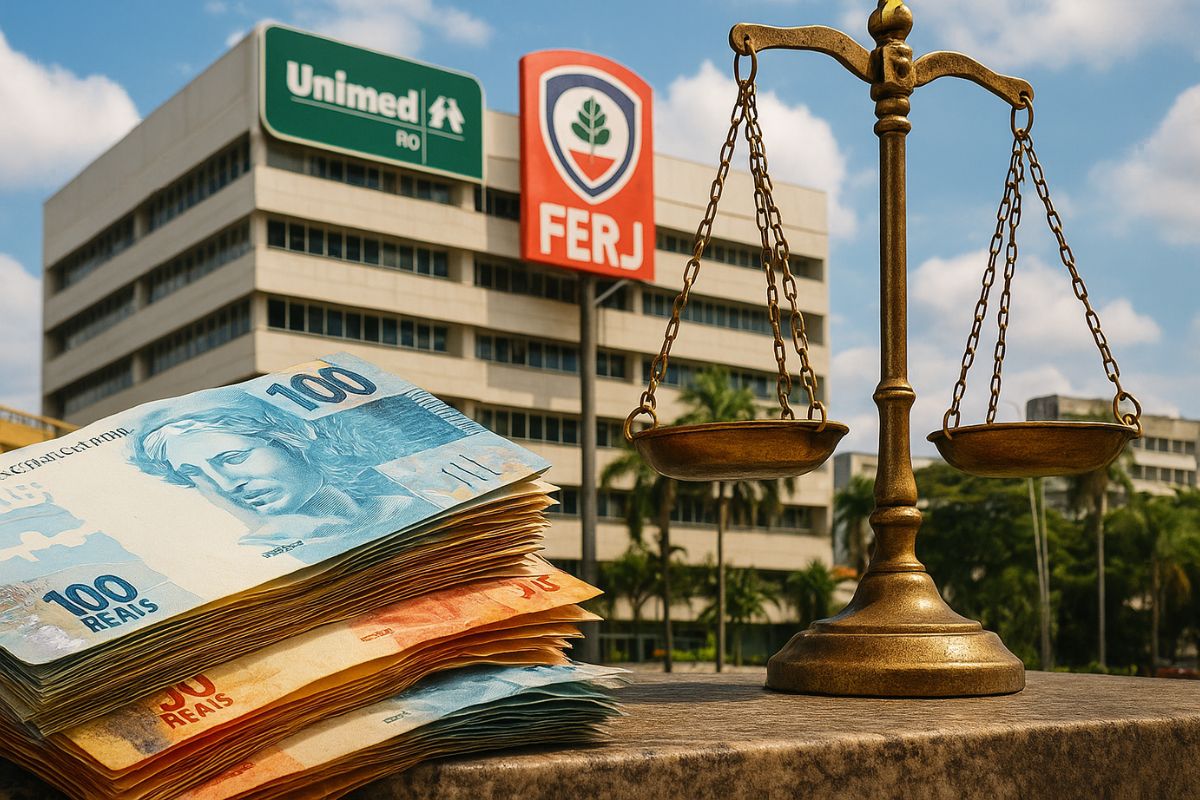
Billion-Dollar Agreement Signed With The National Treasury Attorney General Provides Installment Payments And Use Of The Hospital Da Barra As Guarantee; Negotiation Involves Accumulated Debts Of Unimed-Rio And Ferj After Wallet Migration And Crises In The Supplementary Health Sector.
Unimed-Rio and Ferj have signed a historic agreement of R$ 2.1 billion With The National Treasury, ending one of the largest tax liabilities in the health plan sector in the country. The agreement, led by the National Treasury Attorney General (PGFN), establishes long-term installments and the delivery of the Hospital Da Barra Da Tijuca as guarantee for the debt.
The negotiation process began in 2023, before the migration of the client portfolio to Unimed Ferj, and was only completed in July 2025. The agreement represents a 45% discount on the original amount, with part of the debt paid upfront and the remaining amount distributed in different terms — 60 months for social security debts and 145 months for non-social security taxes.
What Is Provided In The Agreement With The National Treasury
According to sources close to the negotiation, the PGFN assessed that the judicial route would be more traumatic and risky, opting for a consensual solution given the financial fragility of the operator.
-
50 viaducts, 4 tunnels, 28 bridges, and 40 kilometers of bike paths: BR-262 in Espírito Santo will receive 8.6 billion reais for the largest engineering project in the state’s history, inspired by the Immigrant Highway in São Paulo.

-
Brazil produces too much clean energy and doesn’t know what to do with it: over 20% of solar and wind capacity was wasted in 2025 while investors flee and 509 renewable generation projects were abandoned in the last year.

-
Piauí will produce a new fuel that replaces diesel without needing to change anything in the truck’s engine and reduces pollutant gas emissions by half: truck drivers from all over the Northeast are already celebrating the news that will arrive later this decade.

-
A new Brazilian shopping center worth R$ 400 million will be built in an area equivalent to more than 4 football fields, featuring 90 stores, 5 cinemas, a supermarket, a college, and parking for 1,700 cars, potentially generating 3,000 jobs.


The inclusion of Unimed Ferj in the agreement arises from the transfer of the portfolio and operational revenue, which made it an interested party in resolving the liability.
The guarantee offered, the Hospital da Unimed, located in Barra da Tijuca, West Zone of Rio, is considered the most valuable asset of the group.
The property, which belongs to Unimed-Rio, was leased to Ferj after the portfolio migration and is now one of the main medium and high complexity centers of the private network in the state.
In case of non-compliance with the agreement, the National Treasury may legally execute the property, although there are administrative steps before such an extreme measure.
Billion-Dollar Debts And Domino Effect In The Hospital Network
According to the Association of Hospitals of the State of Rio (Aherj), the total indebtedness of the operators has already exceeded R$ 2 billion, totaling R$ 1.6 billion inherited from Unimed-Rio and R$ 400 million in recent unpaid bills by Ferj.
The situation has worsened with the reduction of payments to the accredited network, which has caused contractual breaches with large hospital groups.
Among the most recent episodes are the suspensions of care by Rede D’Or, as well as interruptions in hospitals Pró-Cardíaco, Vitória, São Lucas, and Santa Lúcia, all linked to Rede Américas.
These coverage blocks have reduced the availability of emergency care to beneficiaries and further pressured the ANS, which assumed technical intervention over Unimed Ferj in early September.
Restructuring Under ANS Supervision
The National Supplementary Health Agency (ANS) has determined that Ferj presents an emergency payment plan and normalizes care for users within 15 days.
However, the agency reported that it did not participate in the negotiation with the National Treasury and is unaware of the terms of the tax agreement.
Experts assess that the PGFN’s move signals a new mediation posture with large health debtors, favoring structuring agreements over immediate tax executions.
However, the success of the operation depends on the liquidity and management capacity of Ferj, which has taken on a customer portfolio in a critical situation.
The Role Of The Hospital Da Barra In The Operation
The choice of Hospital Da Barra as a guarantee was not accidental.
The property concentrates high market liquidity and operational relevance, representing the main asset of Unimed-Rio.
The building, valued at hundreds of millions of reais, has served as legal and financial backing to facilitate the installment plan.
According to attorney Felipe Renault, who represented the operator in the negotiation, the hospital was the only guarantee capable of supporting an agreement of this magnitude.
“The rest of the assets are commercial rooms and garages, without significant asset weight”, he explained.
The lease model established between the cooperatives allows the hospital to continue operating while payments are made.
Reflections For The Market And Beneficiaries
The case highlights the fragility of the cooperative model in supplementary health, especially in the face of accumulated tax liabilities and contained adjustments.
Although the agreement with the National Treasury avoids more drastic measures, such as direct seizures and account blockages, the operational risk remains.
In practice, the installment plan ensures financial survival for Ferj and Unimed-Rio, but does not eliminate the need to renegotiate debts with hospitals and suppliers.
If there is a delay in the payment schedule, the hospital may be executed and care may once again be compromised.
The sector is closely monitoring, as the operation has become a stress test for the entire medical cooperatives system in the country.









-

-

-

-

-

-

50 pessoas reagiram a isso.