





 English
  Francês
  Alemão
  Italiano
  Japonês
  Norueguês
  Portuguese
  Spanish
  3 min of reading


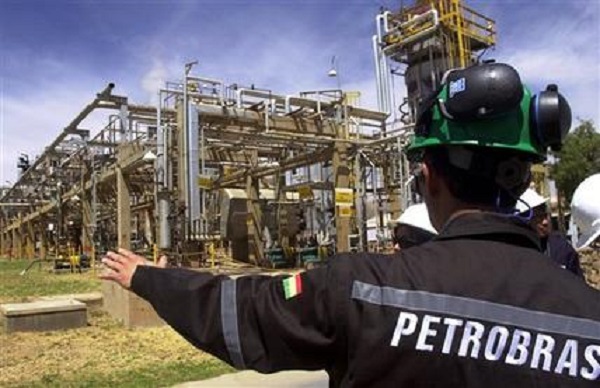
Chevron Agreed to Buy a Troubled Texas Oil Refinery With Room to Handle Shale Flow From Its Operations in West Texas, Two Sources Familiar With the Negotiations Said on Monday.
The leading oil producer in the United States is expected to announce the deal to acquire a 112,000 barrels per day (bpd) refinery in Pasadena, Texas, this quarter, the sources said. The plant is operated by Pasadena Refining System Inc, a subsidiary of the state oil company Petrobras, based in Texas. Chevron spokesperson Braden Reddall declined to comment on Monday. Carlos Monteiro, a spokesperson for Petrobras in Rio de Janeiro, said that any communication about a deal would be disclosed to the market.
A deeply indebted company put the plant on the market in early 2018 after sinking over US $1.18 billion since acquiring its first stake in the operation in 2006.
-
Government unlocks R$ 554 million for a highway that has been requested for decades and accelerates the duplication of BR.
-
Without bricks, without cement, and without endless construction: the cardboard house that is assembled in modules and can be moved.

-
Billions of barrels on the equatorial margin could lead Amapá to double its oil production in Brazil — the state aims to enter the route of companies in the Campos Basin, attract investments, and boost jobs and businesses in the oil and gas sector.
-
Without bricks, without cement, and without endless construction: the cardboard house that is assembled in modules and can be moved.

The negotiations between Chevron and Petrobras were delayed in part by Brazil’s presidential election and pipeline operator Kinder Morgan, which abandoned negotiations to operate a terminal on-site as a joint venture, the sources said.
Lexey Long, spokesperson for Kinder Morgan, declined to comment.
Petrobras is looking to divest US $21 billion in assets to reduce its debt burden amid a series of corruption scandals, including allegations that executives were paid as a result of the 2006 purchase of the Pasadena plant.
The rapid expansion of U.S. shale production from the Permian Basin of West Texas and New Mexico has shaken demand for new refining capacity in the U.S. and crude oil export facilities. Oil production has surged to an estimated 3.8 million bpd this month, up from 1.48 million five years ago.
Chevron, which announced a 150,000 bpd increase in shale production in the third quarter, said it wants a second Gulf Coast facility to handle this crude oil and better supply its gasoline retail network. The plant primarily produces gasoline and distillates such as diesel.
The refinery covers 192 acres on the Houston Ship Channel, and the purchase includes another 274 acres of terminal and other cleared land available for expansion. The site has storage tanks that can hold 5.1 million barrels and a marine terminal for export.
The plant’s workforce of 300 people is represented by the United Steelworkers union and will become Chevron employees once the deal closes.
There are several small U.S. refineries on the market. Husky Energy Inc. began marketing a 12,000 bpd refinery in Prince George, British Columbia, earlier this month.
Royal Dutch Shell recently started accepting bids for its Sarnia refinery in Ontario, with 75,000 barrels/day, according to people familiar with the matter. Delta Air Lines Inc. started marketing a stake in its 185,000 bpd refinery in Pennsylvania last September.
In November, CVR Energy said it may buy back the public holders of its refining unit, CVR Refining GP, which operates refineries in Kansas and Oklahoma. This move would clear a partnership facilitating a future sale.









Seja o primeiro a reagir!