





 English
  Francês
  Alemão
  Italiano
  Japonês
  Norueguês
  Portuguese
  Spanish
  5 min of reading
  2 comments


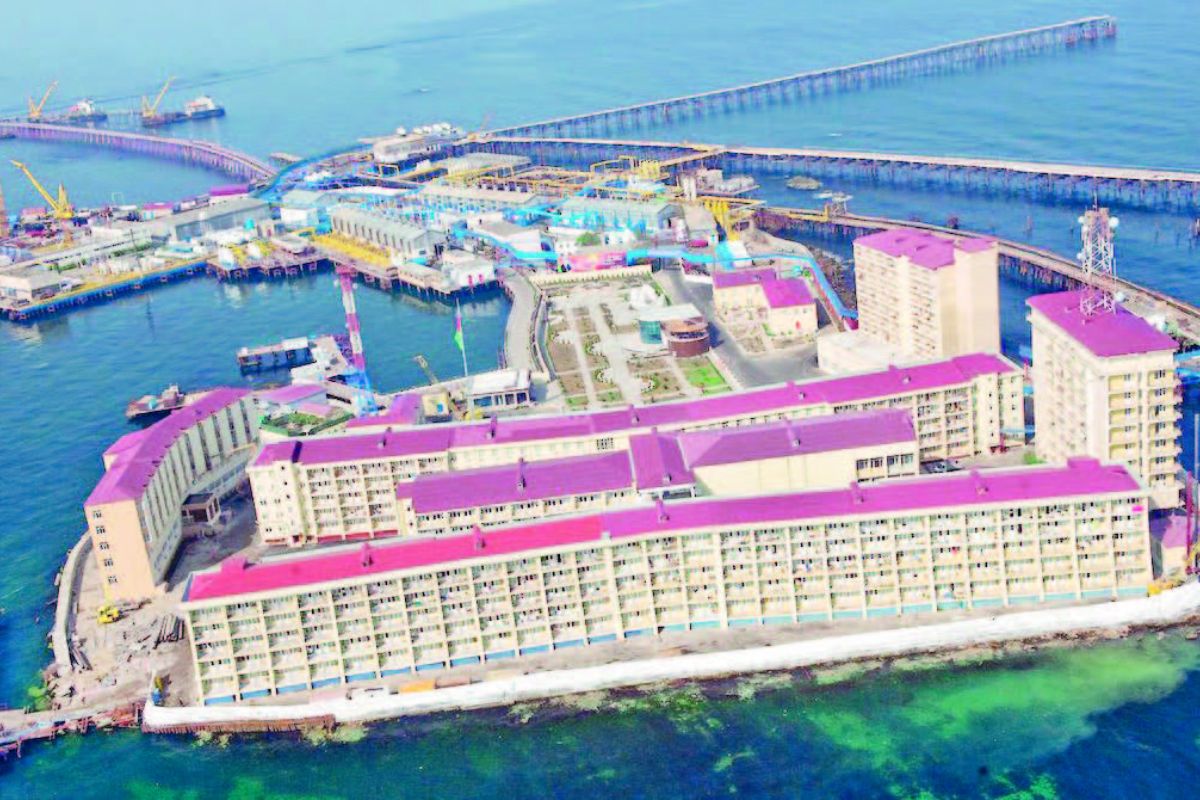


Between 1945 and 1949, the USSR built the oil city Neft Dashlari on an oil platform moored on sunken ships in the Caspian Sea, with hotels, cinema, and a football field, housing 2 thousand people and becoming an icon of Soviet engineering, now in ruins.
55 km off the coast of Azerbaijan, in the Caspian Sea, the oil city Neft Dashlari was born under Josef Stalin’s regime between 1945 and 1949 as the world’s first operational offshore oil platform, built to explore a gigantic oil layer over a thousand meters deep identified by the USSR Academy of Sciences.
Over the following decades, this oil city floating gained houses, hotels, cinema, hospital, and even a football field on a network of platforms and metallic roads built on sunken ships. The project housed about 2 thousand inhabitants and controlled the entire production cycle, from crude oil to refined products, before going into decline after the oil crisis of the 1970s and the Soviet collapse in 1989.
The First Floating Oil City of the Soviet Era

Neft Dashlari, literally “Oil Rocks,” was conceived as a showcase of Soviet industrial capacity in the post-World War II era.
-
Brazilian giant expands borders in the Southeast: Petrobras confirms new oil discovery in ultra-deep waters in the pre-salt of the Campos Basin.

-
Alert in the global energy market: Severe tropical cyclone hits the coast and disrupts gas production at major plants in Australia, threatening global supply.

-
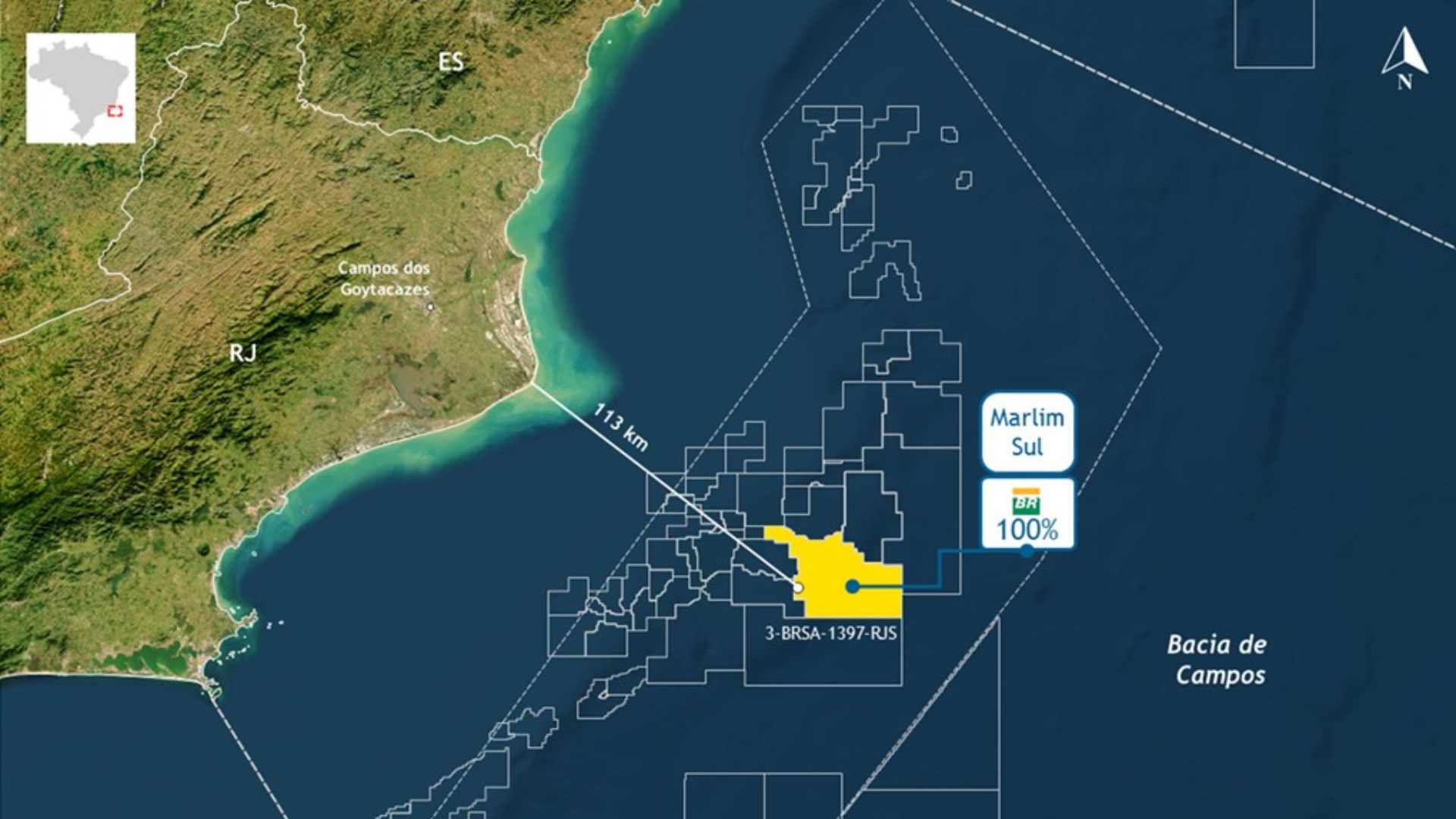
Petrobras finds high-quality oil in the pre-salt at 113 km from RJ and reignites expectations about strategic reserves in the Campos Basin.

-
Ocyan opens registrations for startups focused on innovation in the oil and gas sector and will select projects for Innovation Day with the support of Nexio.


By the end of the 1940s, the USSR bet on this isolated oil city offshore to turn the Caspian Sea into a strategic supply platform in the midst of the global race for the so-called “black gold.”
Between 1945 and the end of the 1960s, the West and Japan raised oil consumption to unprecedented levels, with the United States doubling its demand compared to 1945.
In a market still far from today’s volatility, consolidating a fixed oil city at sea was both an economic and geopolitical move, projecting Soviet technological power during the Cold War.
Sunken Ships as Foundation for the Oil City
The beginning of Neft Dashlari’s construction was improvised and, at the same time, experimental.
First, everything was built on wooden stakes driven into the seabed, creating walkways and small structures for the workers.
Then, Soviet engineers adopted a more radical solution to expand the oil city.
At least seven vessels were deliberately sunk to serve as the base for a system of wooden and steel roads and platforms.
One of them was the Zoroaster, considered the first oil tanker in the world. On these sunken hulls, blocks of residential buildings were raised, transforming hulks of ships into the foundation of a permanent oil city, now largely corroded by the action of time and the sea.
Throughout the process, Neft Dashlari became a tangle of industrial structures: about 2 thousand interconnected oil platforms spanning over 300 km of unstable metal streets and bridges.
This network is the physical skeleton of the oil city that still endures, partially active, in the Caspian Sea.
From Drilling to the Football Field over the Caspian Sea
In 1951, everything was ready to drill the first well in Neft Dashlari.
A year later, systematic construction of metal-structured bridges began to connect artificial islands and production areas.
Starting in 1958, the oil city entered its most visible expansion phase, approaching a complete urban settlement.
Hostels, hotels, cultural centers, bread factories, cinema, a hospital, and the famous football field laid on suspended metal structures were raised.
Additionally, oil collection stations, two diesel compression stations, and two underwater pipelines 350 mm in diameter were installed, consolidating the oil city as an integrated hub for exploration, production, and oil transport.
During its peak, Soviet machinery transformed Neft Dashlari into a showcase of maritime engineering. Infrastructure solutions at sea were tested there, which would later be replicated in other projects.
The city controlled the entire cycle, from exploration to the final product, something rare even for large onshore oil complexes.
Oil Crisis, Fall of the USSR, and Beginning of Decline
Beginning in the 1980s, the scenario started to change.
A global drop in oil prices, caused by an oversupply following reduced demand after the crises of the 1970s, weakened the profitability of several projects.
The oil city of Neft Dashlari was directly impacted by this new cycle.
At the same time, new fields began to be discovered in other regions, diverting investments and labor.
The fall of the Iron Curtain in 1989 and the final collapse of the Soviet Union worsened the situation.
Much of the workforce left Neft Dashlari, and the structures began to deteriorate without a clear plan for deactivation or reconversion.
dismantling the oil city was more expensive than keeping it operating at a reduced capacity, which prolonged a kind of operational limbo.
Ruins, Spot Rehabilitations, and Legacy in the Caspian Sea
Since Azerbaijan’s independence, local authorities have opted to rehabilitate only part of the buildings and some emblematic points of the oil city, such as the old football field.
Still, there is no clarity about the current state of Neft Dashlari, which doesn’t even appear on conventional mapping tools, reinforcing the aura of a forgotten enclave.
What is known is that the population has likely decreased from the 2 thousand inhabitants at its peak, and many structures of the oil city remain in ruins on sunken ships and corroded platforms, with sections of unstable bridges and deactivated areas.
Over six decades, the fields of Neft Dashlari produced more than 170 million tons of oil and 15 billion cubic meters of associated natural gas, leaving an expressive legacy in the history of offshore exploration.
Today, Neft Dashlari is both a vestige of Soviet energy ambition and an extreme example of an industrial city created solely to serve oil. Given this history, if you had the chance to visit this ruined oil city in the middle of the Caspian Sea, what would you like to see or record first?





I think there were more than two inhabitants…
Neft Dashlari, sounds like the name of a Star Wars city.