





 Portuguese
  English
  Spanish
  3 min of reading
  0 comments


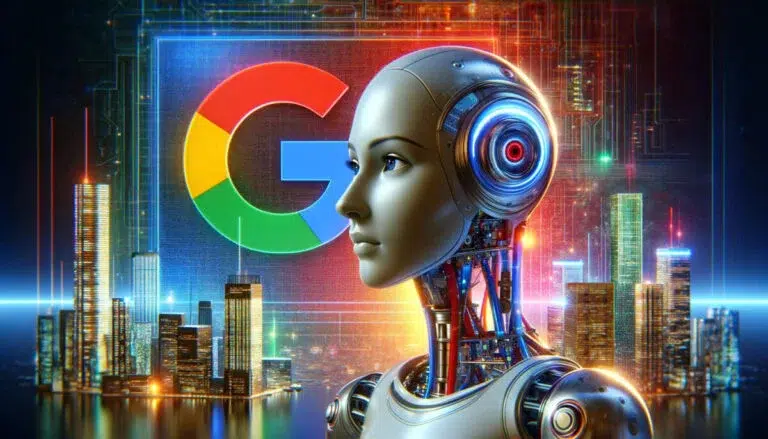
Google Will Invest Over US$ 100 Billion in Artificial Intelligence, Says CEO of DeepMind, Highlighting the Company’s Computational Advantage and the Technology’s Potential for a New Scientific Renaissance
Google is preparing one of the largest investments in its history, allocating an impressive US$ 100 billion for the development and advancement of artificial intelligence.
Demis Hassabis, CEO of Google DeepMind, revealed at a TED conference in Vancouver that Google plans to invest over US$ 100 billion over time in the development of artificial intelligence (AI).
During the presentation, he discussed the company’s ambitious plans regarding AI technology, highlighting that the investment would be even greater than that projected by OpenAI and Microsoft for building a supercomputer in a data center called “Stargate,” at up to US$ 100 billion.
-
Millions of people have been eating yam for centuries without knowing that this humble tuber contains a compound called diosgenin, which scientists have now discovered can improve memory and help control blood sugar levels.

-
Scientists from an international project drill 1,800 meters of ice in Antarctica using hot water and discover details about one of the most intriguing places on planet Earth.

-
Seen from space, a colossal volcano nearly 5,000 meters high in Russia has released 1,600 km of smoke over the Pacific, forming “devil’s horns” of lava and revealing the brutal force of the Ring of Fire.

-
Expedition 501: Scientists drill into the ocean floor and discover a giant reserve of fresh water hidden beneath the sea, extracting nearly 50,000 liters and revealing an invisible system that could reshape the map of water scarcity.


In response to a question about the “Stargate” project, Hassabis stated that Google is investing more than previously disclosed estimates, without providing details on the exact figures.
Google Does Not Want to Fall Behind in Artificial Intelligence
The statement came after Bloomberg released information regarding the plans of OpenAI and Microsoft, which involve a supercomputer with millions of AI chips to enhance large-scale computing.
Hassabis, who founded DeepMind in 2010 before its acquisition by Google in 2014, also spoke about Alphabet’s competitive advantage, Google’s parent company.
He emphasized that the company has superior computing power compared to its rivals, such as Microsoft, which he considers essential to achieve Artificial General Intelligence (AGI).
AGI is the stage at which AI achieves human-like intelligence across various tasks, something Google, according to him, is closer to achieving due to its vast computational power.
In previous statements, Hassabis compared the growing hype around AI to the hype that surrounded cryptocurrencies.
In March, he stated that investment in AI “comes with a lot of hype and perhaps some pitfalls,” and that it distracts from the true science and research behind the technology.
Despite this, he expressed optimism about the future, saying that the industry is “just scratching the surface” of what is possible, and envisioned the beginning of a new era of scientific discoveries, comparing it to a “new Renaissance.”
New Google Chip
Google has taken a significant step in quantum technology with the launch of Willow, its latest quantum computing chip. Designed to tackle the most complex challenges in the field, Willow promises to redefine the performance and efficiency of quantum computing.
Key Features of Willow
- Expanded Qubit Count:
Willow incorporates 105 qubits, representing a significant advancement compared to its predecessor, Sycamore, which had 72 qubits. - Error Correction Innovation:
One of Willow’s key features is its ability to reduce errors exponentially as the number of qubits increases. Due to the sensitivity of qubits to external factors, error correction is a significant challenge in quantum computing. - Superior Performance:
During benchmark tests, Willow performed complex calculations in less than five minutes, a task that would take about 10 septillion years to complete by today’s most powerful supercomputers. - Advanced Logical Qubits:
Willow adopts an innovative approach by grouping multiple physical qubits to form logical qubits, resulting in significantly lower error rates. While individual qubits have high chances of error, Willow’s logical qubits demonstrate an error rate of only 1 in 1,000 per computation cycle.









-

Uma pessoa reagiu a isso.