





 Portuguese
  English
  Spanish
  4 min of reading
  0 comments


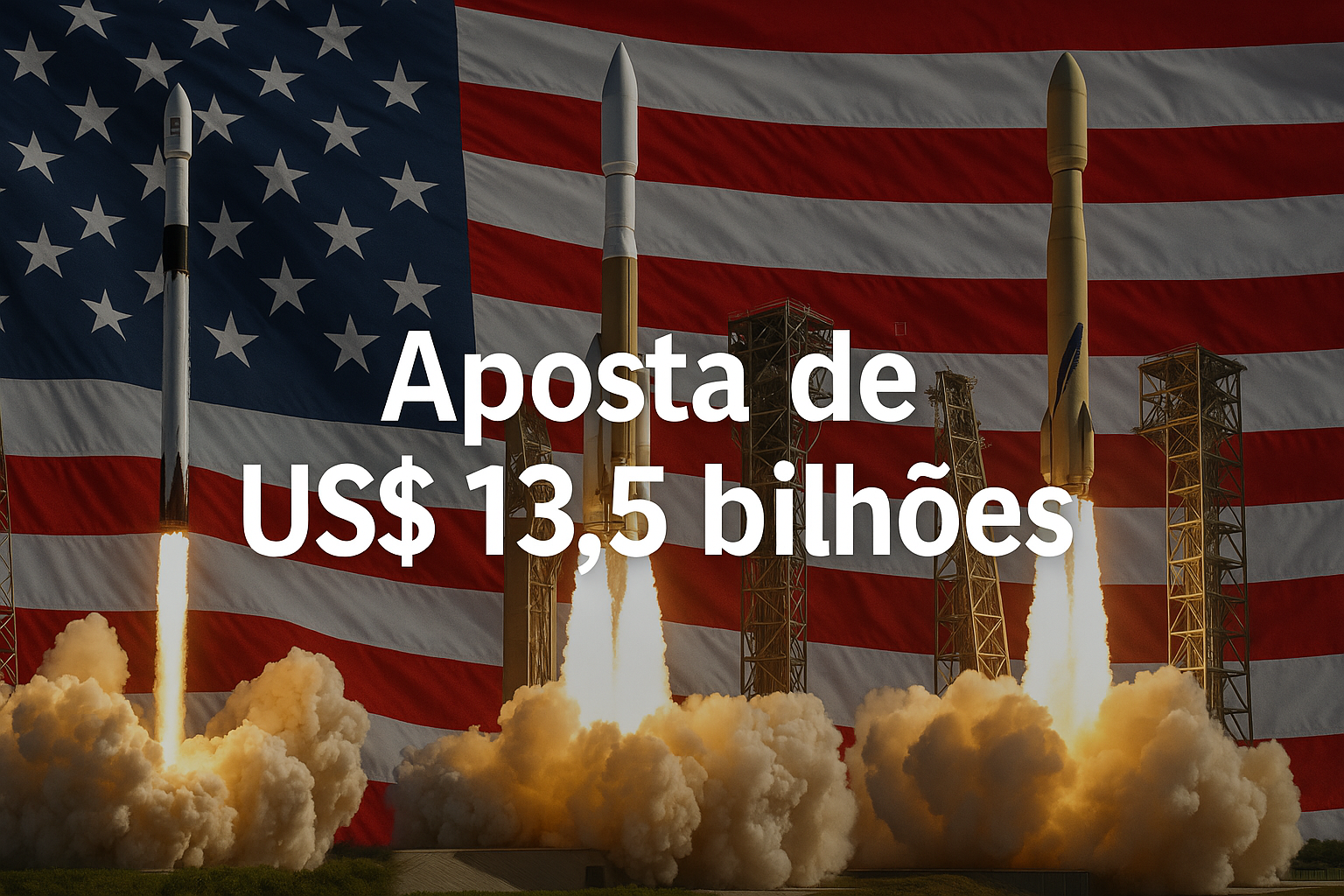
In A New Phase Of The Modern Space Race, The Pentagon Announced An Investment Of US$ 13.5 Billion In Private Companies Such As SpaceX, Blue Origin, And ULA. The Initiative Seeks To Strengthen The United States’ Presence In Space
In A New Effort To Maintain The Supremacy Of The United States In Space, The Pentagon Announced A Package Of Contracts That Could Reach US$ 13.5 Billion. The Giants Of The Private Sector — SpaceX, Owned By Elon Musk; Blue Origin, Owned By Jeff Bezos; And The Traditional United Launch Alliance (ULA) — Were Selected To Lead This Technological Offensive
The United States Department of Defense Announced A Historic Decision. For The First Time, Three Companies Will Share The Country’s Most Critical Space Launch Missions. The Total Value Of The Contracts Reaches An Impressive US$ 13.5 Billion. The Announcement Was Made On April 4.
These Missions Involve The Most Sensitive And Important Aspects Of National Security For The U.S.
-
Motorola launched the Signature with a gold seal from DxOMark, tying with the iPhone 17 Pro in camera performance, Snapdragon 8 Gen 5 that surpassed 3 million in benchmarks, and a zoom that impresses even at night.

-
Satellites reveal beneath the Sahara a giant river buried for thousands of kilometers: study shows that the largest hot desert on the planet was once traversed by a river system comparable to the largest on Earth.

-
Scientists have captured something never seen in space: newly born stars are creating gigantic rings of light a thousand times larger than the distance between the Earth and the Sun, and this changes everything we knew about stellar birth.

-
Geologists find traces of a continent that disappeared 155 million years ago after separating from Australia and reveal that it did not sink, but broke into fragments scattered across Southeast Asia.

They Include Launches That Place Military Communication Systems And Missile Warning Satellites, Among Other Strategic Technologies, Into Orbit.
Three Giants, One Mission
SpaceX, Owned By Elon Musk, The United Launch Alliance (ULA), And Blue Origin, Owned By Jeff Bezos, Were The Chosen Ones.
They Will Operate In The So-Called Phase 3 Lane 2 Of The National Security Space Launch (NSSL) Program, Exclusively Focused On Missions With Maximum Reliability Requirements.
In Total, There Are 54 Launches Planned Between Fiscal Years 2025 And 2029. However, As Is Common In This Type Of Operation, Actual Launches Are Not Expected To Begin Until 2027 Due To The Necessary Preparation And Integration Time.
Contract Distribution
SpaceX Leads The List. The Company Will Be Responsible For 28 Of The 54 Missions. The Total Value Of Its Contract Is US$ 5.92 Billion.
Next Is ULA, With 19 Missions And A Contract Of US$ 5.37 Billion. Blue Origin Appears For The First Time In This Type Of Agreement, With Seven Launches And A Total Value Of US$ 2.39 Billion.
In The Case Of Blue Origin, The Flights Depend On The Certification Of The New Glenn Rocket, Which Is Still In The Development Phase.
The Company’s Missions Are Not Expected To Begin Until The Second Year Of The Contract, When This Phase Is Complete.
What’s At Stake
These Launches Are Not Just Technical. They Support The Backbone Of The American Military Presence In Space. Defense Satellites, Alert Systems, Secure Communication. All This Depends On These Flights.
“The National Security Space Launch Is Not Just A Program. It Is A Strategic Necessity,” Said General Chance Saltzman Of The U.S. Space Force. “Our Warfighters Depend On These Capabilities To Fight And Win.”
Two-Lane Strategy
The Current Phase Of The Program Brings A Novelty: The Dual-Lane Strategy. Lane 1 Covers Simpler Commercial Missions. Lane 2, The Focus Of This Article, Deals With The Most Sensitive And High-Risk Missions.
Out Of The 84 Missions Planned In Phase 3, 54 Are Included In This Lane 2 — The Most Demanding One. The Idea Is To Ensure Flexibility While Maximizing Safety In Launches.
Annual Distribution Of Missions
Each Year, Between 2025 And 2029, New Missions Will Be Assigned To The Participating Companies. The Definitions Of Who Does What Will Be Announced Every October, The Official Month For Decisions In The Sector.
The Entire Process Will Be Supervised By The Space Systems Command, In Partnership With The National Reconnaissance Office.
Both Will Form The Council Responsible For The Distribution Of Missions And Ensuring Integration Among The Parties.
Focus On Military Readiness
According To Brigadier General Kristin Panzenhagen, The Outcome Of These Contracts Is Clear: Guaranteed Access To Space To Protect U.S. Interests. “This Award Is The Culmination Of Nearly Three Years Of Collaboration Between Government And Industry,” She Stated.
The Goal Is To Keep American Military Readiness High And Strengthen The Response Capacity In The Event Of Threats. Additionally, The Contracts Also Serve To Strengthen The Country’s Industrial Base And Stimulate Innovation In The Aerospace Sector.
The Next Steps Are Already Scheduled. With The Strategy Defined, Companies Are Preparing For An Intense Schedule Of Launches. And The U.S. Demonstrates Once Again That Space Remains A Strategic — And Billion-Dollar — Priority.
With Information From United States Space Force.








Seja o primeiro a reagir!