





 Portuguese
  English
  Spanish
  4 min of reading
  11 comments


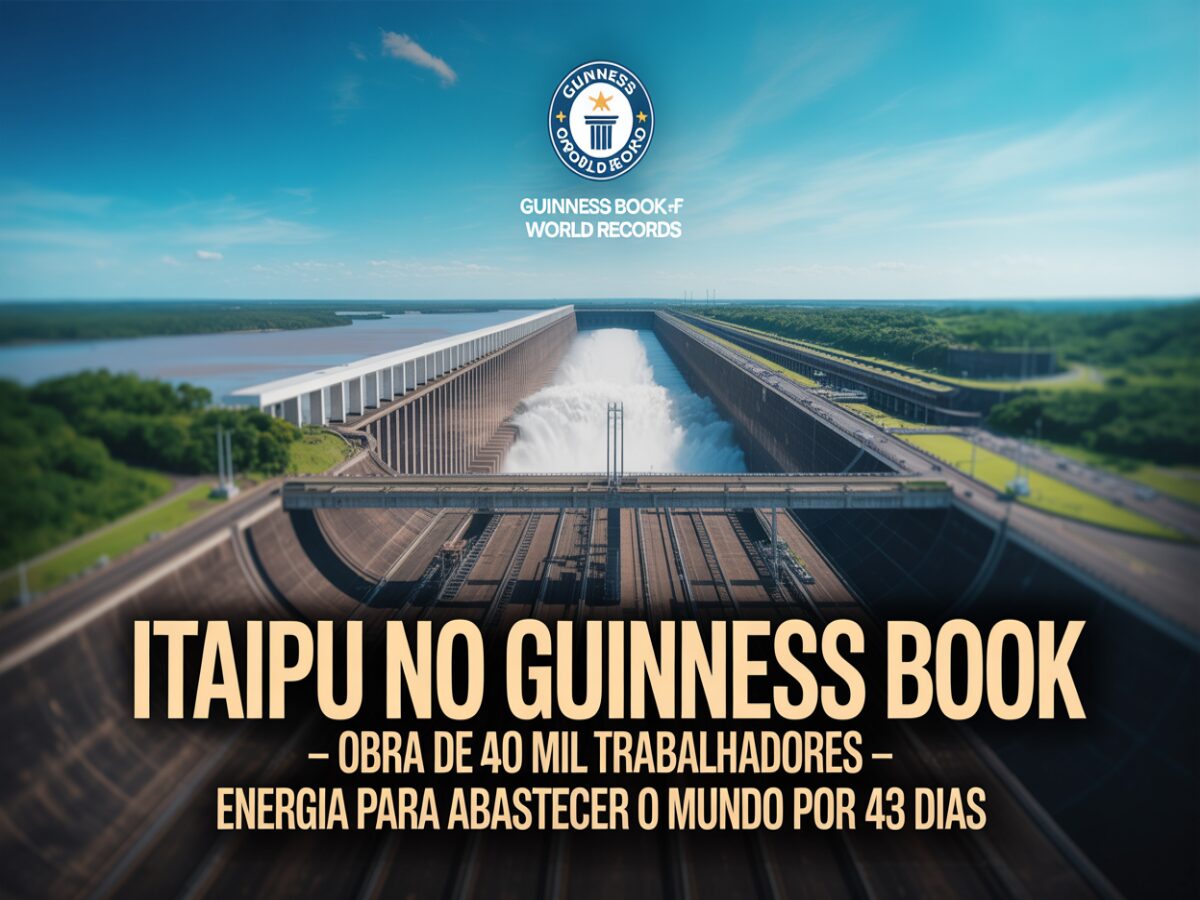

Brazilian Power Plant Dominates the Guinness Book with Historic Feats: Project of 40,000 Workers, with Steel for 380 Eiffel Towers and Record Accumulated Energy to Supply the World for 43 Days!
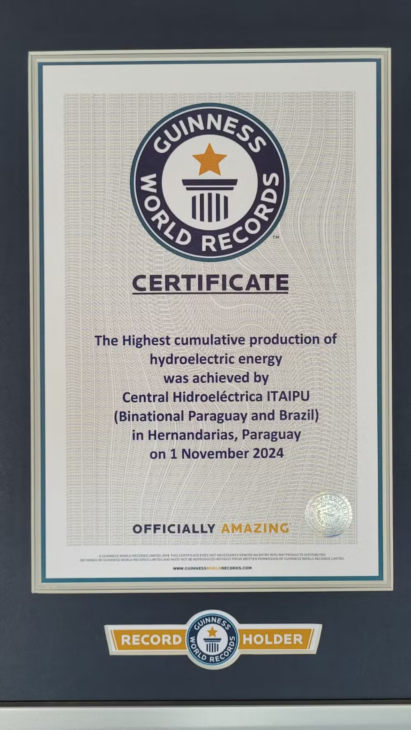
Itaipu Binacional has achieved another historic feat. The power plant, located between Brazil and Paraguay, once again outdoes the Three Gorges Dam in China and has been included in the Guinness Book for the “highest accumulated electricity generation” in the world. The title was announced at a special event on the Brazilian bank in Foz do Iguaçu on November 1, 2024.
Since it began operating in 1984, Itaipu has been accumulating impressive numbers. By October 31, a total of 3,038,273,179 megawatt-hours (MWh) of electricity had been generated, enough to supply the entire planet for 43 days or meet Brazil’s needs for nearly six years. The event was attended by Brazilian and Paraguayan authorities, including Ministers Fernando Haddad and Alexandre Silveira.
This achievement reaffirms the global relevance of the power plant. During the naming ceremony, held in the hall of the Production Building, a Guinness Book judge presented the title to the Brazilian Director-General, Enio Verri, and to the Paraguayan Director, Justo Aricio Zacarías Irún.
-
Son of a seamstress from the rural area of Ceará who did not speak English wins a scholarship of over 2 million reais at Williams College, one of the top 10 universities in the United States, covering everything including dormitory, meals, and annual trips to Brazil.

-
Bill Gates revealed that the true secret behind every great achievement is not a brilliant leap but rather small improvements repeated over the years, and the data from his own career and the fight against climate change prove that he is right.

-
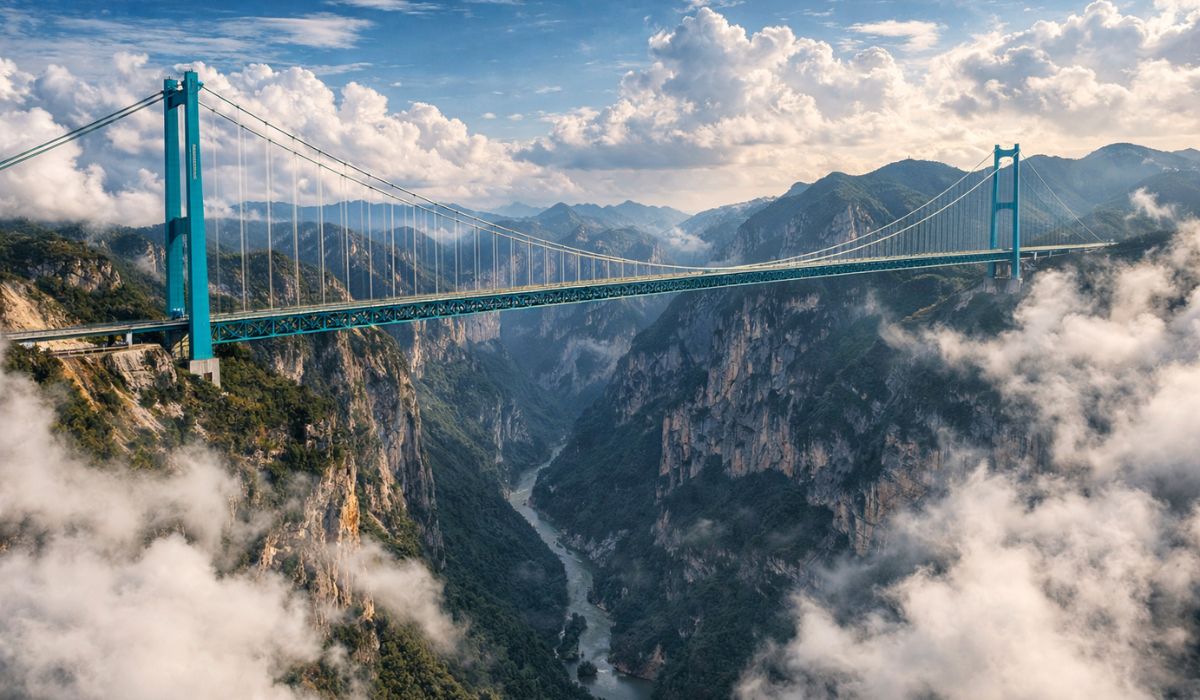
With 22 thousand tons of steel, a height nearly three times greater than the Eiffel Tower, and a cost of R$ 1.6 billion, China is building the highest bridge on the planet over a colossal canyon, reducing a crossing time of over 2 hours to just over 2 minutes.
-
With more than 635,000 doctors, Brazil sees competition increasing in large cities, and recent graduates are competing for shifts at an accelerated pace while the countryside still faces shortages.


Itaipu Binacional Enters the Guinness Book: A Milestone in Energy Production


With Investments Equivalent to $35.93 Billion, It’s the Second Mention in the Guinness for Itaipu Plant, a Historic Milestone in Construction
This is not the first time Itaipu has entered the Guinness Book. The plant was already recognized as the most expensive object on Earth, valued at over $27 billion in 1984 (equivalent to $35.93 billion today). This colossal construction on the Paraná River is an impressive example of modern engineering.
In addition to its monumental cost, Itaipu impresses with its structural data. The steel and iron used in its construction are enough to build 380 Eiffel Towers. Its dam reaches 196 meters in height, equivalent to a 65-story building. The total length of the dam is 7.9 km, consolidating it as a work of unparalleled grandeur.
These numbers are just the basis for the greatness of the plant. Its continuous operation, 24 hours a day, makes it a pillar of energy production in Brazil and Paraguay.
An Energy Supply Sufficient to Power a City of 1.5 Million Inhabitants: Plant Releases Up to 62.2 Million Liters of Water per Second, 40 Times More Than the Average Flow of the Iguazu Falls
Itaipu has 20 generating units, each capable of supplying a city of 1.5 million inhabitants. This impressive energy production once represented 25% of national consumption in 1997. Today, with new sources integrated into the system, the plant meets about 8% to 10% of Brazilian demand.
Moreover, Itaipu serves as an “emergency battery” for critical situations. In 2023, during the national blackout, it played a crucial role in restoring power. This versatility reinforces its importance in the current energy landscape.
The plant’s spillway is also impressive. It can release up to 62.2 million liters of water per second, 40 times more than the average flow of the Iguazu Falls.
Construction of Itaipu Was Considered a “Herculean Task,” Involving Over 40,000 Workers
Between 1975 and 1978, the construction of Itaipu began to take shape. Brazilian and Paraguayan technicians chose the ideal location, dubbed “the rock that sings,” in Tupi. The project transformed the region of Foz do Iguaçu, which went from a city with two paved streets to an urban hub of over 100,000 inhabitants.
The construction was considered a “Herculean task,” involving over 40,000 workers. To accommodate them, 9,000 houses and a hospital were built. Between 1982 and 1986, the reservoir was formed, and in May 1984, Itaipu began generating power.
This progress directly reflected on the regional economy and the socioeconomic development of western Paraná.
One of the Seven Wonders of the Modern World
The electricity generation of Itaipu symbolizes the excellence of modern engineering. In 1995, it was elected one of the Seven Wonders of the Modern World by engineers from around the globe. The selection highlighted both its monumentality and its positive impact on surrounding communities.
Today, the lake formed by the plant, stretching 170 km, is one of the region’s top tourist attractions. This area not only contributes to tourism but also plays a vital ecological role.








Muito orgulho de tal reconhecimento, obra colossau, uma pena, que se arrasta para décadas, de não ter surgido outra obra impactante, um exemplo que nos falta, um Modal de Mobilidade que alcance todo o Brasil, e dignifica, a exemplo de muitos Países, TRENS, Mobilidades sobre Trilhos por todo o Brasil, passageiros.
Se fosse hoje não conseguiria autorização do IBAMA para construir, porque nem a BR319 que já existe, o que falta é manutenção, asfaltamento, o Ibama não autoriza e fica essa briga por décadas.
Obra maravilhosa faraônica estou lendo uma reportagem de um a obra que tenho orgulho de ter ajudado a construir