





 English
  Francês
  Alemão
  Italiano
  Japonês
  Norueguês
  Portuguese
  Spanish
 6 min of reading
  0 comments


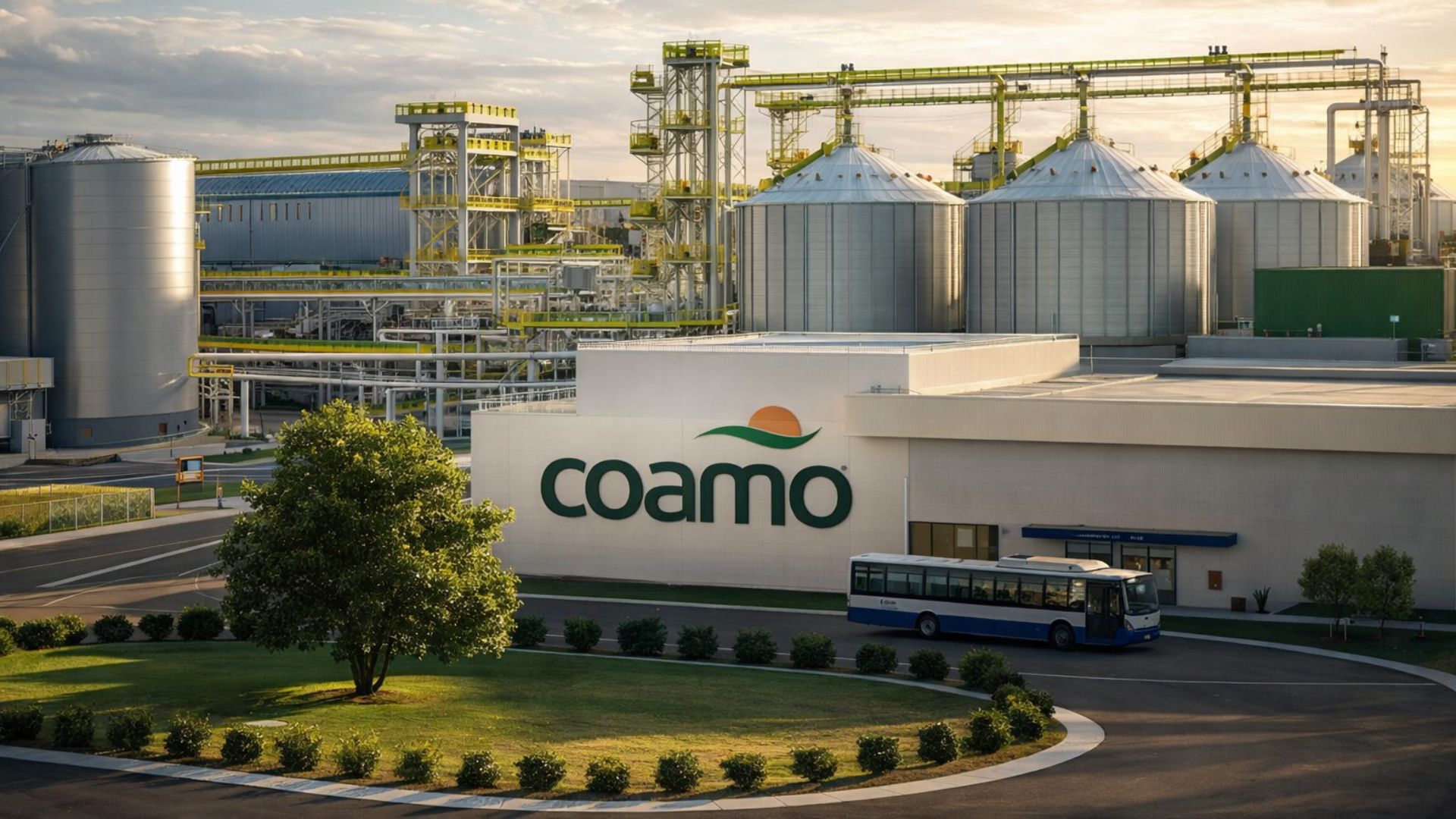
Advancement of the New Ethanol Plant in Campo Mourão Marks Billion-Dollar Investment by Coamo to Transform Corn into Biofuels, Expand Agricultural Industrialization and Generate New Income Opportunities for Producers.
The construction of a new ethanol plant for corn in Campo Mourão is progressing and represents one of the largest recent investments by Coamo Agroindustrial Cooperative in the agro-industrial sector. With an estimated investment of R$ 1.7 billion, the project signifies an important step in the cooperative’s strategy to enhance the verticalization of agricultural production and transform a significant portion of the corn harvest into biofuels and industrial derivatives.
According to an article published by Tribuna do Interior on March 8, once operational, the plant will have the capacity to process about 1,700 tons of corn per day and produce approximately 765,000 liters of ethanol daily, in addition to important co-products such as DDGS (protein meal used in animal nutrition) and corn oil. The initiative is part of a growing movement in Brazilian agribusiness to add value to agricultural commodities through industrialization.
The project also reinforces the importance of Campo Mourão as one of the main agro-industrial hubs in Paraná. By investing in a new ethanol plant, Coamo expands its operations in the biofuels sector, a segment that is gaining relevance in the global energy landscape due to the search for renewable and less polluting sources.
-
Brazil accelerates decarbonization in the South: International forum in Foz do Iguaçu gathers leaders to discuss the advancement of biomethane in the energy matrix and the potential of “caipira pre-salt.”

-
As diesel prices soar due to conflicts in the Middle East, a Brazilian city decides to test a little-known biofuel that promises to completely replace fossil fuel without adaptation and could change the future of energy in the country.

-
Innovation with biofuel engines transforms agribusiness by replacing diesel without the need for major adaptations, ensuring energy efficiency and helping to reduce dependence on oil.
-
Used Cooking Oil Transforms Into Kerosene: How 1 Million Tons of Used Fat Are at the Center of an Aviation Fuel Market That Could Attract Over $1 Trillion in Investments, Already Fuels Planes with Up to 80% Lower Emissions, and Triggered a Global Competition for This Waste


Construction of the Ethanol Plant in Campo Mourão Enters the Most Intense Phase of Execution
The construction of the ethanol plant in Campo Mourão has entered a decisive phase. According to the management of Coamo, the engineering portion of the project is already fully resolved and nearly all the industrial equipment needed for operation has been negotiated with suppliers.
The current phase focuses on civil construction and the assembly of industrial structures that will support production. It is a large-scale project within the cooperative’s industrial park, requiring complex logistical and operational planning.
Initially, Coamo expected to inaugurate the ethanol plant within this year. However, adjustments to the project and difficulties with suppliers have altered the original schedule. The new expectation is that operations will begin between January and February of next year, following the completion of the final stages of installation and industrial testing.
Despite this adjustment in timeline, the project continues to progress and is already considered an important milestone in the cooperative’s agro-industrial expansion in Campo Mourão.
Scale of the Coamo Project Impresses and Involves Movement of 3 Million Cubic Meters of Earth
The magnitude of the new ethanol plant can be observed by the scale of the civil works necessary for its implementation. According to Coamo, the project involves approximately three million cubic meters of earth movement, the largest earthworks ever carried out by the cooperative in its history.
This volume of work demonstrates the complexity of the industrial structure being built in Campo Mourão. The installation of the plant requires ample areas for the installation of equipment, silos, tanks, processing units, and logistical infrastructure.
The comparison made by the cooperative’s management illustrates the project’s scale well. The work is often described as similar to the construction of a small industrial city within the Coamo complex.
This infrastructure will be essential to sustain the continuous operation of the ethanol plant, which is expected to operate with high processing capacity and a high level of industrial efficiency.

Coamo’s Strategy Bets on Biofuels to Increase Producers’ Income
The new ethanol plant in Campo Mourão is part of a broader strategy by Coamo to add value to the agricultural production of its members. Instead of just marketing unprocessed grains, the cooperative aims to expand the industrial processing of corn and soybeans.
By transforming corn into biofuels, the cooperative creates new market opportunities and expands revenue sources within the production chain. This strategy also helps reduce dependence on fluctuations in the international commodities market.
In the case of corn, Brazil has increased its ethanol production from the grain, following a trend that began mainly in the Midwest region. The advancement of this industry has stimulated new investments and increased the sector’s competitiveness.
With the new ethanol plant, Coamo will compete in a market dominated by large groups specialized in the production of biofuels derived from corn.

Annual Consumption of Up to 650,000 Tons of Corn Strengthens Regional Market
In the initial phase of operation, the ethanol plant is expected to consume between 600,000 and 650,000 tons of corn per year. This volume represents only a portion of the production received by Coamo, which currently receives about 3 million tons of the grain annually.
This scenario shows that there is still significant growth potential for industrial corn processing within the cooperative. Even with the new plant, a large part of the production will continue to be directed to the traditional grain market.
Nevertheless, the installation of the ethanol plant in Campo Mourão creates an additional marketing alternative for producers. The increase in domestic demand for corn is likely to contribute to better price formation and greater market stability. Furthermore, the transformation of the grain into biofuels generates higher value-added products, strengthening the entire production chain economically.
Coamo’s Ethanol Plant is Already Born Ready for Future Capacity Expansion
During the project’s development, Coamo decided to make important adjustments to the structure of the new ethanol plant. The goal was to prepare the plant to allow for future production capacity expansion.
This means that part of the infrastructure is already sized to support a potential doubling of production in the future. Physical spaces, industrial structures, and logistical systems have been planned to facilitate a possible second phase of expansion.
Although these changes required adjustments to the project schedule, the decision may reduce costs and accelerate new investment phases if the biofuels market continues to grow.
For Coamo, this early preparation is a way to ensure long-term competitiveness and keep up with the expansion of agricultural production in Campo Mourão and other regions served by the cooperative.
Industrial Diversification Includes Corn Ethanol and New Biodiesel Project
The investment in the ethanol plant in Campo Mourão is part of a larger set of industrial initiatives by Coamo. The cooperative is also advancing in another relevant project: the construction of a new biodiesel plant in the municipality of Paranaguá.
According to the cooperative, the engineering portion of this project is also well advanced, and the construction site is expected to be assembled between April and May. The expectation is that the unit will start operations in the middle of next year.
With this, Coamo will start producing two important types of biofuels: corn ethanol and soybean biodiesel. This diversification enhances the cooperative’s industrial portfolio and reinforces its strategy for verticalizing agricultural production.
Additionally, the cooperative already has a wide range of grain-derived products, including refined oil, vegetable fats, margarines, and special meals, which further strengthens its position in the agro-industrial sector.
Transformation of Corn into Renewable Energy Expands Opportunities in Agribusiness
The construction of the new ethanol plant in Campo Mourão represents an important step in the evolution of Coamo‘s business model. By investing in the transformation of corn into biofuels, the cooperative expands producers’ access to more sophisticated markets with higher added value.
This strategy allows farmers to participate in industrial and energy chains that would be difficult to access individually. Industrialization within the cooperative creates scale, reduces costs, and expands the commercial reach of products.
At the same time, the project reinforces the role of Brazilian agribusiness in renewable energy production. The growth of the biofuels sector has been highlighted as one of the paths to reduce emissions and diversify the energy matrix.
In this context, Coamo‘s ethanol plant is likely to become one of the hallmarks of agro-industrial expansion in Campo Mourão, consolidating the cooperative’s strategy to transform grains into new products, new markets, and new opportunities for its members.









-

Uma pessoa reagiu a isso.