





 English
  Francês
  Alemão
  Italiano
  Japonês
  Norueguês
  Portuguese
  Spanish
  3 min of reading


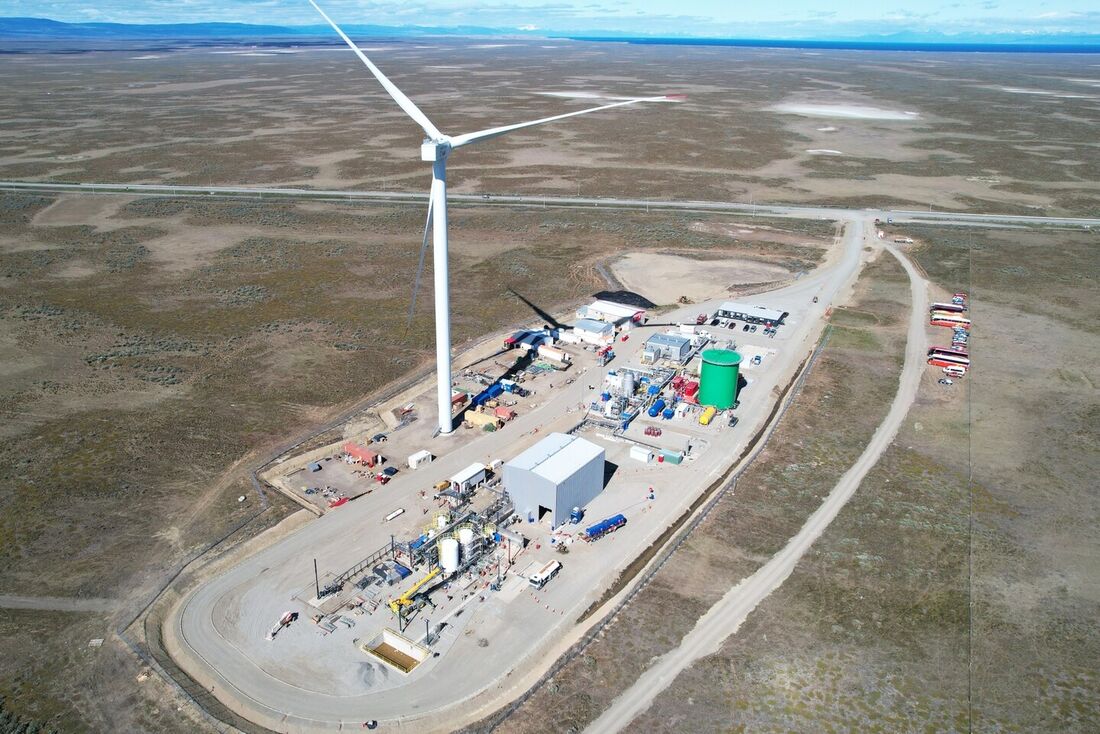
Synthetic Gasoline Without Oil Is the New Bet for the Future of the Global Fuel Market, Aiming to Meet the High Demand for the Product. The Production Plant of the Resource, Called Haru Oni, Has Already Begun Operations and Is Running at Full Steam.
The search for alternatives to fuels with oil continues to be one of the main objectives of the global energy sector. In recent years, a synthetic gasoline project without oil began to take shape, but it had not been made viable until now. Last Tuesday, (12/20), synthetic fuel production started in southern Chile, in Magallanes, at the plant named Haru Oni. Now, the global market is witnessing an alternative to the high demands for gasoline in the coming years.
Synthetic Gasoline Project Without Oil Has Been Completed and Resource Production Is Already Happening at the Chilean Haru Oni Plant
Several years ago, a project for a possible synthetic gasoline without the use of oil began to take form, but it was only in experimental phases, with no predictions for the start of mass production.
However, the year 2022 brought significant advancements for the project, and this week, the Haru Oni plant, located in southern Chile, started the production of the resource, which promises to be the future of the energy market.
-
Ocyan opens registrations for startups focused on innovation in the oil and gas sector and will select projects for Innovation Day with the support of Nexio.

-
Petrobras announces new oil discovery in the pre-salt of the Campos Basin and reinforces Brazil’s prominence with high-quality reserves that can increase production and energy revenues.

-
Alert in the fuel market: Analysts and a former director of ANP warn that oil prices may worsen in the coming months due to global instability.
-
Ocyan brings executives and digital solutions to Macaé Energy 2026 and highlights offshore expansion with Nexio and a new base in Macaé.


The plant combines electrical energy, water, and CO2 to generate e-Methanol and, eventually, carbon-neutral gasoline from electricity.
In this way, the fuels generated at the Haru Oni plant are being referred to by the international market as electro-fuels or electric fuels (e-Fuels).
For synthesizing gasoline without oil, the base used is hydrogen, produced in an electrolyzer with electrical energy from wind turbines. This technology was provided to the Haru Oni plant by Siemens.
It is one of the participants in the project. To make the production of synthetic gasoline viable, Siemens Energy, Porsche, HIF Global, and other companies in the energy sector came together in a consortium.
The automotive company Porsche had already announced its initiative for future use of synthetic fuels, and is now part of the production of gasoline without oil.
Haru Oni Plant Expected to Reach 130 Thousand Liters of Production of Synthetic Fuel Without Oil During Pilot Phase Throughout 2023
According to the companies in the Haru Oni consortium, the plant is expected to reach a production of 130 thousand liters of synthetic fuel per year still in 2023, during the project’s pilot phase.
After this first year, the companies expect production to continue growing exponentially, until reaching the mark of 55 million liters per year by the middle of the decade, a significant result for the initial years of operation.
Two years after that, around the year 2027, expectations for the production capacity of synthetic gasoline are quite high. Companies project around 550 million liters per year at the Haru Oni plant.
By way of comparison, according to the projected fuel demand in Brazil by the Energy Research Company (EPE), Brazil will need 38.1 billion liters just in 2023.
Thus, the new synthetic fuel initiative without oil could be a viable alternative to meet part of this demand.
Although it is still in the initial phase, the Haru Oni plant could significantly contribute to minimizing the impacts of the growing demand for gasoline over the next decade.







Seja o primeiro a reagir!