





 Portuguese
  English
  Spanish
  5 min of reading
  2 comments


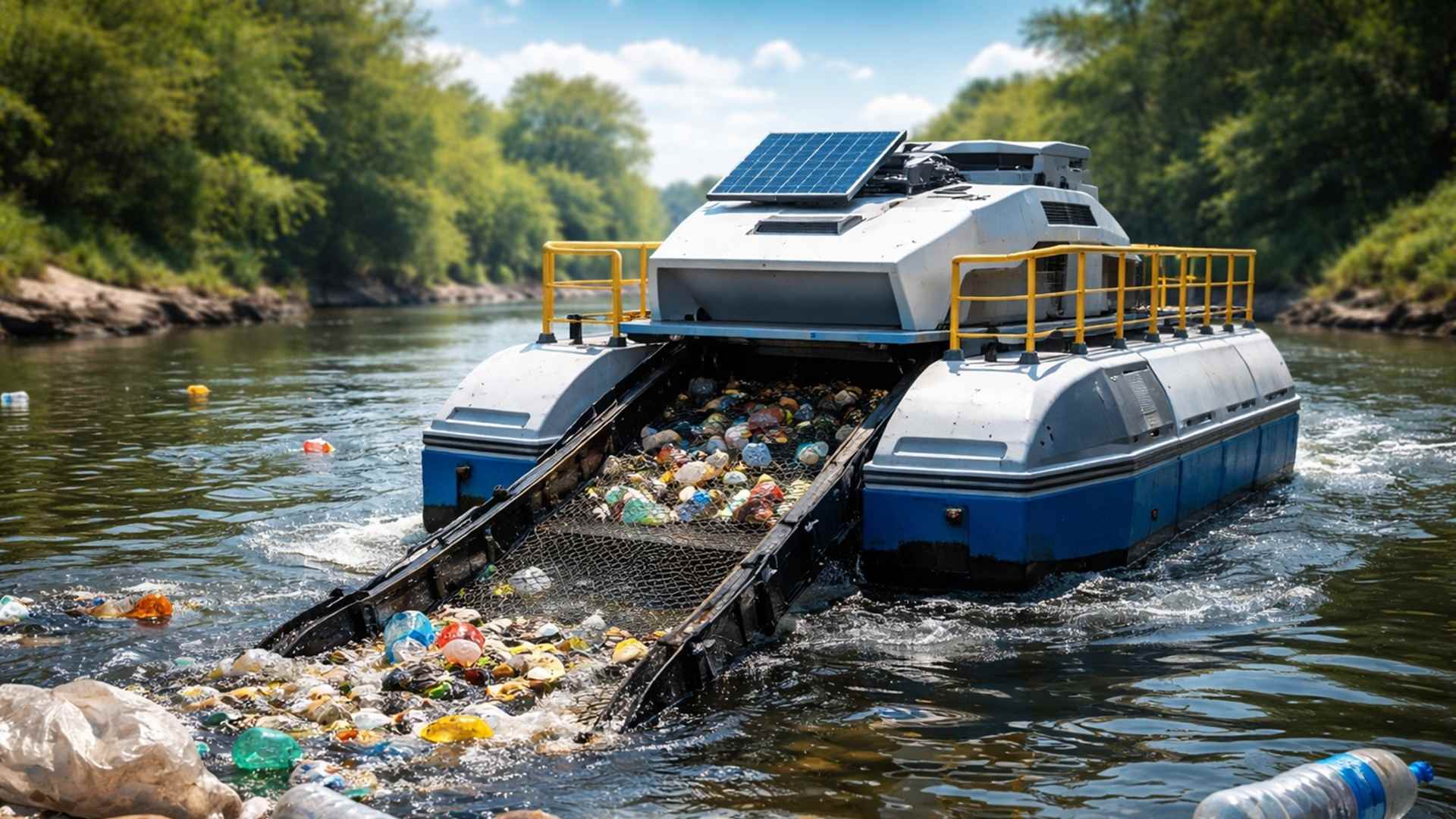


Initiatives Such As The Interceptor And The WasteShark Use Robots To Remove Trash From Rivers, Offering Innovative Technological Solutions That Positively Impact River Cleaning And Environmental Preservation
River pollution has become a growing problem in various parts of the world, with significant environmental and economic impacts.
The accumulation of waste, especially plastics, affects biodiversity and compromises the health of aquatic ecosystems. According to a report from the United Nations Environment Programme (UNEP), it is estimated that 80% of ocean waste comes from land-based sources, with rivers being the main transport routes for waste to the oceans.
In response to this environmental crisis, various innovative projects and robots have been developed to remove trash from rivers, using advanced technology to tackle this global challenge.
-
Friends have been building a small “town” for 30 years to grow old together, with compact houses, a common area, nature surrounding it, and a collective life project designed for friendship, coexistence, and simplicity.

-
This small town in Germany created its own currency 24 years ago, today it circulates millions per year, is accepted in over 300 stores, and the German government allowed all of this to happen under one condition.

-
Curitiba is shrinking and is expected to lose 97,000 residents by 2050, while inland cities in Paraná such as Sarandi, Araucária, and Toledo are experiencing accelerated growth that is changing the entire state’s map.

-
Tourists were poisoned on Everest in a million-dollar fraud scheme involving helicopters that diverted over $19 million and shocked international authorities.


Interceptor Project: Solar Robotic Solution For Trash Capture In Rivers
The Interceptor, developed by the organization The Ocean Cleanup, is a large-scale project that utilizes robots to collect floating trash in rivers before it reaches the oceans. These robotic systems are installed in rivers around the world, including in countries in Latin America and Southeast Asia.
Using solar energy, the Interceptor operates with zero carbon emissions, making it an environmentally sustainable solution.
Each unit is capable of removing up to 100,000 kilograms of trash per day, having a significant impact on reducing river pollution.
The system consists of a floating platform equipped with a trash capture conveyor that collects debris as it floats down the river.
The waste is then directed to a storage compartment, where it is later removed. The project is already operational in several locations, including Indonesia, Brazil, and Africa, with plans to expand to other major rivers.
The Interceptor is one of the most visible initiatives in the fight against river pollution and highlights the importance of using robots in the preservation of water bodies.
WasteShark: Autonomous Aquatic Robot For Debris Collection In Rivers And Lakes
The WasteShark is an autonomous aquatic robot developed by RanMarine Technology, which stands out for its ability to operate independently to remove trash from rivers and other water bodies. The main innovation of the WasteShark is its autonomous navigation, which allows the device to collect waste efficiently and at a low operational cost. The robot can remove up to 200 kilograms of trash per day, functioning in ports, rivers, canals, and lakes.
Equipped with sensor technology, the WasteShark is capable of navigating precisely, identifying and collecting plastic waste and other debris.
Its design includes a collection system capable of storing materials such as plastic trash, bottles, and even invasive vegetation, which are often found in large quantities on the water’s surface.
In addition to being an example of robotics applied to river cleaning, the WasteShark also contributes to environmental awareness by providing data on the quantity and type of waste collected, promoting data-driven solutions for water waste management.
Trashbot: The Local Innovation For Community Cleanup Of The Chicago River
In Chicago, the Trashbot project has stood out as a local and innovative solution to remove trash from the river. The Trashbot is a remotely controlled floating robot designed to traverse the Chicago River, collecting plastic waste and other floating materials. The great innovation of this project is its integration with the local community, which is directly involved in monitoring and operating the robot, making the solution not only technological but also collaborative.
The Trashbot has a storage capacity of up to 2.5 tons of trash, making it an effective option for dealing with urban pollution in a high waste traffic environment. One of the main advantages of the Trashbot is its versatility and adaptability to different types of river environments.
The robot is also designed to be accessible, allowing communities around the rivers to actively participate in cleaning efforts, promoting awareness of the importance of keeping rivers clean. This type of project also serves as a model for how cities can incorporate technology and community engagement to solve urban environmental problems.
The Global Impact Of Robots On River Cleaning
The use of robots in removing trash from rivers not only combats river pollution but also has significant implications for environmental preservation on a global scale.
Studies indicate that pollution in rivers can result in biodiversity loss, affecting aquatic species and the quality of water consumed by communities around the rivers.
Additionally, the presence of large amounts of plastic waste in rivers contributes to the growing crisis of ocean pollution, as rivers serve as transport channels for waste that eventually reaches the oceans.
With the implementation of robots like the Interceptor, the WasteShark, and the Trashbot, it is possible to not only collect large volumes of trash but also significantly reduce pollution in rivers and protect local aquatic ecosystems.
These projects demonstrate how robotic technology can be effectively applied to solve complex environmental problems, providing scalable and sustainable solutions to the water pollution challenges faced by many cities around the world.
The use of robots in river cleaning also reflects a growing trend to integrate artificial intelligence and autonomous technology into environmental initiatives.
These robotic devices are more efficient and less costly than traditional solutions, and they can operate continuously without the need for constant human intervention.
Thus, by employing technologies like these, it is possible to achieve ambitious goals of waste reduction and preservation of natural resources with minimal impact on communities and ecosystems.
Conclusion: Technology For River And Planet Preservation
The use of robots to remove trash from rivers is a promising and innovative solution to one of the biggest environmental problems of the modern world.
Projects like the Interceptor, the WasteShark, and the Trashbot are leading this change, using cutting-edge technology to combat pollution and preserve aquatic ecosystems.
While challenges remain significant, these initiatives represent an important step towards a cleaner and more sustainable future for the planet’s rivers and oceans.
SOURCE: This article was based on information obtained from reliable sources such as The Ocean Cleanup, RanMarine Technology, and Urban Rivers.










Muy bueno, la tecnología al servicio de la descontaminación de fuentes de agua.
Y con algo de conciencia ciudadana sería todo un éxito.