





 Portuguese
  English
  Spanish
  4 min of reading
  0 comments


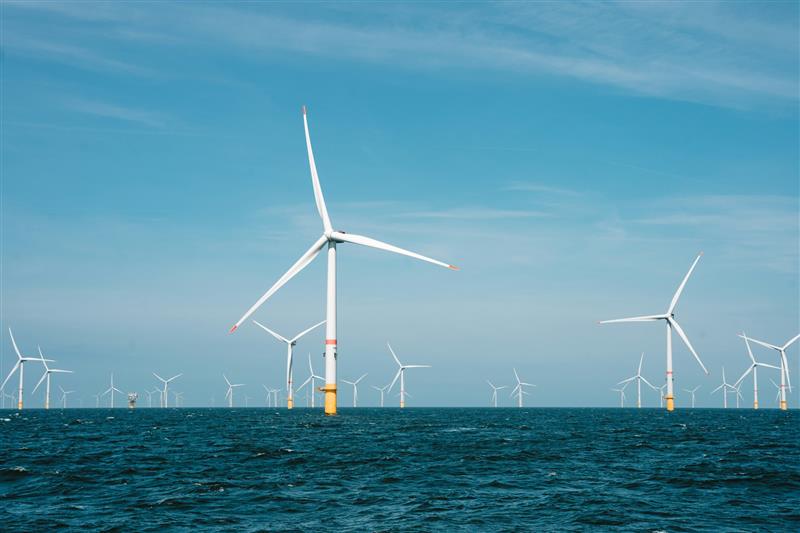
Eight Entities from the Electricity Sector and Industry Sent a Formal Request to the National Congress to Overturn the Vetoes of President Luiz Inácio Lula da Silva on the Offshore Wind Law.
The document was submitted to the President of the Senate, Davi Alcolumbre (União-AP), and to the President of the Chamber of Deputies, Hugo Motta (Republicanos-PB). According to the entities, the changes made by the government may affect investments in the sector and increase energy costs in Brazil.
Furthermore, the associations argue that the removal of these points undermines the predictability of the energy market. Thus, investors may feel insecure about making investments in the sector, which compromises the growth of renewable energies.
Main Vetoed Points
Among the vetoed excerpts in the presidential sanction, two points are considered crucial by the sector:
-
A new Brazilian shopping center worth R$ 400 million will be built in an area equivalent to more than 4 football fields, featuring 90 stores, 5 cinemas, a supermarket, a college, and parking for 1,700 cars, potentially generating 3,000 jobs.

-
Larger than entire cities in Brazil: BYD is building a 4.6 km² complex in Bahia with a capacity for 600,000 vehicles per year, but the discovery of 163 workers in conditions analogous to slavery has shaken the entire project.

-
With an investment of R$ 612 million, a capacity to process 1.2 million liters of milk per day, Piracanjuba inaugurates a mega cheese factory that increases national production, reduces dependence on imports, and repositions Brazil on the global dairy map.

-
Brazilian city gains industrial hub for 85 companies that is equivalent to 55 football fields.

- Postponement to 2050 of the end of contracting thermal power plants with Power Commercialization Contracts in the Regulated Environment (CCEAR). According to the government, this measure could prolong dependence on fossil sources, delaying the transition to renewable energies.
- Extension of 20 years for contracts of Small Hydroelectric Plants (PCHs), biomass power plants, and wind farms included in the Incentive Program for Alternative Electric Energy Sources (Proinfa). The government’s justification is that this extension would create an imbalance in the energy market, hindering competition and affecting innovation in the sector.
In addition, the government argues that maintaining these rules would benefit only a few companies. At the same time, it would prevent new competitors from entering the sector. To avoid this scenario, the vetoes were applied.
Impacts on the Electric Sector
The entities that signed the request warn that maintaining the vetoes could impact new investments, the development of renewable sources, and job creation.
According to the calculations presented, the revocation of the vetoes could attract R$ 68 billion in investments and generate 200,000 new jobs per year.
Moreover, the group argues that the expansion of Hydroelectric Plants up to 50 MW could reduce the need for thermal power plants. Thus, there would be a more sustainable transition to cleaner and less expensive sources.
Another point highlighted in the document sent to Congress is the impact on electricity costs.
According to estimates, overturning the vetoes would reduce electricity prices for consumers. In the case of PCHs, the cost per megawatt-hour would drop from R$ 465 to R$ 285. For the wind energy from Proinfa, the reduction would be from R$ 801 to R$ 189 per MWh.
For this reason, the entities argue that overturning the vetoes would bring positive impacts for both the market and end consumers. Thus, it would be possible to ensure a more accessible and competitive energy sector.
Energy Security Issue
Another central argument from the electric sector is that overturning the vetoes could strengthen national energy security.
The entities claim that, if the expansion of hydroelectric plants up to 50 MW is approved, there would be an increase of 4.9 GW of firm capacity in the system. This expansion would replace 3.75 GW of gas-fired thermal plants, as outlined in the Eletrobras Law of 2021.
Additionally, the signatories of the document emphasize that the vetoed thermal generation was already provided for in previous legislation. For the sector, its replacement by renewable sources would be more economical and sustainable.
Thus, Brazil’s electrical matrix could be strengthened without compromising the sector’s competitiveness. Furthermore, the integration of new renewable sources would reduce risks associated with fluctuations in fossil fuel prices.
Impact on Proinfa and the Energy Bill
The proposal also addresses the impacts on the Incentive Program for Alternative Electric Energy Sources (Proinfa), which finances renewable source projects.
According to the entities, overturning the vetoes would allow for a relief of R$ 1.4 billion in the Energy Development Account (CDE) in 2025. This factor would lower the cost of energy for consumers and companies.
Additionally, the expansion of hydropower could help compensate for the intermittency of offshore wind energy, ensuring a more balanced energy matrix.
With this change, it would be possible to provide greater stability in energy supply, avoiding price fluctuations over time.
On the other hand, the lack of incentives for renewable sources could compromise Brazil’s competitiveness in the energy transition. Consequently, the country might lose strategic investment opportunities in the sector.
Entities Supporting the Request
The request to review the vetoes was signed by the following entities from the electricity sector:
- Brazilian Association of Clean Energy Generation (Abragel)
- Brazilian Association of PCHs and CGHs (ABRAPCH)
- Gaúcha Association for the Promotion of Small Hydroelectric Plants (AGPCH)
- Association of PCHs of Goiás (APCH)
- Santa Catarina Energy Producers Association (Apesc)
- Intermunicipal Union of Energy Generation, Transmission, and Distribution Companies of the State of Minas Gerais (SINGTD)
- Union of the Construction Industry, Generation, Transmission, and Distribution of Energy in the State of Goiás (Sindienergias)
The entities assert that the overturning of the vetoes by Congress will ensure legal security and predictability for the electricity sector.
This change could facilitate new investments and allow Brazil to advance in the energy transition in a competitive and sustainable manner. Furthermore, the measure may generate direct benefits for consumers, reducing electricity costs in the long term.
This way, the country would have a more balanced, sustainable, and efficient matrix, ensuring a reliable and accessible electricity supply for the population.









Seja o primeiro a reagir!