





 Portuguese
  English
  Spanish
 5 min of reading
  12 comments


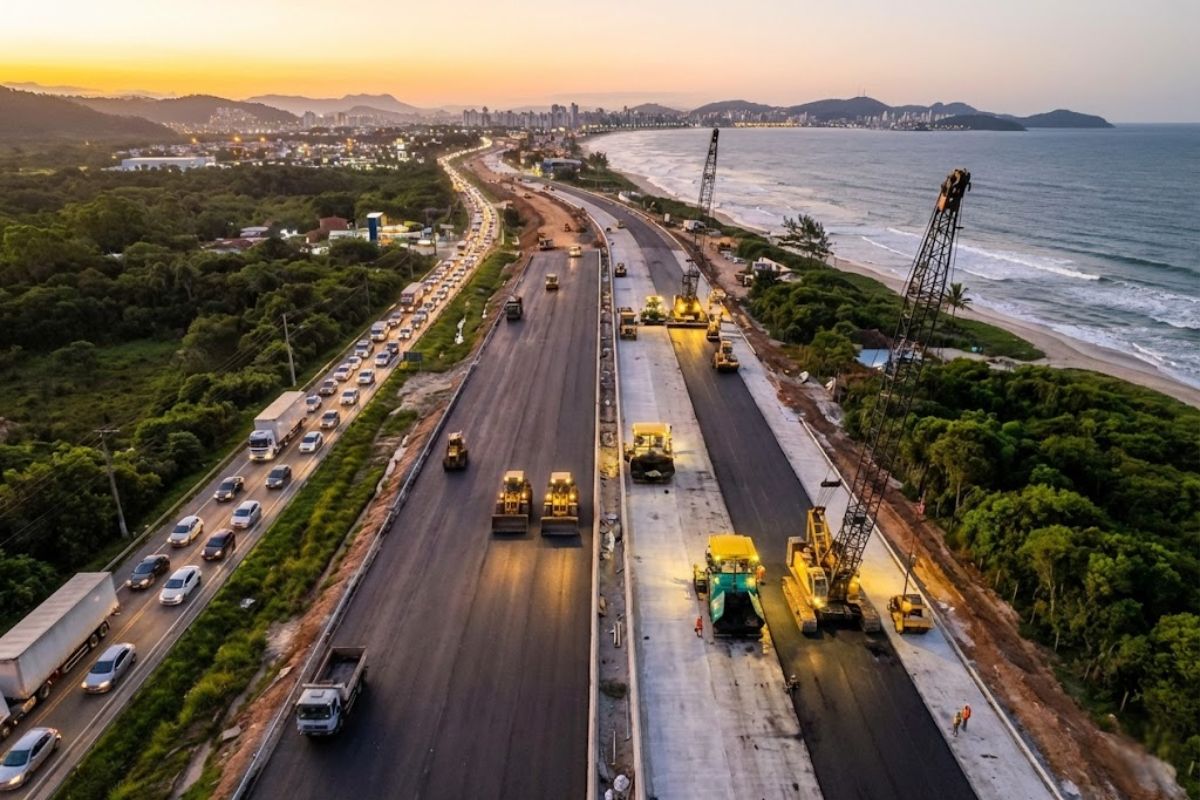


New Highway Via Mar With Six Lanes Parallel to BR 101 Promises to Relieve Congestion Between Florianópolis and Joinville and Forever Remodel the Chaotic Road Traffic of the Northern Santa Catarina Coast
Announced as a new highway strategically connecting Florianópolis and Joinville, Via Mar will have six lanes parallel to BR 101, construction starting in 2026, multiple overpasses and bridges, promising to reduce chronic congestion, shorten travel times, ease freight flow, and reorganize the coastal traffic in Santa Catarina throughout the high season. The Via Mar project was announced in phases, but a significant milestone was in October 2024, when the government of Santa Catarina signed the service order for the preparation of executive projects and environmental impact studies for the first batches. This signature marked the official launch of the technical studies and the formal planning of the highway. Recent news from November and December 2025 confirms that the state government set the construction start for the first half of 2026, reaffirming its commitment to the project.
With a route planned to connect the north of Greater Florianópolis to the Joinville region, Via Mar is envisioned with an infrastructure profile for Santa Catarina, not merely as an alternative vacation road. The highway was designed to absorb part of the flow currently concentrated on the already saturated BR 101, filled with cars, trucks, and buses, and to create a new logistic axis between ports, industries, tourism, and services along the coast.
BR 101 Saturated and Pressure for a New Structural Highway

The duplication of BR 101 in the northern section of Santa Catarina, completed in the mid-1990s, no longer meets current mobility needs.
-
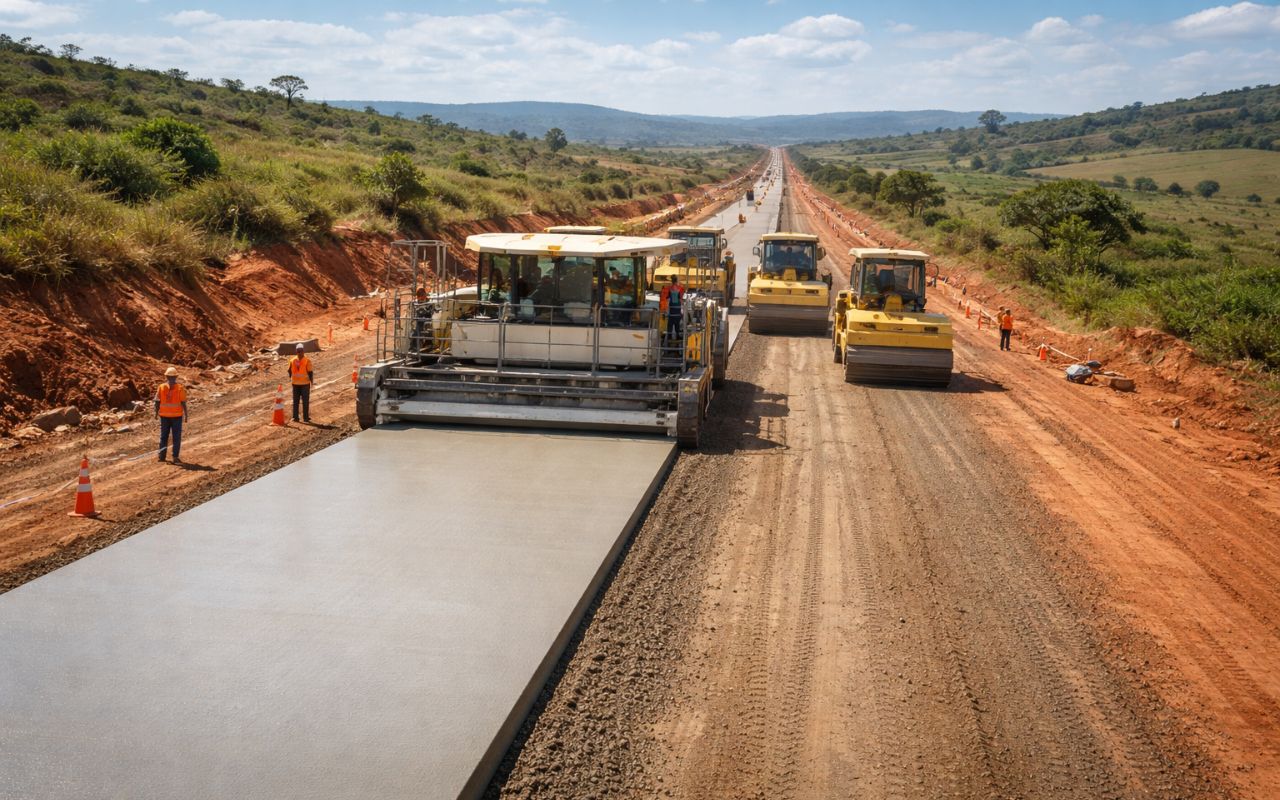
New CCR concrete paving technology promises roads up to 3x more durable, less maintenance, and cost reduction in Brazil.
-
Made from recycled plastic, plastic wood is gaining space in the construction industry because it does not rot, resists moisture, and reduces maintenance costs over the years.

-
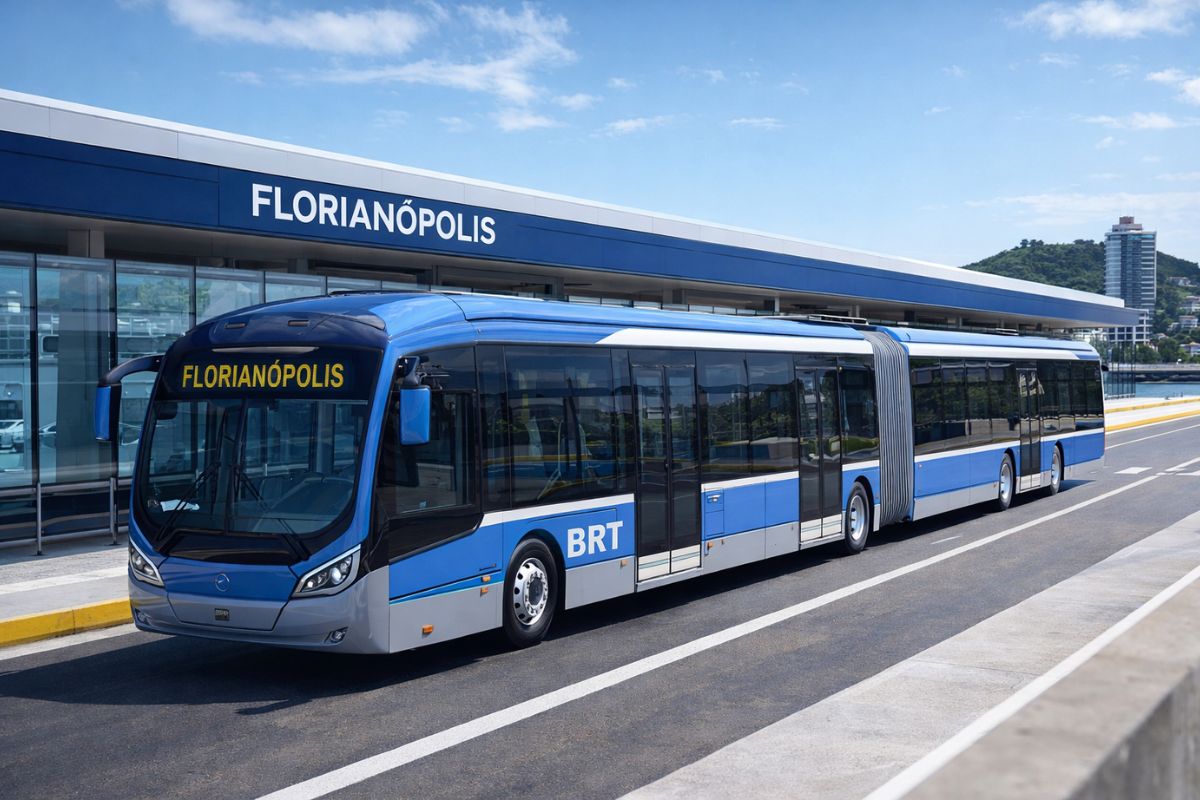
Florianópolis will receive a million-dollar BRT that will begin construction in 2026 with nearly 400 million in funding from the federal government and the Inter-American Development Bank, and the map already shows the routes for the exclusive bus corridors.
-
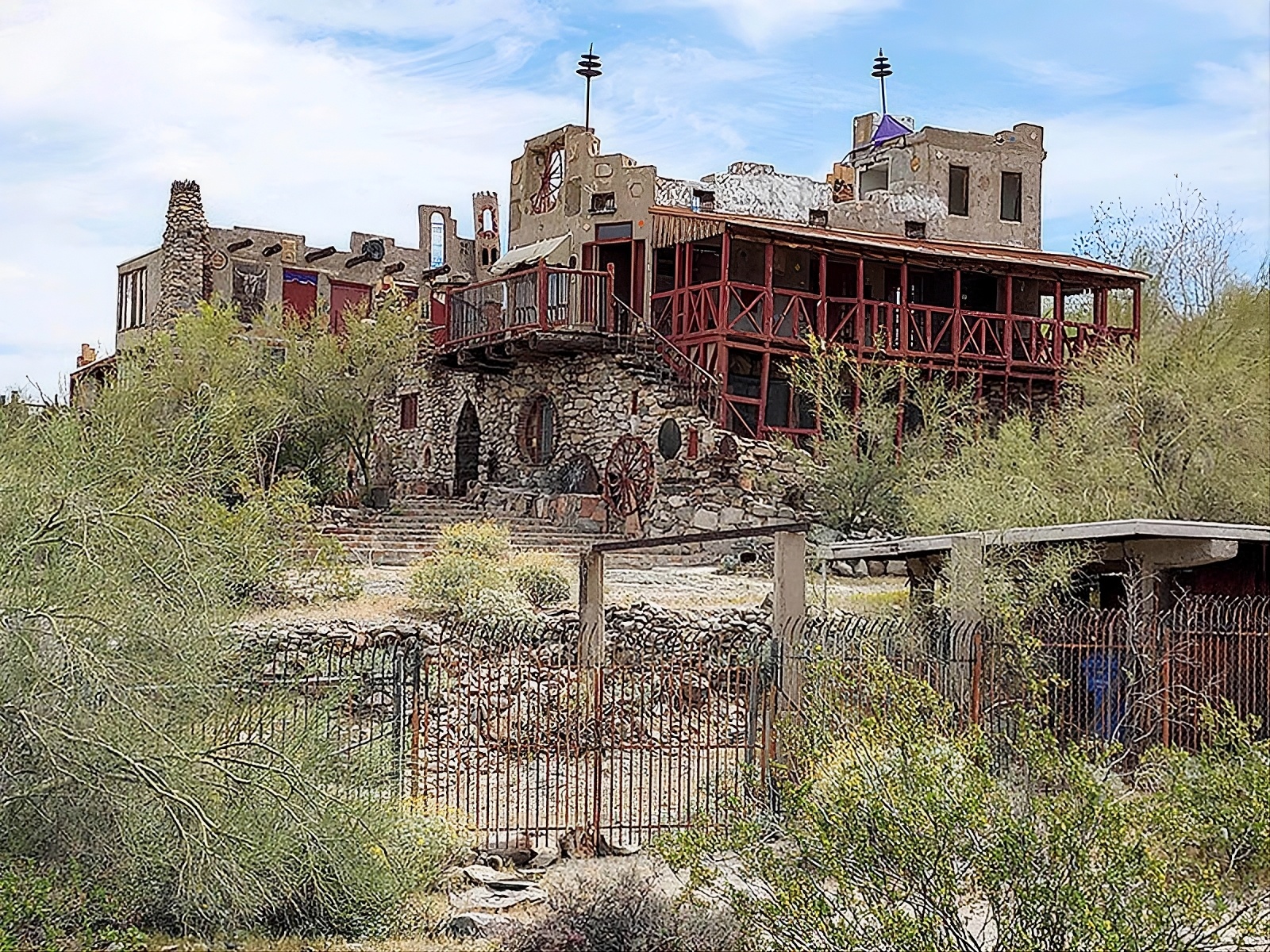
Without a blueprint, without an engineer, and using scrap from the dump, a father spends 15 years building an 18-room castle for his daughter, featuring tram tracks, 13 fireplaces, and over 700 m², which may now be demolished.

Kilometer-long traffic jams, short trips turning into hours, and recurring accidents have become the daily scenario between Florianópolis and Joinville.
Without a robust alternative, the entire land connection between the two regions depends on a single corridor.
During holidays and summer, the problem worsens, directly affecting tourism, freight transport, services, and the routine of those who work in the area.
It is in this context that the state government bets on Via Mar as a new highway parallel to BR 101, designed from the outset to operate with greater capacity and modern traffic standards.
Route, Extension, and Division Into Batches of Via Mar
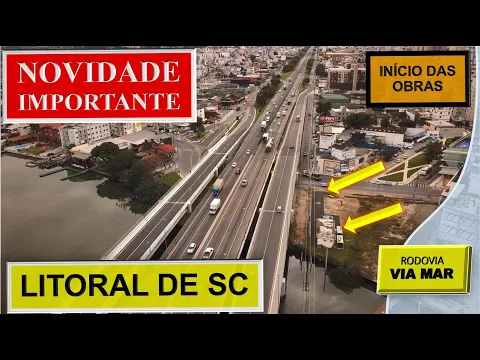

Via Mar was conceived as a new high-capacity highway, with three lanes in each direction, totaling six lanes along the axis between Joinville and the Greater Florianópolis ring.
The project divides the implementation into five large batches, with different functions and connections.
The initial segment, between Joinville and the Antônio Heil highway in the Itajaí Valley, totals approximately 90.46 kilometers, divided into four successive batches:
Batch 1: connects Joinville to BR 280 in Guaramirim, measuring 26.85 kilometers, with two overpasses and four bridges planned.
Batch 2: runs from BR 280 to SC 415, between Massaranduba and São João do Itaperiú, with 21.9 kilometers, one overpass and two bridges.
Batch 3: stretches from SC 415 to SC 414, between Luiz Alves and Navegantes, totaling 16.77 kilometers, with two bridges planned.
Batch 4: connects SC 414 to the Antônio Heil highway, crossing the Itajaí Açu River and BR 470, over a stretch of 25.87 kilometers, with four overpasses and four bridges.
Batch 5 completes the projected layout of the new highway, linking the Antônio Heil highway to the Greater Florianópolis ring, in the region between Tijucas and Biguaçu.
This section is expected to measure 54.72 kilometers, with four overpasses and four bridges, and still requires bidding to get off the ground.
Capacity, Design Standard, and Logistical Function
Via Mar was designed to operate as a high-performance corridor, with three lanes per direction in almost the entire stretch and modern standards for intersections, overpasses, and crossings.
The idea is to better separate long-distance flow from local trips, reducing the number of direct accesses and at-grade crossings that currently overload BR 101.
With the new highway, trucks and freight will have a more predictable route between industrial hubs, ports, and distribution centers along the coast, while passenger and tourism vehicles gain a second route to reach the beaches and cities of northern Santa Catarina.
Integration with highways such as BR 280, BR 470, SC 414, SC 415, and the Antônio Heil highway reinforces the role of the axis as the backbone of regional mobility.
In practice, this means less interference between heavy traffic and urban traffic, greater fluidity at the most sensitive crossings, and reduction of the risk of critical bottlenecks in accidents or emergency works.
Work Schedule and Effective Start of Operations
According to the government of Santa Catarina, the Via Mar project has already advanced in the design and division into batches phase, and the next step is to accelerate bidding and contracts to facilitate the construction site.
Governor Jorginho Mello announced that the official expectation is to see machines in the field by mid-2026, placing the start of construction of the new highway in the first half of that year.
From a technical evaluation, the challenge is not limited to starting work fronts.
It will be necessary to synchronize the timelines of the different batches, ensure environmental licensing, expropriation, and urban accesses, in addition to coordinating the execution with existing traffic on BR 101 and connecting roads.
Without this coordination, the risk is to replace one bottleneck with another, shifting the problem instead of solving it.
Expected Impact on Traffic and Routine in the Santa Catarina Coast
If the planning is fulfilled and Via Mar is delivered with the announced standards, the new highway is likely to reshape the mobility map between Florianópolis and Joinville.
The expectation is for a significant reduction in chronic congestion, especially during the high season, and reliable travel times for residents, tourists, and freight carriers.
For the productive sector, an additional route with six lanes could mean relevant logistical gains, fewer delays in deliveries, and greater predictability for industries, commerce, and services linked to the port and tourism.
For those living on the northern coast, the most noticeable change will be the ability to plan daily commutes without the current uncertainty of spending hours stuck on BR 101.
At the same time, experts warn that Via Mar does not eliminate the need for land use management, public transport, and road safety enforcement.
A new highway resolves part of the problem, but does not replace urban mobility policies, metropolitan integration, and long-term planning.
And you, do you believe that the new Via Mar highway will really end the chaotic traffic between Florianópolis and Joinville, or will traffic tend to clog again as the coast grows even more?









O Governo Federal está devolvendo 385 milhões que o governo anterior pegou emprestado do Moisés pra não parar a obra da BR 470. O Bolsonaro não devolveu ao Estado e agora coube ao Lula pagar mais esta conta, pois a preocupação dele eram as motociatas.
Da mesma forma Lula pagou os precatorios e o ICMS retido e.nao pago aos governadores. Foi um calote atrás do outro e seus apoiadores, mesmo no prejuízo, ficaram de boquinha fechada.
Ótima solução. Infelizmente o governo federal é só roubo e não estão nem ai. Por que correto seria a br101 que é federal e tem um monte de pedágios, deveria ter de 3 a 4 pistas. E está parada no tempo. Vergonha!!
O **** ganhou proporcionalmente aqui em SC o Estado com mais votos para ele, porém, como sabe que aqui está tudo no bolso, já tem um filho vereador, um outro parente em.cargo no governo do Estado e logo terá o Carlos como Senador, não fez nada a não ser passear na minha São Chico e se engasgar com camarão.
Pois eh! Nossa SC tem 28 prefeitos da direita e extrema direita presos.
Alguns corruptos da direita e da extrema direita estão como fugitivos.
E logo teremos mais presos.
O chefe maior da gangue está na ****.
Essa turma criou o roubo institucionalizado em.forma de emendas pix e vc vem culpar a esquerda.
Acorda.
certamente, e esperamos q o gov Jorginho continue oferendo o melhor p Santa Catarina q merece excelente estrutura e facilidades, a população corresponde com trabalho sério.