





 Português
  Inglês
  Espanhol
  6 min de leitura
  0 comentários


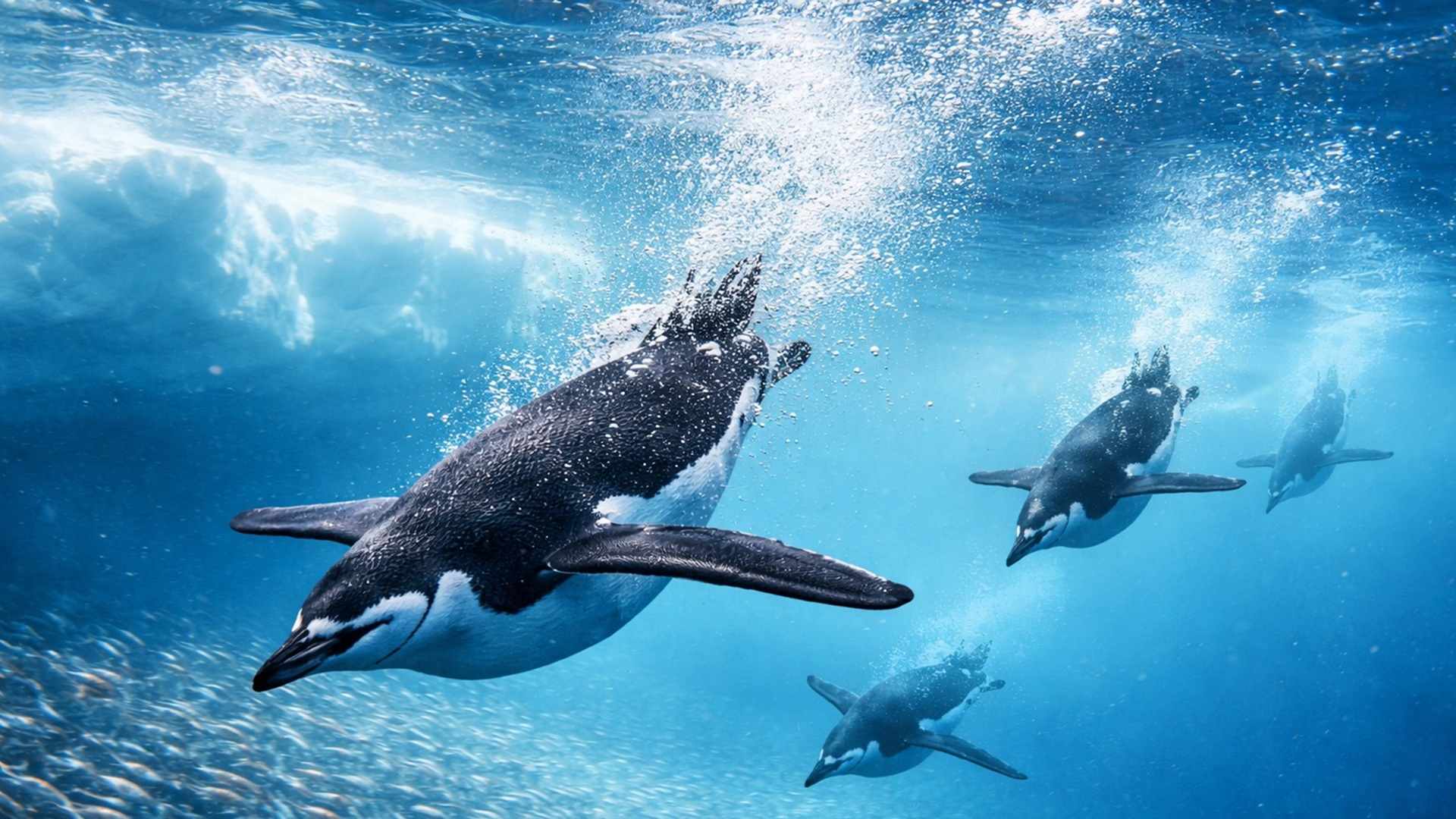
Records Obtained with High-Resolution Micro-Cameras Attached to Animals Show, for the First Time, How Gentoo Penguins Dive, Swim, and Capture Krill in the Antarctic Ocean, Revealing Patterns of Movement, Depth, Feeding Times, and Recent Changes in Behavior During the Breeding Season
Micro-Cameras with GPS Installed on the Backs of Gentoo Penguins Allowed for Recording, from the Birds’ Own Perspective, Their Swimming in the Southern Ocean, with Movements Similar to Flight, Including Movements, Dives, and Approaches to Schools of Krill During Foraging Trips from Nelson Island in Antarctica.
The recordings were obtained by a team led by researcher Lucas Krüger from the Chilean Antarctic Institute and the Millennium Institute BASE, in work conducted in the Antarctic Specially Protected Area of Punta Armonía. The central objective of the study is to better understand how penguins locate and exploit krill in different areas of the Antarctic Peninsula.
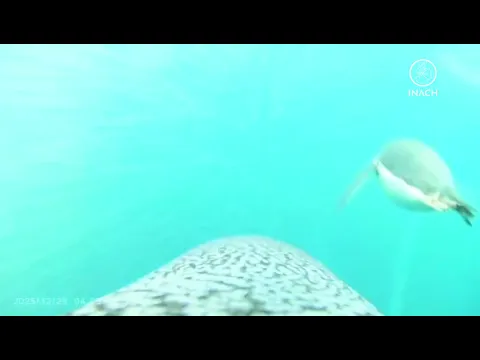
The images show continuous fragments of swimming, diving, and movement to feeding areas, offering a direct view of behaviors that are normally hidden beneath the ocean’s surface. The material is part of INACH’s Protected Marine Areas program and contributes to the ecosystem monitoring of the Commission for the Conservation of Antarctic Marine Living Resources.
-
A bright yellow mushroom imported from Asia escaped from a cultivation farm in the United States in 2010 and is now aggressively spreading across 25 states, destroying entire communities of native fungi in American forests.

-
Buried under China, a colossal machine weighing 20,000 tons began operating as the largest neutrino detector on the planet and, in just 59 days, surpassed results that science took half a century to achieve.

-
Iran enters the center of a climate alert after the war emitted 5.6 million tons of CO2 in two weeks, surpassing the annual pollution of entire countries.

-
Lunar exploration may change after a Chinese probe finds a “cavity” of radiation that reduces the impact on astronauts by up to 20% at certain times on the Moon.

How the Micro-Cameras Were Installed on the Penguins
To capture the images, researchers attached micro-cameras directly to the feathers of Gentoo Penguins using tape and adhesive, a method already used in previous studies of seabird tracking. The technique allows for temporary attachment of the equipment without compromising the animal’s movement.
The device is installed only during a single foraging cycle. Researchers select individuals that are in the breeding phase, which have nests with chicks, and remove the camera as soon as the penguin returns from the sea. The maximum time of use of the equipment on each animal is up to two days.
During this period, the adult leaves the nest, moves to feeding areas, performs successive dives, and returns to feed the chicks. This complete cycle is recorded, allowing for tracking each stage of the foraging journey.
In addition to video, the micro-cameras incorporate depth sensors and accelerometers. According to Krüger, this combination allows for precise examination of behavior during diving, acceleration, and movements, relating the physical data to the captured images.

Diving Data and Analysis of Feeding Behavior
The integration between images and sensors allows for classifying the behavior of the penguins during their search for food. Researchers can identify whether the animal feeds in dense schools of krill or on isolated prey, as well as the depth and time at which these activities occur.
The data also allow for estimating the distance traveled on each trip to sea and the level of effort involved in different feeding strategies. The combined analysis of acceleration, depth, and video provides a level of detail that was not possible before.
As a result, the study provides direct information on how penguins explore their main food resource in the region.
Each dive can be associated with a specific context, reducing the need for indirect inferences based solely on location data.
This set of information helps to understand how variations in krill distribution influence the behavior of the birds and how these strategies may change over time or between different areas of the Antarctic Peninsula.
Punta Armonía as a Strategic Research Area
Punta Armonía is an Antarctic Specially Protected Area whose central value is associated with the preservation of its ecosystem. The area hosts a significant number of seabird species that breed in a relatively small space, making it a priority location for ecological research.
Among these species, there is a large colony of Gentoo Penguins that has shown significant changes over the last few decades. In the 1980s, the colony had more than 100,000 nests; in the 1990s, that number fell to around 90,000, and today approximately 40,000 nests are estimated.
Despite the reduction, the colony remains representative of the population of the species in the Antarctic Peninsula and adjacent regions. This gives relevance to the data obtained at the site for understanding broader population trends.
The micro-cameras allow tracking the entire journey of a penguin during the breeding phase.
Records show that some individuals go out in groups to feed and dive to depths close to 30 meters, primarily during the nighttime.
These observations provide direct evidence of how penguins organize their routes and feeding strategies in a context of high population density and competition for resources.
Interactions with Other Species in the Southern Ocean
The obtained videos reveal that Gentoo Penguins do not move alone towards feeding areas. In various recordings, there are polyspecific groups formed by different species of penguins and large marine mammals.
According to Krüger, there are images showing Gentoo Penguins and Macaroni Penguins moving together, as well as the presence of humpback whales and fin whales moving along the same routes towards krill-rich zones.
The records also indicate changes in the daily activity pattern. In one of the observed periods, the penguins began moving one or two hours before attempts to capture krill began and concentrated their feeding during the night.
This behavior is not always recorded consistently, suggesting interannual variations or responses to changes in environmental conditions and food availability.
Despite the logistical effort involved in collecting these data, researchers emphasize that the scientific value of the images justifies the work. Each video contributes to a more accurate understanding of the parameters governing the search for food.
Indications of Changes in the Marine Ecosystem
The data obtained from the micro-cameras help to contextualize the pressures faced by Gentoo Penguin colonies. Changes in krill availability, competition with other seabirds, and the recovery of whale populations appear as overlapping factors in the environment.
Each recorded dive represents a unit of information about the functioning of the Southern Ocean ecosystem. The accumulation of these records allows for analyzing patterns and identifying possible changes over time.
By integrating this data with broader monitoring programs, researchers can relate local observations to regional trends, strengthening the scientific basis for comparative analyses.
The fidelity of the images, combined with the sensors, reduces uncertainties and enhances the understanding of the actual behavior of the birds in their natural habitat, even in situations of difficult direct observation.
Changes in the Breeding Period of the Penguins
The new records of marine behavior occur in a context of changes in the reproduction of various colonies of penguins in Antarctica. Krüger points out that there are indications of an advance in the breeding period in several areas.
This advancement is consistent with changes observed in environmental conditions. The researcher explains that earlier melting of snow in the colonies may facilitate the early arrival of penguins for breeding, as snow is one of the main limiting factors in this process.
The anticipation of reproduction may generate mismatches between the growth phase of the chicks and the peak availability of krill. Additionally, it may intensify competition for food among the three species of Pygoscelis penguins in the Antarctic Peninsula and South Shetland Islands.
Krüger warns that if Gentoo Penguins start breeding earlier, their demand for food may coincide with that of the Macaroni Penguins, which are considered more efficient in capturing krill, potentially affecting the availability of the resource.
This scenario adds to other factors mentioned by the researcher, such as changes in krill biomass, increased rainfall, recovery of whale populations, and growth of fishing activity on this crustacean in the region.
By gathering images, sensor data, and ecological observations, the study provides a detailed foundation for understanding the challenges faced by Gentoo Penguins.
The micro-cameras transform each trip to sea into concrete information, expanding the understanding of the dynamics of the Southern Ocean and how these birds adjust their behavior in a changing environment, even when some details remain unnoticed or only partially hidden.
This article was prepared based on information from the Chilean Antarctic Institute (INACH), the Millennium Institute BASE, and statements from researcher Lucas Krüger, within the scope of studies conducted in the Antarctic Specially Protected Area of Punta Armonía.







Seja o primeiro a reagir!