





 Portuguese
  English
  Spanish
  3 min of reading
  0 comments


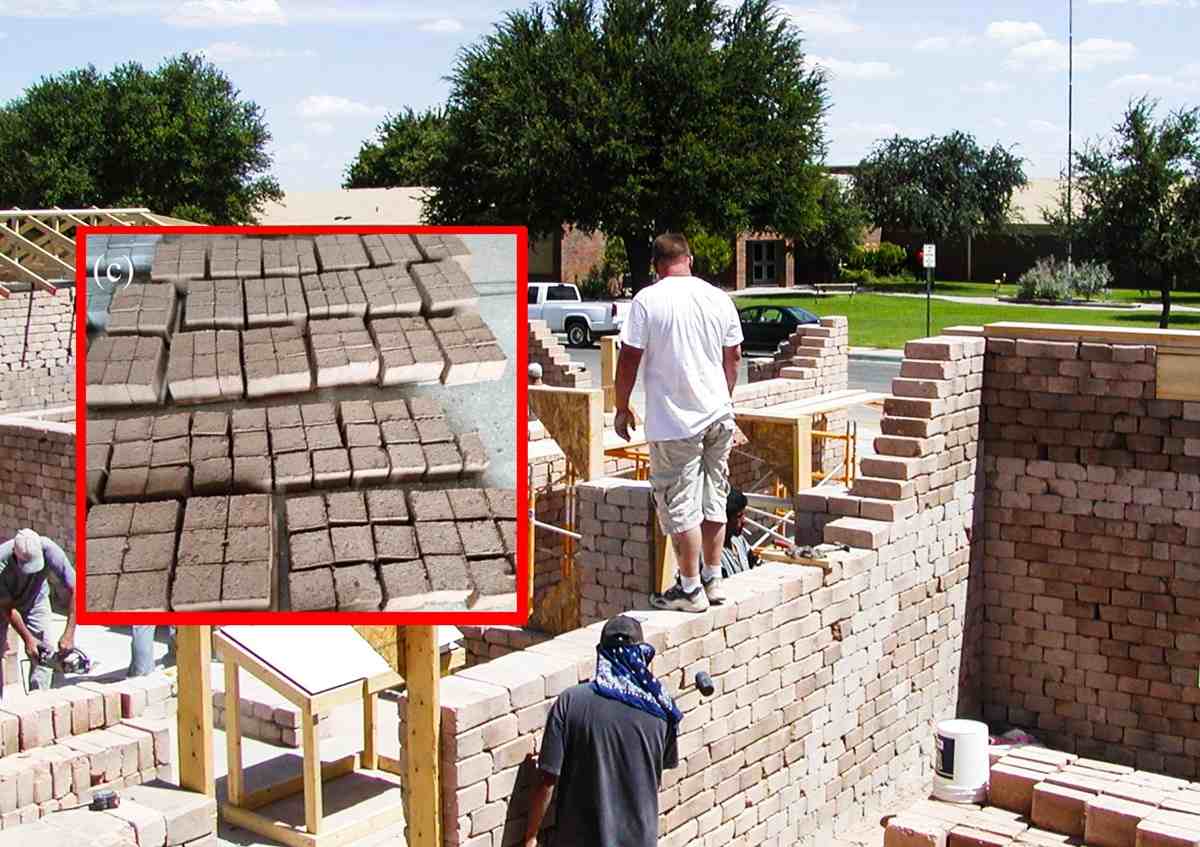
Researchers From The University Of Portsmouth Developed Building Blocks With Recycled Glass, Offering A Sustainable And Durable Alternative To Traditional Bricks.
Researchers From The University Of Portsmouth Found A Creative Solution For Discarded Glass, Transforming It Into Bricks. They Developed A Technique To Turn Waste Glass Into Powder And Incorporate It Into The Production Of Building Blocks.
The Innovation Promises To Reduce Environmental Impacts And Make The Process More Efficient, As Glass Is Not As Easy To Recycle As One Might Think.
The Research Involved Scientists From Three Other Universities. The Main Idea Was To Analyze How Recycled Glass Could Act As A Stabilizing Agent In Compressed Earth Blocks, Known As CEB.
-
Motorola launched the Signature with a gold seal from DxOMark, tying with the iPhone 17 Pro in camera performance, Snapdragon 8 Gen 5 that surpassed 3 million in benchmarks, and a zoom that impresses even at night.

-
Satellites reveal beneath the Sahara a giant river buried for thousands of kilometers: study shows that the largest hot desert on the planet was once traversed by a river system comparable to the largest on Earth.

-
Scientists have captured something never seen in space: newly born stars are creating gigantic rings of light a thousand times larger than the distance between the Earth and the Sun, and this changes everything we knew about stellar birth.

-
Geologists find traces of a continent that disappeared 155 million years ago after separating from Australia and reveal that it did not sink, but broke into fragments scattered across Southeast Asia.

This Type Of Material Is Considered More Sustainable Than Traditional Baked Bricks, As It Results In Much Lower Carbon Emissions.
How The CEB Works
CEBs Are Made From A Combination Of Soil, Water, And Generally, Cement. These Components Are Mixed In Specific Proportions And Compressed Under High Pressure, Forming Strong And Durable Blocks.
The Cement In This Recipe Plays An Essential Role As A Binder, Preventing Cracking And Damage Caused By Moisture.
To Replace The Cement, Researchers Needed To Find An Alternative That Offered The Same Durability.
The Team Tested Various Compositions With Lime And Recycled Glass. The Goal Was To Find A Solution That Would Not Compromise The Structural Properties Of The Blocks While Keeping Production Costs Low.
The Ideal Mixture
Dr. Muhammad Ali, Co-Author Of The Paper Published In The Journal Discover Civil Engineering, Detailed The Process.
According To Him, Various Tests Were Conducted With Different Levels Of Recycled Glass, Checking Water Absorption, Compression Resistance, And Maximum Stress Before Deformation Or Breakage.
After A Series Of Experiments, The Most Efficient Composition Was Obtained With 10% Lime And 10% Recycled Glass Particles.
This Combination Showed Better Performance, With No Cracking Even Under High Pressure. The Discovery Paves The Way For The Commercial Use Of This Technology.
The Scientists Believe That CEB Manufacturers Could Adopt The Mixture To Increase The Production Of More Ecological Blocks.
However, They Emphasize That Additional Studies Are Needed To Assess The Durability Of The Material Under Different Conditions.
Potential Uses
CEBs, According To The Researchers, Are Ideal For Small-Scale Constructions, Such As Houses, Schools, And Clinics, Especially In Areas Of Low To Medium Humidity.
They Are Not Recommended For High-Rise Buildings Common In Major Urban Centers.
But In Developing Countries, Where Labor Is Abundant And Local Materials Are Valued, These Blocks Could Have Wide Applications.
The Repurposing Of Glass Into Blocks Also Helps To Avoid Waste Accumulation In Landfills.
Traditional Recycling Of This Material Requires A Lot Of Energy For Refining And Transport, Which Is Not Always Feasible On A Large Scale.
Other Glass Applications
The Study Reinforces The Importance Of Exploring New Recycling Methods.
In Various Researches, Glass Has Already Been Used To Replace Sand In 3D Printing Concretes, To Create Fire-Resistant Coatings, And Even To Make Bricks With Improved Thermal Insulation.
There Are Also Experiments With Glass Designed To Decompose In Composting.
However, The Initiative From The University Of Portsmouth Stands Out For Its Potential To Combine Sustainability, Resource Savings, And Innovation In The Construction Industry.








Seja o primeiro a reagir!