





 Portuguese
  English
  Spanish
  4 min of reading
  0 comments


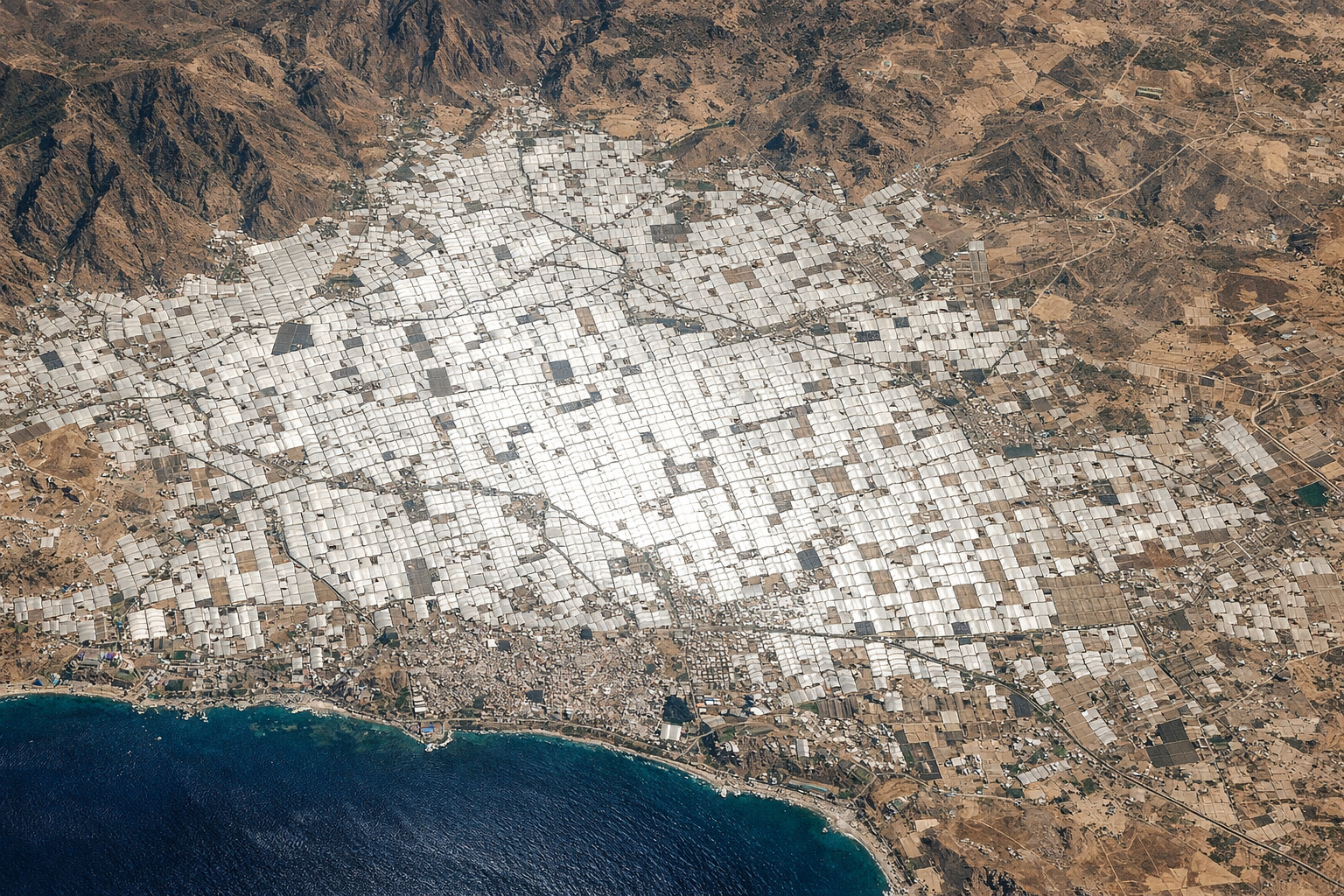
NASA Reveals Bright Agricultural Landscape Covering Over 40,000 Hectares in Almería and Transforms Arid Region into Global Powerhouse of Intensive Production
For decades, a narrative has been repeated almost as absolute truth: the Great Wall of China would be visible from space with the naked eye. In other versions, the Pyramids of Giza held this legendary status. The idea has always been seductive. Colossal monuments spanning millennia, defying gravity, time, and human imagination itself.
However, from an orbital perspective, these historical symbols simply do not stand out as popular myth suggests. The information was released by “Doth News,” according to the original report, and reinforces a finding already confirmed by satellite images and space records: what truly catches attention up there is not a wall winding through mountains, nor ancient pyramids in the desert.
On the contrary, what shines in orbital photographs is a modern construction made of metal and plastic that has profoundly changed the agricultural map of the world.
-
The sugar-energy sector advances with agricultural technology, but agricultural productivity still raises concerns.

-
The eggshell that almost everyone throws away is made up of about 95% calcium carbonate and can help enrich the soil when crushed, slowly releasing nutrients and being reused in home gardens and vegetable patches.

-
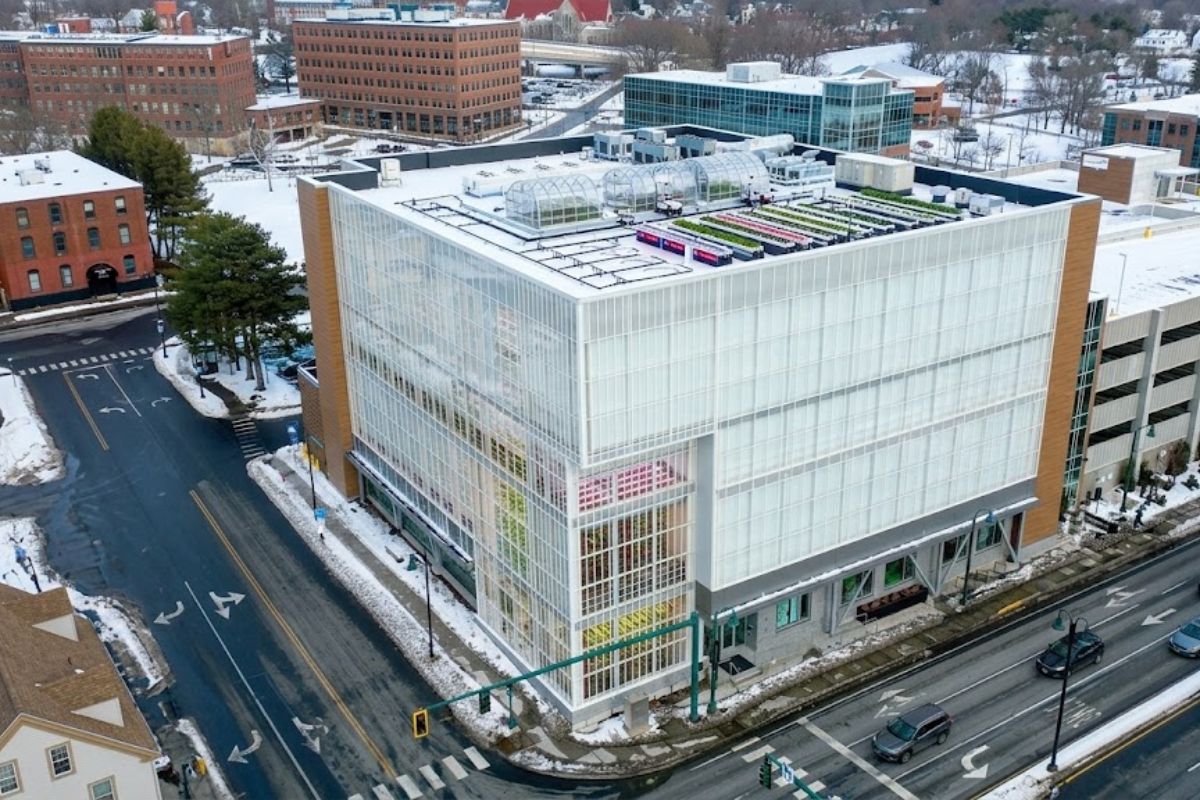
This farm in the United States does not use sunlight, does not use soil, and produces 500 times more food per square meter than traditional agriculture: the secret lies in 42,000 LEDs, hydroponics, and a system that recycles even the heat from the lamps.
-
The water that almost everyone throws away after cooking potatoes carries nutrients released during the preparation and can be reused to help in the development of plants when used correctly at the base of gardens and pots, at no additional cost and without changing the routine.


The Sea of Plastic in El Ejido That Changed European Agriculture
In the southeast of Spain, in the province of Almería, there is a landscape that resembles a mirrored reflection of the planet itself. The region of El Ejido is home to an immense concentration of greenhouses covered with white plastic, forming what has become known worldwide as the “Sea of Plastic.”
Viewed from above, the area resembles a frozen sea under the intense sun. However, there is no snow or light dunes. What spreads for miles is a geometric mosaic of reflective tarps covering over 40,000 hectares, equivalent to approximately 380 square kilometers dedicated to intensive agriculture.
Therefore, it is not an isolated detail on the European map. It is a gigantic agricultural structure that supplies markets in several countries across Europe. Within these greenhouses, tomatoes, cucumbers, peppers, and melons grow on an industrial scale. Moreover, the organization is impressive: rows perfectly aligned, uniform coverage, and continuous production for much of the year.
As a result, the region has transformed from arid land to a global reference in intensive agriculture. This transformation has not only impacted the local economy but also altered the large-scale food supply dynamics.
Why Does the Sea of Plastic Appear in NASA Images?
The explanation for this visibility in space is not in the isolated size of each greenhouse. In fact, the secret lies in the collective. The density, uniformity, and highly reflective material create a surface that reflects a large amount of sunlight.
Images released by NASA clearly show the bright area contrasting sharply with the drier surroundings of the Almería region. The white plastic used in the greenhouses reflects light intensely enough to make the territory visually distinct in orbital photographs.
In other words, it is not just a matter of land area, but of the physical behavior of light. The combination of a dry climate, arid soil around, and white coverage creates a striking contrast that stands out in images captured hundreds of kilometers above the Earth’s surface.
Meanwhile, ancient monuments, no matter how grand, have colors and textures that blend into the natural environment, making them difficult to distinguish in orbit.
Between Agricultural Innovation and Environmental Debate
There is, however, a contemporary irony in this story. While myths about historical constructions continue to circulate, it is a modern agricultural infrastructure that truly stands out in space images.
On one hand, the Sea of Plastic has turned El Ejido into a symbol of productive efficiency. On the other hand, it also raises important debates about sustainability, the intensive use of water resources, and long-term environmental impacts.
Additionally, experts discuss issues related to plastic waste management, water consumption in a naturally arid region, and the challenges of maintaining this productive model sustainably in the future.
Therefore, what shines from space represents not only economic success. It also represents environmental complexities and strategic decisions that shape the future of global food production.
The lesson is clear: what truly stands out from orbit is not always what we imagine. Sometimes, it is not the oldest or most famous works that capture the gaze of satellites. Instead, it is the reflection of our contemporary production model.
And, in this case, it is white, geometric, industrial — and visible from space.
Did you imagine that a modern agricultural structure could surpass historical monuments and actually appear in images taken from space?









-

-

-

-

-

-

23 pessoas reagiram a isso.