





 Portuguese
  English
  Spanish
  5 min of reading
  12 comments


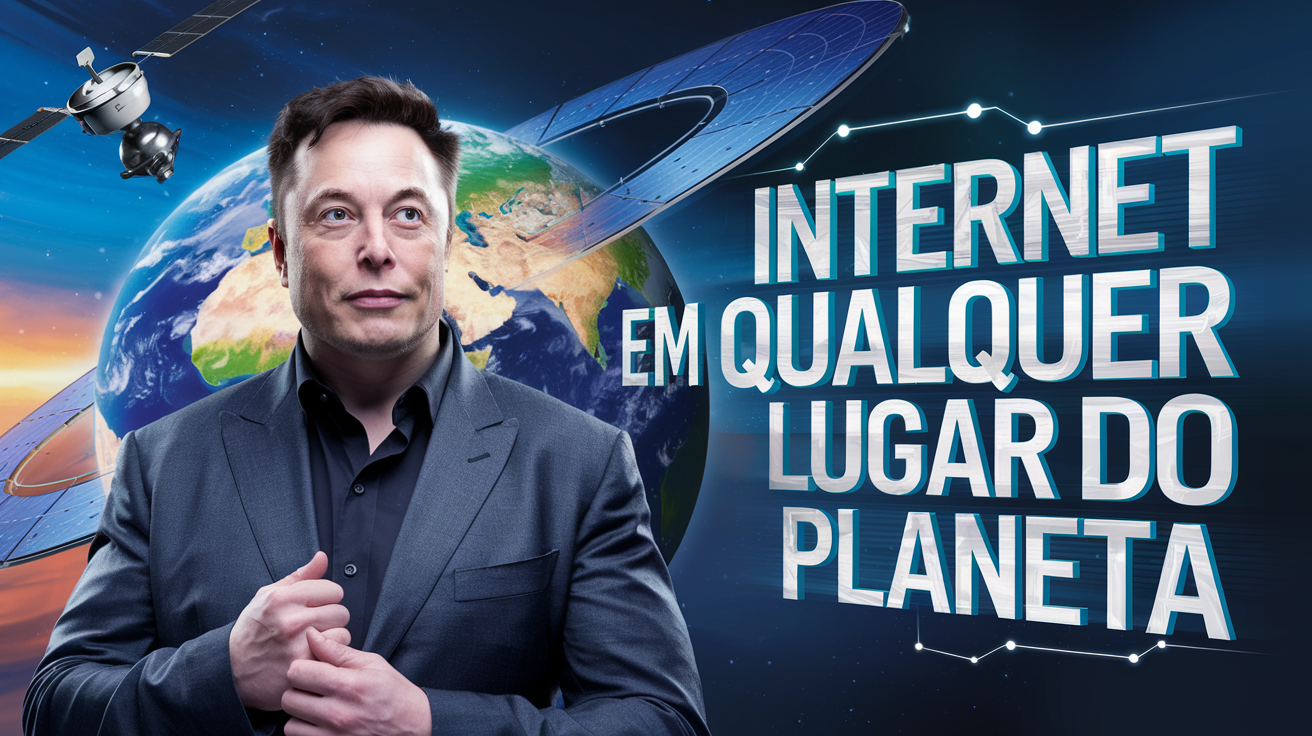


Imagine Accessing High-Speed Internet Directly on Your Phone Anywhere in the World, Without Relying on Towers or Cables! Elon Musk and His Starlink Are Revolutionizing Telecommunications, Connecting Remote Areas and Promoting Global Digital Inclusion. Get Ready to Say Goodbye to the Limitations of Traditional Networks and Embrace a New Era of Universal Connectivity!
Imagine a world where connectivity knows no geographic limits, where even the most remote corners of the planet enjoy high-speed internet.
This futuristic vision is closer to reality than ever, thanks to a technological revolution that promises to shake the foundations of traditional telecommunications.
An innovation that could forever change the way we connect and communicate.
-
A “silent skill” is allowing Brazilians to earn up to R$ 22,000 per month without a degree and become indispensable for companies that rely on millions of data to survive.

-
Researchers at the Toyota Research Institute found that if a human uses robotic arms to flip a pancake 300 times in an afternoon, the robot learns to do it on its own the next morning, and this is currently the most promising method to solve the biggest bottleneck in modern robotics.

-
Goodbye iron: a common item in households is starting to lose space to technology that smooths clothes in minutes without an ironing board and with less energy consumption.

-
Antarctica reveals an unusual clue high in the Hudson Mountains, and what appeared to be just an isolated rock began to expose a secret hidden under the ice for ages.


Starlink, an ambitious project by SpaceX led by Elon Musk, is about to revolutionize internet access by announcing its entry into the mobile satellite connectivity market.
With the promise of providing connection anywhere in the world, the initiative especially targets remote areas with no conventional coverage, positioning itself as an innovative solution for global digital inclusion.
How Satellite Internet Works for Mobile Phones
The Starlink technology uses low Earth orbit (LEO) satellites to provide internet directly to mobile devices.
Unlike traditional networks that rely on cell towers and cables, satellite connection eliminates the need for extensive terrestrial infrastructure.
Key Features of the Technology
- Global Coverage: The connection is accessible in areas where traditional networks do not reach, such as forests, deserts, and oceans.
- High Speed: Promises speeds similar to 4G networks and even 5G.
- Low Latency: Thanks to the orbital position of the satellites, response time is significantly lower than that of traditional geostationary satellites.
Integration with Mobile Devices
Connectivity with mobile phones will be implemented in two main phases:
- Direct Satellite Connection: Users will be able to access the internet on their mobile devices without the need for additional equipment.
- Partnerships with Carriers: Starlink is working with carriers to integrate its technology into existing networks, providing a seamless transition between terrestrial and satellite networks.
Benefits for Remote and Emergency Areas
Digital and Social Inclusion
One of Starlink’s central goals is to promote digital inclusion, ensuring that isolated communities have internet access.
This connectivity will allow access to online education, health services, and economic opportunities, reducing digital inequality on a global scale.
Disaster and Emergency Response
In situations of natural disasters or humanitarian crises, satellite internet technology can be crucial.
The absence of terrestrial infrastructure in these scenarios often hinders rapid communication.
Starlink offers a reliable solution, ensuring that rescue teams and authorities can communicate in real-time.
Competition and Challenges in the Satellite Internet Market
Starlink is not alone in the race for leadership in satellite connectivity.
Projects like Amazon’s Project Kuiper and OneWeb are also investing in satellite constellations to offer similar solutions.
Competition in the Sector
- Amazon (Project Kuiper): Plans to launch thousands of satellites to compete directly with Starlink.
- OneWeb: Already has satellites in orbit and is focused on partnerships with governments and private companies.
Challenges Faced by Starlink
- High Costs: Operating satellites in low orbit requires massive investments, which may reflect in high initial costs for consumers.
- International Regulation: Global implementation depends on regulatory approvals in different countries, which can create barriers to expansion.
- Orbital Sustainability: The increase of satellites in orbit raises concerns about space debris and potential collisions.
Impact on the Telecommunications Market
Starlink’s entry into the mobile connectivity market could redefine telecommunications.
Traditional carriers face the challenge of competing with a solution that offers global coverage and independence from terrestrial infrastructure.
Transformation for Consumers
With Starlink technology, consumers in urban and rural areas will be able to experience high-quality internet, even in places where service was previously non-existent.
A New Era for Telecommunications Companies
Traditional telecommunications companies will need to innovate to compete with Starlink’s broad and flexible coverage.
Strategic partnerships may emerge as a solution to integrate technologies.
How Users Can Access Starlink’s Service
Currently, Starlink’s service is available through kits that include satellites dishes and routers.
In the future, mobile connectivity is expected to be direct, eliminating the need for additional equipment.
Steps to Connect
- Sign Up for the Service: Users must register on Starlink’s website to check availability in their area.
- Kit Installation: For traditional service, setting up the provided equipment is necessary.
- Direct Connection (Future): With technology development, the connection will be automatic on compatible mobile phones.
Elon Musk’s Vision for the Future of Global Connectivity
Elon Musk, founder of SpaceX and creator of Starlink, has always emphasized the importance of accessible global connectivity.
With thousands of satellites already in orbit and plans for continuous expansion, Starlink is well-positioned to transform the way the world connects.
Next Steps for Starlink
Starlink’s plans include expanding its constellation of satellites in orbit and consolidating strategic partnerships with governments and private companies.
The company also plans to launch more satellites to ensure even greater coverage, especially in areas where connectivity is still limited or non-existent.
Another essential step is the development of mobile devices compatible with satellite internet technology.
Elon Musk has already indicated that Starlink is working to allow conventional smartphones to connect directly to satellites, without the need for external antennas or additional equipment.
The Imminent Revolution and Global Impact
With the expansion of Starlink and other satellite internet companies, the global telecommunications market is on the brink of a major transformation.
The possibility of connecting billions of people who were previously excluded from the global network has the potential to drastically change the economic, educational, and social landscape in various regions.
Still, challenges remain.
Issues like international regulation, economic viability for low-income populations, and environmental impacts related to the increasing number of satellites are topics that require attention and creative solutions.
Nonetheless, the promise of a connected world without barriers is an ambitious goal that can transform lives.
Conclusion
Starlink’s entry into the mobile satellite internet market is yet another example of the impact that technological innovations can have on a global scale.
With Elon Musk’s leadership and SpaceX’s strength, the company is paving the way for a new era of connectivity, challenging traditional carriers and providing innovative solutions to digital inclusion issues.
As Vivo, Claro, Tim, and other carriers face the challenge of competing with a technology that transcends borders, Starlink positions itself as a key player in the future of telecommunications.
Now, it remains to be seen how these changes will shape the market and people’s lives in the coming years.






Excelente, é o q falta pra complementar a Internet, parabéns ao sr Musk.
As operadoras vai perder um número extremamente massivos de clientes , porque as operadoras não oferecem Internet ilimitado, as redes sociais hoje que eram ilimitados não é mais , o vivo easy da vivo acabou com todas as diarias que eram ilimitado com moovit, youtube,watsapp e tantos outros quando a starlink começar a atuar eu caio fora da vivo.
Simplesmente fantástico.