





 Portuguese
  English
  Spanish
 3 min of reading


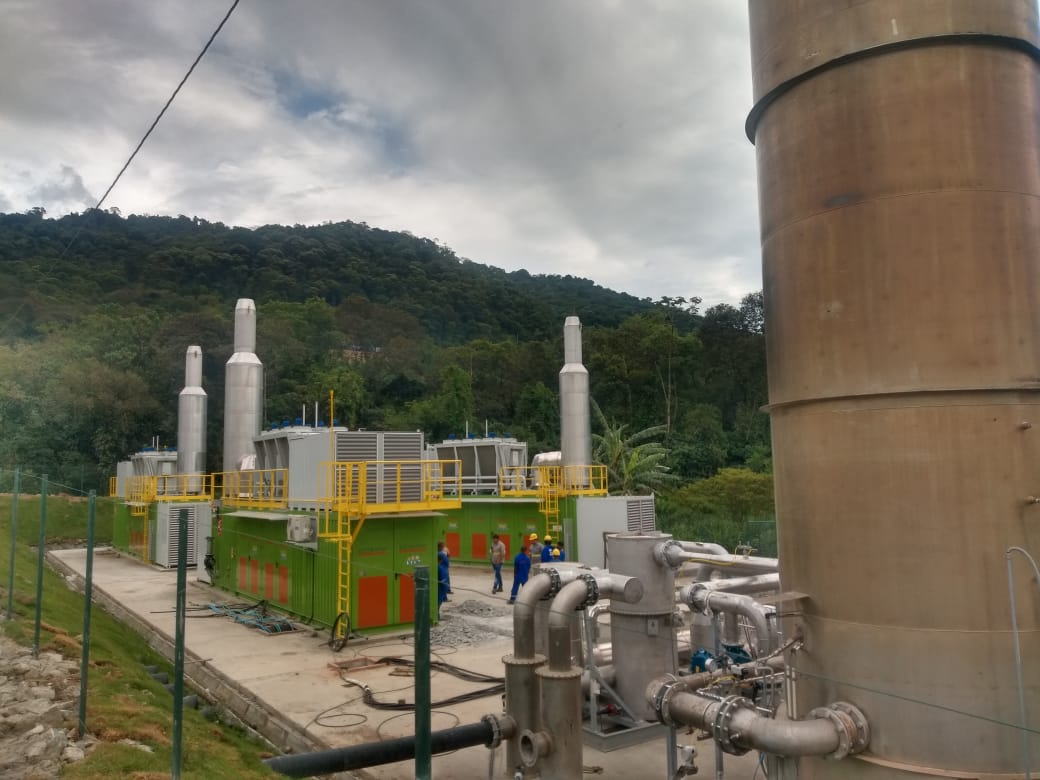
Of The 83 Plants In The Distributed Generation Program Planned By Vivo For All Of Brazil, 21 Are Already In Operation. Together, They Already Supply 7,450 Consumer Units Of The Company And Produce 187,289 Megawatt-Hours/Year.
Vivo, the largest telecommunications company in the country, is committed to sustainable development and 100% renewable energy consumption, and inaugurated last month, in Santos, its first biogas distributed generation plant in the state of São Paulo. Built in partnership with Grupo Gera, the plant is installed on an area of 1,490 square meters, next to the Terrestre Ambiental Landfill.
Read Also
- Petrobras Hits Historic Record For Liquefied Natural Gas (LNG) Imports, Purchasing Over 40 Million Cubic Meters Of The Input In A Single Day!
- Federal Institute Of Rio De Janeiro (IFRJ) Opens Selection Process For 1,764 Vacancies In Free Technical Courses In Oil And Gas, Occupational Safety, Mechanics, Computer Science And Much More!
- The First Energy Capacity Reserve Auction Held In Brazil May Be Voided Due To Unequal Conditions Of Competition
- Job Openings Today (04/01) To Work At An Ethanol Plant
- Itaipu Hydroelectric Plant Reaches 66.3 Million MWh, Enough Energy To Supply The Planet Earth For 19 Hours, Brazil For One Month And Seven Days, And Paraguay For Two Years And 11 Months!
Vivo’s initiative is part of the company’s strategy to increase its own energy production from renewable sources. According to the company, of the 83 plants in the distributed generation program planned by the company for all of Brazil, 21 are already in operation, in different regions of the country and with different partners, producing energy from solar, hydropower, or biogas sources. Together, they already supply 7,450 consumer units of the company and produce 187,289 megawatt-hours/year. Another 62 plants will be implemented by Vivo in 2022.
Vivo’s Biogas Plant In São Paulo Generated 49 Jobs During Construction
The plant at the Terrestre Ambiental Landfill will utilize between 2,500 and 5,000 Nm³/h (normal cubic meters per hour) of biogas with a high methane content (approximately 50% in its composition) for electricity generation and carbon credits.
-
Renewable energy advances over protected areas in Brazil, and a survey by the Energy Transition Observatory reveals silent impacts that challenge environmental conservation and pressure sensitive traditional territories.

-
Rio Grande do Sul accelerates energy transition: State invests in renewable technologies and consolidates decarbonization strategies and pathways to attract billions in new industrial investments.

-
With 160,000 m² of collectors, an area larger than 20 football fields, Silkeborg, in Denmark, hosts a solar thermal plant that heats 19,500 homes and could become the largest solar heating plant in the world.

-
A study reveals the expansion of renewable energy procurement in Brazil and shows how companies are taking advantage of opportunities to reduce expenses, ensure energy efficiency, and strengthen strategic environmental commitments.


The initiative allows the biogas from the landfill, which was previously not being utilized and was directly emitted into the atmosphere, to be redirected to these processes that begin with the burning of biogas, and result in the final product, along with steam, being carbon dioxide, a gas approximately 21 times less polluting than methane.
The project generated 49 jobs during construction and will have 20 job positions during the operation phase of the plant.
20,850 megawatt-hours/year will be produced and fed into the CPFL Piratininga distribution company’s energy grid, enough energy to meet the consumption of more than a thousand Vivo units, such as stores, offices, antennas, and transmission equipment, located in the area covered by the distributor.
Vivo’s Energy Consumption Is 100% Renewable Since November 2018
Vivo’s energy consumption, the largest telecommunications company in Brazil, has been 100% renewable since November 2018, when the company transitioned from a scenario with 26% energy consumption from renewable sources – obtained in both the free market and through distributed generation – to 100%, through the acquisition of energy certificates, the I-RECs (International Renewable Energy Certificates), from wind sources, for the remainder of its electricity consumption.
The acquisition of the certificates allowed Vivo to advance its fully renewable consumption target by 12 years, which was previously set for 2030. This also contributed to Vivo reducing its CO2 emissions by 70% compared to 2015, and enabled the company to make significant progress toward neutralizing greenhouse gas emissions. Since 2019, Vivo has also been a carbon-neutral company.
The Distributed Generation initiative of Vivo in Brazil will account for 89% of the consumption in low voltage, serving more than 30,000 company units across the country, producing about 711,000 MWh/year of energy, enough to supply the consumption of a city of up to 320,000 inhabitants. Committed to sustainable development, the company also works intensively on initiatives aimed at energy efficiency to reduce and optimize consumption.








Seja o primeiro a reagir!