





 Portuguese
  English
  Spanish
  4 min of reading
  2 comments


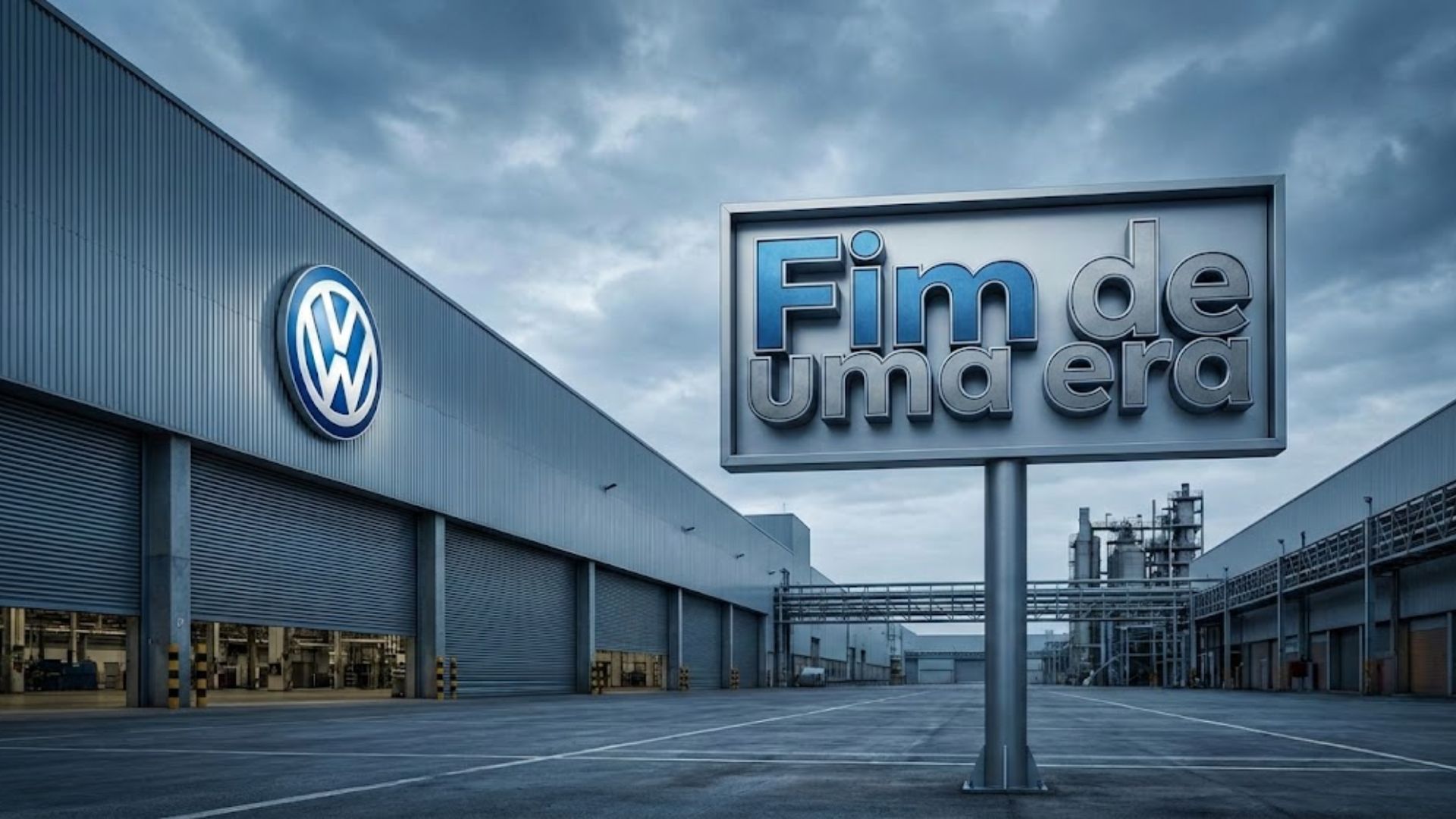


Historical Closure Marks Restructuring of Volkswagen in Germany, Involves Job Cuts, Review of Billion-Dollar Investments and Change in Use of a Symbolic Factory of Electric Transition, Amid Global Financial Pressure Faced by the Automaker.
Volkswagen announced the closure of its factory in Dresden, in eastern Germany, in an unprecedented decision since the founding of the automaker 88 years ago.
This is the first time the company has definitively ended vehicle production at a facility located in German territory.
The assembly line was shut down this week, ending the production of the electric ID.3 model and consolidating a movement for industrial and financial reorganization of the group.
-
Unemployment rises again to 5.8% at the beginning of 2026, raising alarms about the end of temporary positions and its impact on the Brazilian job market.

-
Document organization can cut invisible costs in small businesses, a simple step that prevents waste, rework, and losses in daily operations.

-
Chinese giant worth nearly R$ 4 billion that manufactures cables for electric cars, solar energy, and robotics wants to open a factory in SC.
-
Many employers do not know, but the law guarantees domestic workers a 25% increase in salary during trips, 50% for overtime, 20% for night shifts, and 17 additional benefits that can lead to labor lawsuits if not paid.


Financial Pressure and Review of Global Strategy
The measure occurs in a context of pressure on the company’s results.
Volkswagen faces a decline in sales in the Chinese market, a slowdown in demand in Europe, and the impacts of trade tariffs affecting its operations in the United States.
This scenario has led the automaker to review its global strategy, focusing on cost reduction, adjusting its portfolio, and prioritizing projects with higher financial returns.
Internal data indicates that the group maintains an investment plan estimated at about €160 billion for the next five years, a value lower than previously forecasted in the last cycle.
In the previous planning, the projection was €180 billion between 2023 and 2027.
The review reflects, according to company executives, the need for greater financial discipline in light of a more restrictive market environment.
Cash, Investments and Analysts’ Evaluation
According to Volkswagen’s chief financial officer, Arno Antlitz, the estimate for net cash by 2025, which previously indicated a result close to zero, now indicates a slight positive balance.
Nevertheless, automotive sector analysts believe the pressure on the company’s finances is expected to persist at least until 2026.
This assessment takes into account the high costs of technological transition and the growing competition in the electric vehicle segment.
In this context, the internal guidance of the company has been to concentrate resources, reduce the number of simultaneous projects, and seek more consistent profit margins.
Market experts point out that this movement is also related to the reevaluation of the pace of electrification.
With the expectation that combustion engines will remain in circulation longer than initially predicted, Volkswagen has maintained parallel investments in gasoline and hybrid technologies.
These investments continue alongside the development of fully electric vehicles.
History and Low Scale of the Dresden Factory
The Dresden factory, inaugurated in 2002, has always had a specific role within the group’s industrial structure.
Originally, the unit was designed for the production of the luxury sedan Phaeton, which ceased production in 2016.
After that period, the site was used as a technological showcase for the brand, focusing on electrification and the assembly of the ID.3.
Despite its symbolic relevance, the volumes produced in Dresden have been limited over the years.
Since the start of operations, the plant has manufactured fewer than 200,000 vehicles.
This number is significantly lower than the annual production of Volkswagen’s main factory located in Wolfsburg.
This factor weighed in the decision to shut down the line, especially at a time of cost and operational efficiency review.
Job Cuts and Agreement with Unions
The end of industrial activities in Dresden is also linked to an agreement made in 2022 between Volkswagen and German unions.
The agreement provides for the reduction of about 35,000 jobs linked to the VW brand in Germany.
This measure is part of a long-term adjustment plan.
The company indicated that layoffs will occur gradually, respecting the terms negotiated with workers’ representatives.
According to Thomas Schäfer, head of the Volkswagen brand, the closure of the factory was a decision made after extensive internal evaluations.
In public statements, the executive stated that the measure became necessary from an economic point of view.
The justification considers the current market conditions and the need to ensure the financial sustainability of the company.
New Use of Space and Academic Partnership
Even with the end of production, the Dresden complex will continue to be used.
Volkswagen confirmed that the space will be leased to Technical University of Dresden.
The institution plans to establish a research campus focused on artificial intelligence, robotics, and semiconductors at the site.
The partnership involves a joint investment of €50 million over seven years.
The resources will be directed towards the development of applied research and technological innovation.
In addition, the automaker informed that the site will continue to operate as a vehicle delivery point for customers.
The area will also remain a tourist attraction, keeping part of the structure open to the public.
In this way, Volkswagen preserves its institutional presence in the city, even without industrial activity.
Repercussions for the Automotive Industry
The closure of the factory occurs alongside the group’s efforts to consolidate its global electrification strategy.
Volkswagen continues to produce electric vehicles at other facilities.
Models such as ID.4 and ID. Buzz remain among the company’s bets for the coming years.
At the same time, the automaker seeks to balance investments in different technologies.
The strategy takes into account the uncertainties regarding the speed of energy transition in the automotive sector.
The case of Dresden has been interpreted by analysts as an indication of the structural transformations underway in the industry.
These changes involve not only vehicle propulsion but also productive reorganization, investment review, and redefinition of regional priorities.
To what extent are decisions like this expected to become more frequent among major automakers in light of the current global scenario?








Essa obrigatoriedade de fabricação de elétricos só arrebentou com o mercado. Toda essa imbecilidade de energia limpa que na verdade é muito mais poluente só está causando ruína financeira . Sou completamente contra a fabricação de carros 100% elétricos.
Coloca faixa em português numa foto de fábrica na Alemanha !!! PQP