





 Portuguese
  English
  Spanish
  5 min of reading
  1 comment


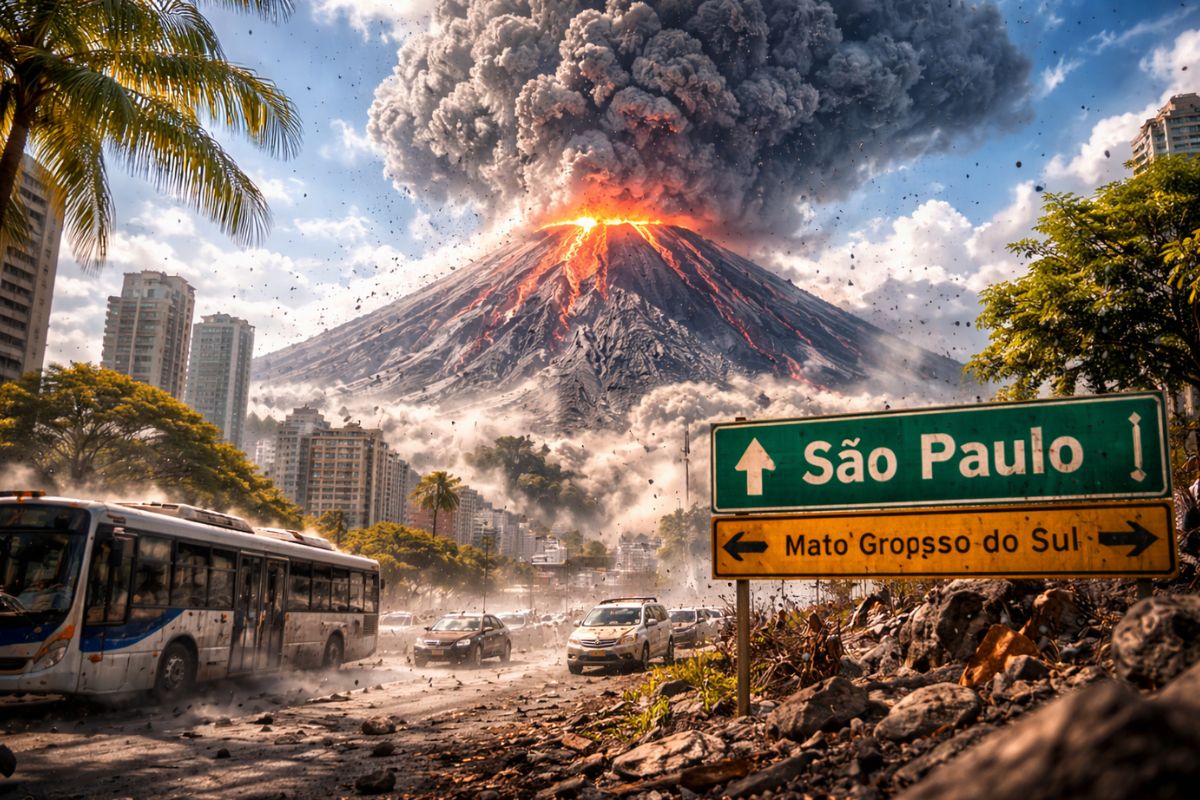


The Volcano Eruption at the End of the Mesozoic Era Spread Intense Activity in Regions That Today Include São Paulo and Mato Grosso do Sul, While in Pará a Volcano 1.85 Billion Years Old, Cited by the Brazilian Geological Survey, Preserves Dozens of Eruptions and a 22 km Caldera.
You read about a volcano eruption in São Paulo and Mato Grosso do Sul and thought that this doesn’t exist in Brazil, but science points to a different timeline: there are volcanoes, just not active today. The geological record indicates that ancient volcanic activity occurred in areas that today make up São Paulo and Mato Grosso do Sul, as well as reaching neighboring countries.
The same set of studies that debunks common sense also brings a second shock: in Pará, researchers from the Institute of Geosciences at the University of São Paulo identified one of the largest known volcanoes and the oldest, estimated to be 1.85 billion years old, according to the Brazilian Geological Survey. The combination of age, preservation, and scale helps explain why this volcano eruption from the past still surprises in geological studies.
Why a Volcano Eruption Seems Impossible in Today’s Brazil
The doubt arises from a current fact: there are no active volcanoes today in São Paulo, Mato Grosso do Sul, or Pará.
-
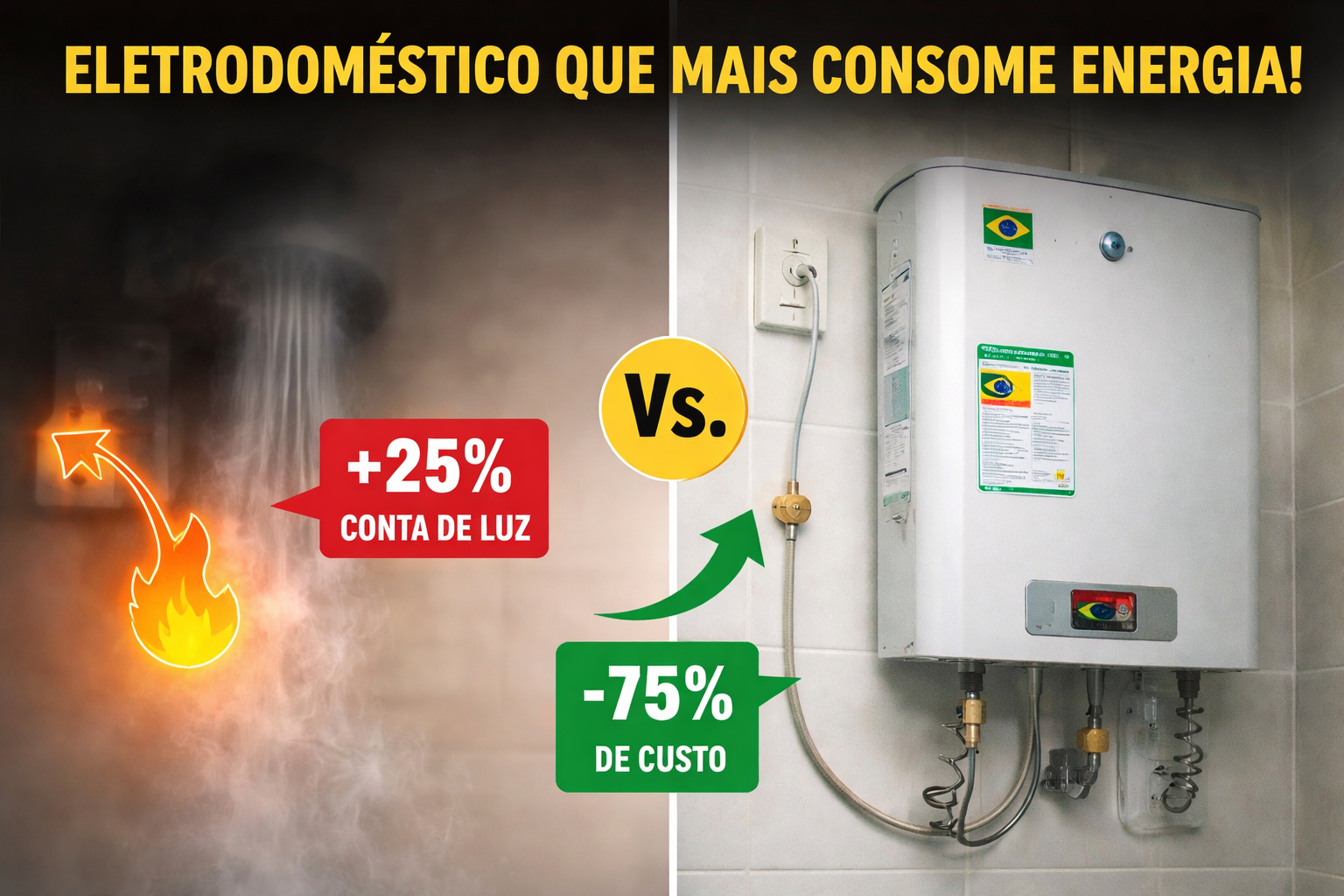
The household appliance that consumes the most energy in Brazilian homes is not the air conditioner; it is located in the smallest room of the house, is used daily, and can account for up to 25% of the electricity bill, while an alternative in the same outlet can reduce this cost by up to 75%.
-
Son of a seamstress from the rural area of Ceará who did not speak English wins a scholarship of over 2 million reais at Williams College, one of the top 10 universities in the United States, covering everything including dormitory, meals, and annual trips to Brazil.

-
Bill Gates revealed that the true secret behind every great achievement is not a brilliant leap but rather small improvements repeated over the years, and the data from his own career and the fight against climate change prove that he is right.

-
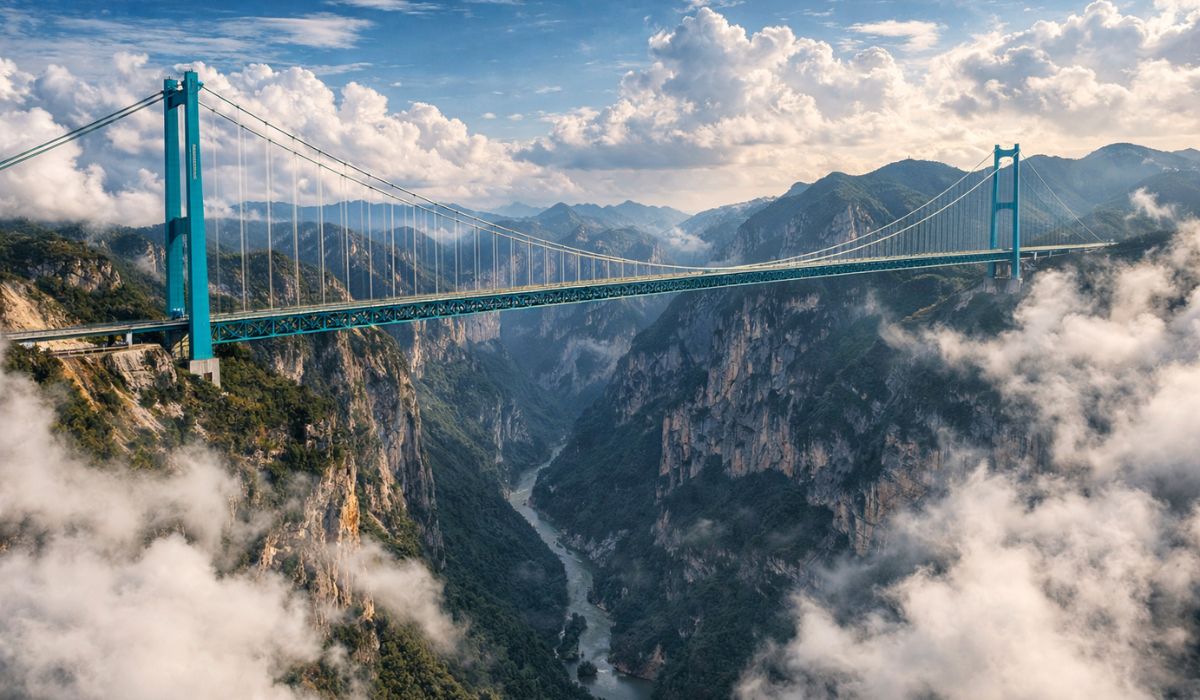
With 22 thousand tons of steel, a height nearly three times greater than the Eiffel Tower, and a cost of R$ 1.6 billion, China is building the highest bridge on the planet over a colossal canyon, reducing a crossing time of over 2 hours to just over 2 minutes.

Still, the presence of ancient volcanic structures in Brazilian territory supports that the country has experienced phases of volcano eruptions, just at very remote geological windows.
When the theme comes up as a volcano eruption, the confusion is understandable because the contemporary landscape of São Paulo and Mato Grosso do Sul does not display active cones.
In Pará, the situation is even more counterintuitive, precisely because it involves an extremely ancient volcano, described and contextualized by the Brazilian Geological Survey.
The Episode at the End of the Mesozoic Era That Reached São Paulo and Mato Grosso do Sul
At the end of the Mesozoic Era, about 66 million years ago, there were volcanic manifestations of very high intensity in the territory that today corresponds to the South of Brazil.
This activity also affected São Paulo and Mato Grosso do Sul, in addition to reaching Argentina, Uruguay, and Paraguay.
In this context, speaking of a volcano eruption does not mean that there was a single eruptive point within the current borders of São Paulo or Mato Grosso do Sul.
It means that the volcanic activity of that period marked the region and left signs that today allow reconstructing the extent of the event in geological studies.
The Giant of Pará with 1.85 Billion Years and the 22 km Caldera
According to the Brazilian Geological Survey, a group of researchers from the Institute of Geosciences at the University of São Paulo found in Pará one of the largest known volcanoes and the oldest, estimated to be 1.85 billion years old.
The geological structure of Brazil is quite ancient, and this fact helps to frame why there are no volcano eruptions currently.
Despite the age and the effects of erosion, the volcano in Pará is described as very well preserved, which generates curiosity among specialists.
The reason presented is comparative: most volcanoes of this type formed less than 250 million years ago, which makes the case of Pará an outlier in geological studies.
The studies associated with the site indicate a sequence of dozens of small eruptions that culminated in a gigantic and catastrophic episode.
According to the Brazilian Geological Survey, this final phase culminated in the formation of a 22 km diameter caldera.
The volcano is located between the Tapajós and Jamanxim rivers and there is no access road to the site.
What the Discovery in Pará Reveals About Geological Studies in Brazil
The finding in Pará is described as a hidden event because it was off the public’s radar for being in an area without access roads, between the Tapajós and Jamanxim rivers.
The identification gained weight by being attributed to a group from the Institute of Geosciences at the University of São Paulo and reinforced by the Brazilian Geological Survey, which details age and size.
Alongside the episode of 66 million years that hit São Paulo and Mato Grosso do Sul, Pará expands the notion that Brazil carries a volcanic archive much older than common sense suggests.
For science, this contrast fuels new questions about preservation, erosion, and traces of volcano eruptions in different eras.
Why There Are No Active Volcanoes Today in São Paulo, Mato Grosso do Sul, and Pará
The explanation presented by science rests on the scale of time: the eruptions mentioned occurred long ago, and what remains are ancient structures, affected by erosion and preserved unevenly.
Therefore, there is no volcano eruption today in São Paulo, there is no volcano eruption today in Mato Grosso do Sul, and there is no volcano eruption today in Pará.
The Brazilian Geological Survey reinforces that the geological structure of the country is very old.
This background helps to understand why specialists are surprised by a 1.85 billion-year-old volcano in Pará and, at the same time, why the current routine of São Paulo and Mato Grosso do Sul does not include active volcanoes today.
The theme of volcano eruptions has gained strength by contradicting common sense, but the data cite two clear axes: an episode of 66 million years that hit São Paulo and Mato Grosso do Sul and a volcano in Pará that is 1.85 billion years old with a 22 km caldera, according to the Brazilian Geological Survey.
The result is a portrait of how geological studies reveal ancient events without indicating the risk of active volcanoes today.
To keep up with new discoveries and understand what changes, it’s worth monitoring announcements from the Brazilian Geological Survey and research from the Institute of Geosciences at the University of São Paulo, especially when involving São Paulo, Mato Grosso do Sul, and Pará.
Which part of this volcano eruption case surprises you the most: the age of 1.85 billion years in Pará or the reach of 66 million years that affected São Paulo and Mato Grosso do Sul?








Não faxia ideia da existência deste Vulcão em alusão. Obrigada. Me surpreendeu. Preciso ler mais.