





 Portuguese
  English
  Spanish
 5 min of reading
  0 comments


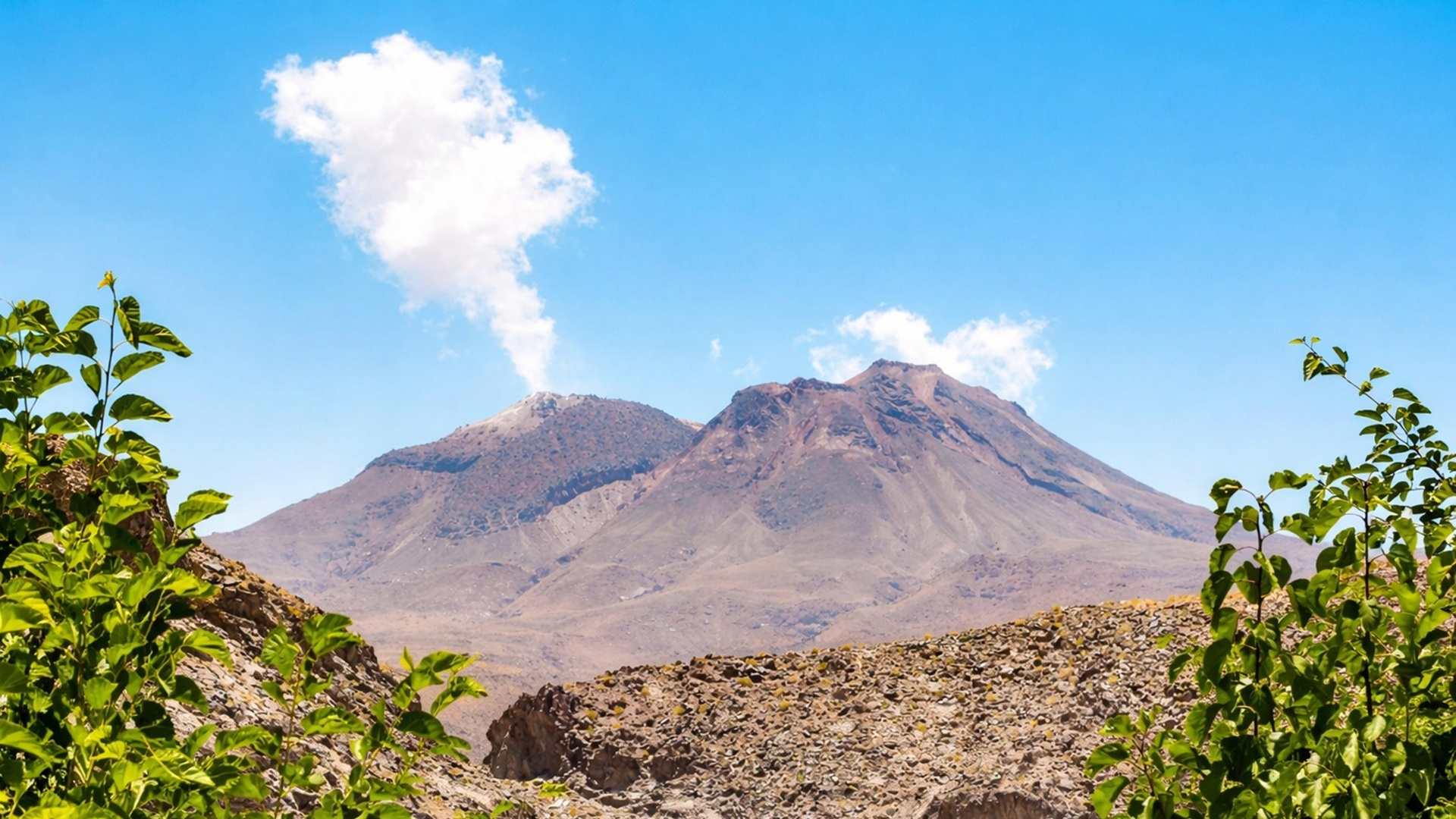
Study With Sentinel-1 Satellites Detects Elevation of 9 Centimeters in 10 Months at Taftan Volcano, After 700,000 Years Asleep, Indicating Pressure Increase of Up to 630 Meters in Depth and Possible Risk of Phreatic Explosions in Southeast Iran
A volcano in southeast Iran showed an elevation of about 9 centimeters in 10 months after 700,000 years asleep. The signal was detected by Sentinel-1 satellites and indicates an increase in pressure near the top of the Taftan volcano crater.
The volcano is Taftan. It has not erupted in recorded human history. However, the new signal indicates that the system is active and needs to be monitored, according to a study published in the journal Geophysical Research Letters.
Monitoring the Volcano With Space Radar
Scientists tracked the ground using InSAR, a radar method that measures ground movement from space. Sentinel-1 satellites were employed, capable of operating day and night and seeing through clouds.
-
Motorola launched the Signature with a gold seal from DxOMark, tying with the iPhone 17 Pro in camera performance, Snapdragon 8 Gen 5 that surpassed 3 million in benchmarks, and a zoom that impresses even at night.

-
Satellites reveal beneath the Sahara a giant river buried for thousands of kilometers: study shows that the largest hot desert on the planet was once traversed by a river system comparable to the largest on Earth.

-
Scientists have captured something never seen in space: newly born stars are creating gigantic rings of light a thousand times larger than the distance between the Earth and the Sun, and this changes everything we knew about stellar birth.

-
Geologists find traces of a continent that disappeared 155 million years ago after separating from Australia and reveal that it did not sink, but broke into fragments scattered across Southeast Asia.

The elevation of Taftan volcano lasted just over ten months and was concentrated near the summit. The movement did not retreat, suggesting that the pressure has not yet dissipated within the structure.
Pablo J. González, from the Institute of Natural Products and Agrobiology of the Spanish National Research Council, IPNA, is the lead author guiding the work.
Taftan is a remote region and lacks ground instruments such as continuous GPS receivers. This makes space radar the best way to monitor a little-visited mountain, although surrounded by many cities.
Pressure Source Located Up to 630 Meters
The team modeled a source located between 490 and 630 meters below the surface. This shallow depth suggests the presence of gases that move and accumulate within a hydrothermal system.
In this environment, hot water and gas circulate beneath a volcano. The researchers tested common causes and dismissed heavy rains and nearby earthquakes as possible triggers for the observed phenomenon.
The signal rose and slowed down without external influence. This is consistent with internal processes acting within the structure of the Taftan volcano.
Deeper down lies the magma reservoir, a mass of molten rock situated more than 3.2 kilometers deep. The current thrust likely comes from gases above it, not from fresh magma reaching the surface.
The observed pattern is one of slow compression. First, the ground rose. Then it stabilized as new fractures opened and some gas found pathways to escape.
Classification and History of Taftan Volcano
Labels like extinct volcano can be misleading. Taftan is a stratovolcano standing 3,940 meters tall, formed by layers of lava and ash.
It emits gases through fumaroles at the top, openings that release gases and show that the system remains active. Records of eruptions over the last 10,000 years are sparse.
The silence in the records does not mean inactivity in terms of rock and gas. Volcanoes can remain inactive for long periods and change activity within months.
This is why scientists observe not only ash plumes. They monitor gases, heat, and ground movements as early warning signs. The new deformation is a concrete measure, not just a label.
Elevations Without Magma and Evaluated Hypotheses
A likely factor is the accumulation of gas in compact rocks and fractures. As pressure increases, the rock rises slightly, and the summit responds first.
Another possibility is a small pulse of magma that released volatiles into the surface layers. These gases escape and exert pressure in the pores of the rocks.
Both hypotheses fit the shallow source identified and the timing of the elevation. Data shows that as gas found exits, the rate of ascent decreased.
None of this requires an eruption. It demands attention, as the pressure needs an outlet, and how it will be released is relevant for the region.
Risks Associated With Taftan Volcano
The main short-term hazards are not lava flows. They are phreatic explosions, driven by steam when hot fluids vaporize suddenly near the surface.
Gas explosions can cause irritation to the eyes, lungs, and downwind crops for a short period. The city of Khash is about 50 kilometers away.
This proximity is enough for residents to smell sulfur when the wind blows in the same direction. According to González, the pressure will have to be released in the future.
He stated that the study does not aim to cause panic. It serves as a warning to regional authorities in Iran to allocate resources for analyzing the situation.
These are clear warnings, not predictions. The message is to prepare while the mountain shows early signs, not when intensification occurs.
Next Steps in Monitoring the Volcano
The teams plan to measure gases in the fumaroles and slopes. Continuous readings of sulfur dioxide, carbon dioxide, and water vapor may indicate increases or decreases in pressure.
They also advocate for the installation of a basic network of seismographs and GPS units. Even modest configuration would improve the accuracy of timing measurements and reduce blind spots.
The satellites will continue monitoring. InSAR detects small changes that can be verified within days by field teams.
Authorities can plan evacuation routes, create risk maps, and share simple guidelines with nearby communities. Documented steps today reduce confusion when conditions change.
Tectonic Context and Importance of Satellites
Taftan is located where one tectonic plate slides beneath another in a subduction zone. This setup creates magma at depth and gas-rich fluids in surface layers.
The volcano has two main peaks and long-lasting fumaroles. These features indicate that heat is still rising from below.
Many volcanoes exhibit similar slow changes that do not culminate in an eruption. Others intensify activity rapidly after periods of calm.
Radar satellites see through clouds and smoke, day or night. This is useful in dry, high-altitude locations where the weather is harsh.
Sentinel-1 uses C-band radar and repeats passes frequently enough to create a record of movement. Repeated observations are essential when the change is just a few centimeters.
With more satellites in orbit, revisit intervals decrease. This provides quicker updates when conditions change.
If the ground starts to sink, pressure may be decreasing. If the elevation continues or accelerates, pressure is still increasing.
Sudden changes in gas measurements or small tremors beneath the summit would also be warning signs. Scientists will test whether the internal plumbing remained sealed or opened.
For nearby residents, simple measures can help. It is important to observe wind patterns, keep masks handy, and follow official guidelines.
Constant monitoring turns surprises into known issues. In the case of Taftan volcano, the recorded deformation is an objective data point that guides the next decisions of authorities and scientists.








Seja o primeiro a reagir!