





 Português
  Inglês
  Espanhol
  3 min de leitura
  1 comentário



Pressure: US Sends GENERAL to Brazil and China REACTS!
The United States has just sent a clear message to the world by sending General Laura Richardson, head of the American Forces Command South, to Brazil. China, on the other hand, did not take this movement lightly. Brazil, caught in the crossfire, finds itself in a delicate position, being a strategic epicenter in the dispute between these two powers.
Recently, the rivalry between the US and China has been compared to a new “cold war,” with both countries fiercely competing for global influence and dominance in strategic areas such as technology and the economy. Richardson’s presence in Brazil during the military exercises of Operation Southern Seas 2024 underscored this tension.
The Context of the Dispute

The relationship between Brazil and China has strengthened, with the Asian giant surpassing the US as Brazil’s largest trading partner. China has become vital for the Brazilian economy, especially in the commodities sector, but this growing Chinese influence worries Washington. Richardson’s visit and her critical statements about Chinese expansion in Latin America and the Belt and Road Initiative make it clear that the US is attentive and unsettled by the Chinese presence on the continent.
-
If the USA were to go to war with Brazil, Washington’s greatest fear would not be the attack itself, but facing a vast territory, prolonged resistance, and a costly, chaotic, and unpredictable occupation.
-
In 2013, Nicaragua sold the concession for a canal to rival Panama to a Chinese billionaire who lost 85% of his fortune, disappeared, and was declared bankrupt. Now the project resurfaces with a new route, a new Chinese partner, and a cost of $64.5 billion.
-
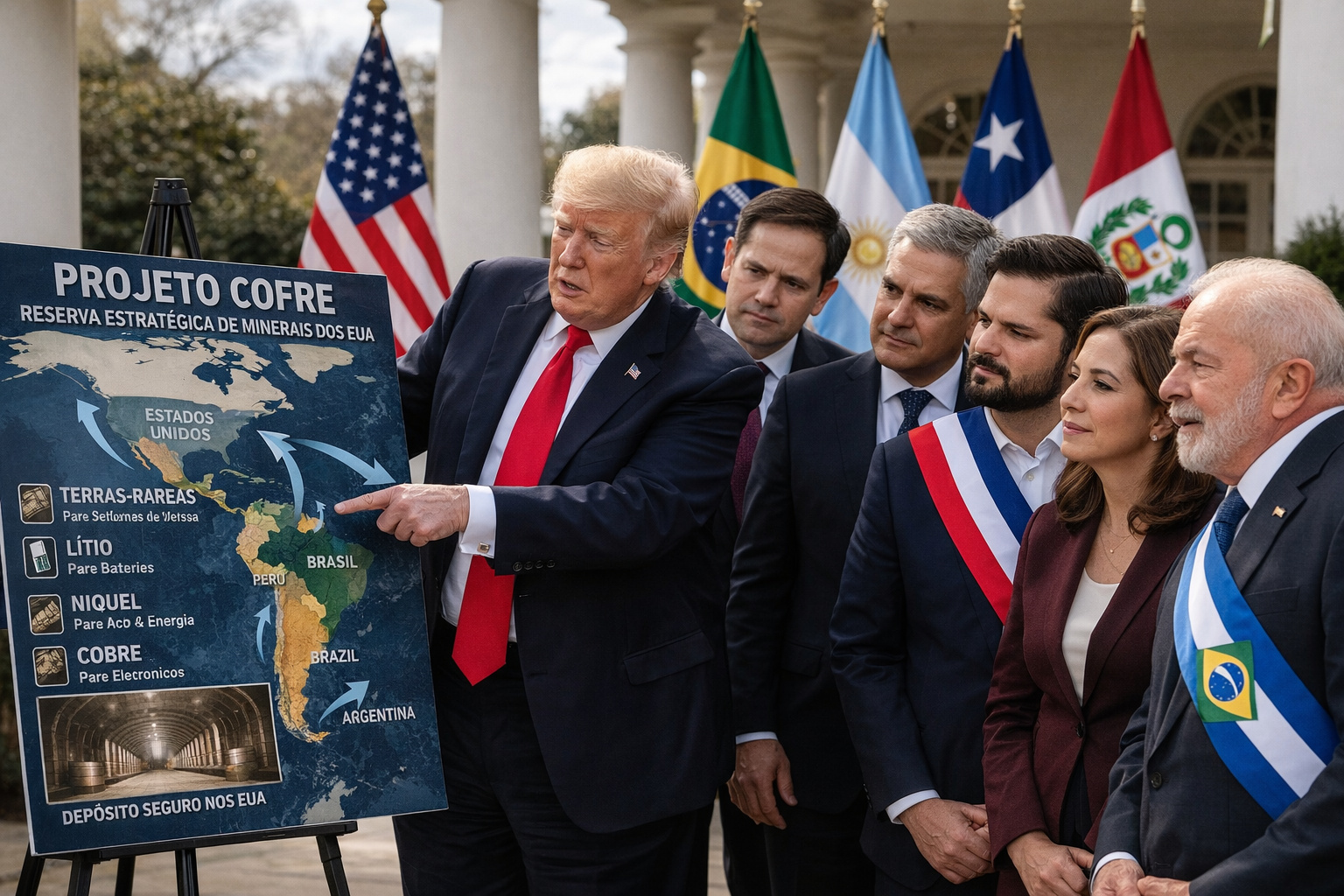
The USA announces a mysterious billion-dollar vault project to store critical minerals, but what intrigues experts is not just the plan itself, but why Latin America, including Brazil, has entered the center of this global dispute against China.
-
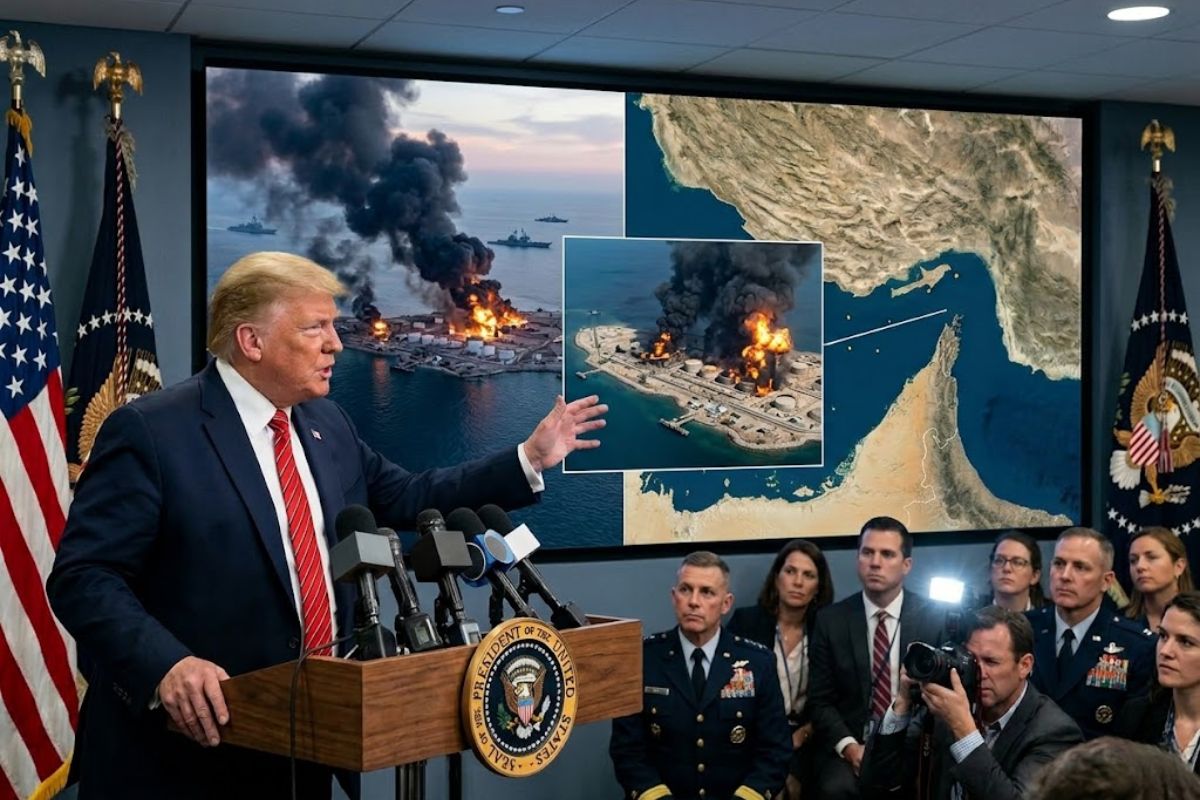
Trump Announces Bombing of U.S. Military Targets on Iranian Island Responsible for About 90% of Iran’s Oil Exports, Warns of Further Attacks if Navigation in Strategic Strait of Hormuz Is Threatened

In an interview with the newspaper “Valor Econômico,” General Richardson stated that democracies, like Brazil and the US, operate in a win-win system, unlike China, which, according to her, does not respect the sovereignty of the countries it engages with. This statement prompted a firm response from the Chinese Embassy in Brazil, which condemned the general’s remarks and accused the US of trying to manipulate public opinion and coerce other states into taking sides.
The Impact on Brazil
For Brazil, balancing relations with these two powers is not an easy task. Richardson’s visit was viewed with suspicion by Beijing but reflects Brazil’s strategic importance to both sides. China’s growing economic presence in Brazil, with investments in infrastructure and energy, contrasts with the historical partnership with the US in technology and financial services.
The joint military exercises between Brazil and the US, celebrating 200 years of bilateral relations, were not just a demonstration of friendship, but a clear signal that the US does not intend to let China dominate the region unchallenged. The geopolitical message is strong and clear: Brazil is at the center of this dispute, and its decisions will influence the balance of power in Latin America.
China’s Reaction
The visit of General Richardson to Brazil and China’s response underscore the complexity of current international relations. Brazil, as the largest economy in Latin America and a key piece in the geopolitical chessboard, must navigate carefully between American and Chinese influences, seeking to maximize economic benefits while maintaining its political autonomy. The scenario is far from simple and requires skilled diplomacy to prevent the country from becoming a battleground between the world’s two largest powers.








Ora ora! A China não é “atrasada”? Por que essa disputa? Parece que estou vendo duas prostitutas brigando pelo parceiro que as deseja.