





 Português
  Inglês
  Espanhol
  4 min de leitura
  0 comentários


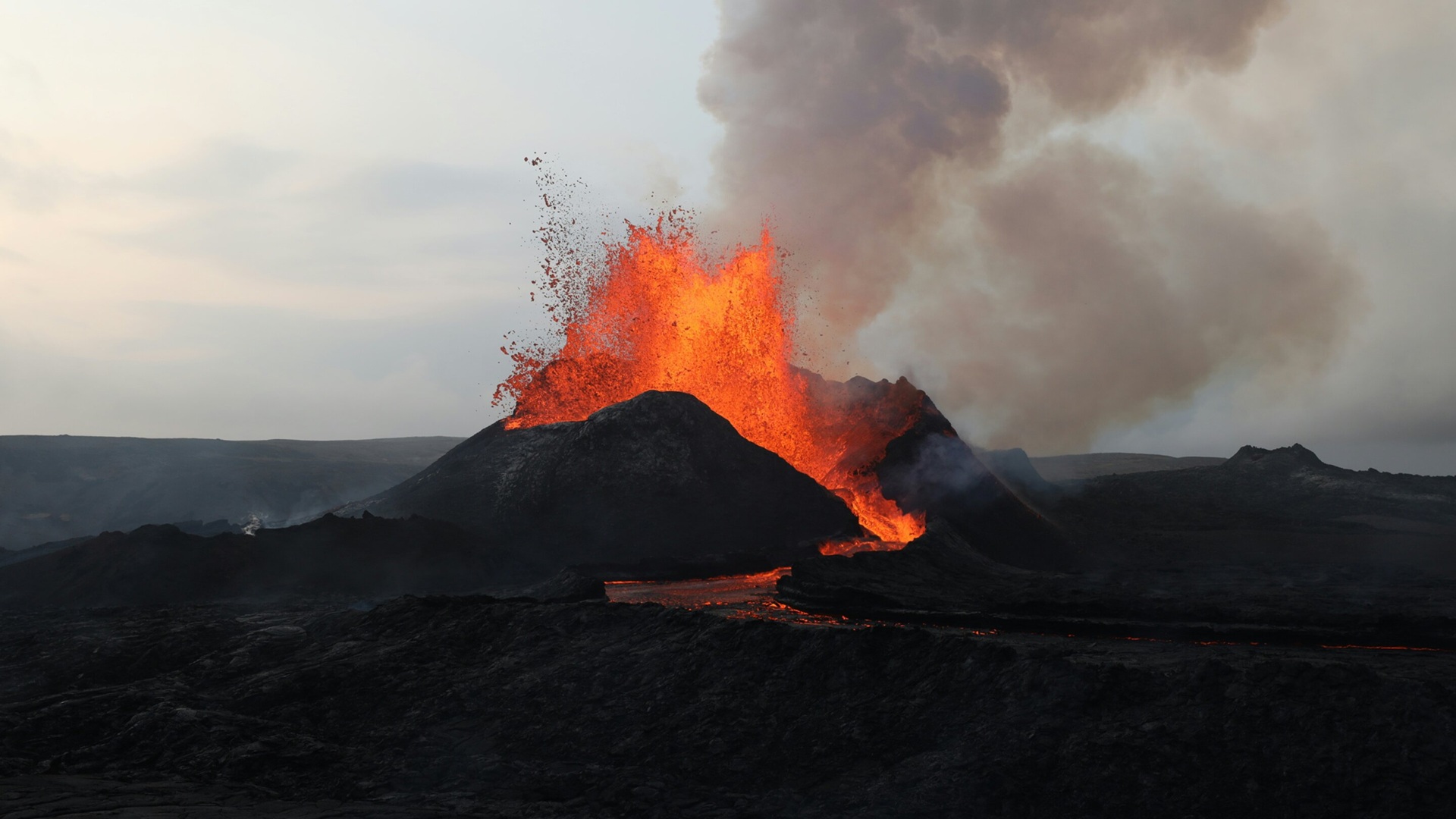
Published study in Nature Communications indicates that large volcanic eruptions may be accelerated by the dissolution of gases back into the magma, and not just by the release of these volatiles, altering the understanding of pressurization in large silicic magmatic chambers
Large volcanic eruptions may be driven by the dissolution of gases back into the magma, according to a study published in the journal Nature Communications. The research proposes a different mechanism from the prevailing explanation and points out that the reabsorption of volatiles can accelerate pressurization in large silicic magmatic chambers.
Understanding what triggers large eruptions is considered crucial for risk assessment, but the exact mechanism that leads to these events is still not fully understood.
Until now, the main theory held that the exsolution of volatiles, a process in which gases leave the magma, would be one of the central factors behind these eruptions.
-
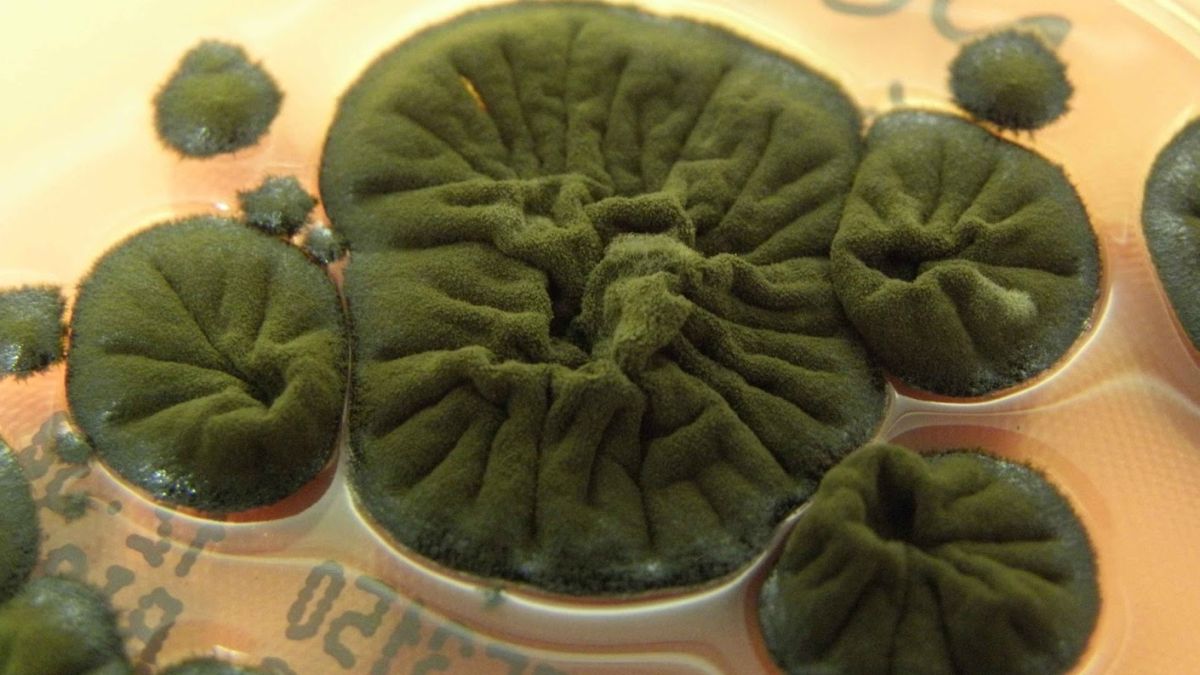
Found in one of the most radioactive places on Earth, this Chernobyl fungus may be doing something with radiation that no one has been able to explain to this day.
-
A bright yellow mushroom imported from Asia escaped from a cultivation farm in the United States in 2010 and is now aggressively spreading across 25 states, destroying entire communities of native fungi in American forests.

-
Buried under China, a colossal machine weighing 20,000 tons began operating as the largest neutrino detector on the planet and, in just 59 days, surpassed results that science took half a century to achieve.

-
Iran enters the center of a climate alert after the war emitted 5.6 million tons of CO2 in two weeks, surpassing the annual pollution of entire countries.


The prevailing model and the new proposal
Previous research highlighted the exsolution of volatiles as a determining factor for eruptions caused by increased pressure in magmatic chambers. In this process, dissolved gases, such as water vapor, carbon dioxide, and sulfur, separate from the silicate magma and form bubbles as the material rises or cools.
This behavior reduces solubility and generates significant magmatic overpressure, capable of driving volcanic eruptions. Some previous studies also indicated that, in large volcanic systems, these exsolved gases may dampen pressure, making eruptions less frequent but larger when they occur.
However, the authors of the new study argue that for exsolution to act as the main eruptive trigger, it would need to overcome both the loss of volatiles due to passive degassing and the viscous relaxation of the crust. According to them, this would require rapid crystallization rates, something difficult to maintain in larger, thermally buffered reservoirs.
According to the team, in large silicic systems, the exsolved volatiles may exert primary control over the compressibility of the magma and the growth of the magmatic chamber, rather than directly triggering the eruptions. From this assessment, the researchers turned their attention to the opposite process.
Reabsorption of volatiles in volcanic eruptions
The study investigates the so-called reabsorption of volatiles, a phenomenon in which gases dissolve back into the magma. According to the authors, this return reduces the compressibility of the magma, alters the system’s response to recharge, and affects its overall stability.
In practice, this makes the magma harder to compress, which accelerates the pressurization of the system. For the team, this mechanism can quickly increase pressure in large silicic magmatic chambers and thus trigger eruptions faster than the exsolution of volatiles.
The researchers state that this difference is important because it alters how the stability of the magmatic chamber is interpreted. Instead of functioning solely as an element linked to the release of gases, the system would also be influenced by the dissolution of these volatiles in the magma.
The case of the Aso caldera in Japan
As an example, the scientists analyzed an ancient volcanic eruption in Japan. The team argues that the reabsorption of volatiles likely played a key role in the eruption known as Aso-4, which occurred about 86,000 years ago at the Aso volcano.
To reach this conclusion, the researchers used a thermomechanical numerical model of magmatic chambers calibrated with geochemical data from the Japanese volcano. The study also relied on information obtained from apatite crystals, a calcium phosphate mineral expelled by these volcanoes.
According to the authors, apatite can serve as a record of the behavior of water saturation in the magma. The data extracted from these crystals helped reconstruct how the eruption occurred and served as a basis for feeding the model simulations.
Results of the simulations
The simulations tested different recharge rates, volatile contents, and thermal conditions. The goal was to identify under what situations the reabsorption of volatiles occurs and how it interferes with the stability of the magmatic chamber.
The results showed that reabsorption reduces the compressibility of the magma, amplifies pressurization, and destabilizes the chamber. According to the authors, this effect led to a faster eruption than in scenarios where exsolution predominated.
When specifically analyzing cases with 5% by weight of H₂O, the researchers observed that the pressurization rate was substantially higher in the reabsorption simulation. In this scenario, the eruption occurred after approximately 2,300 years, while the exsolution simulation did not register an eruption within the 5,000-year simulation time.
The authors attribute these high pressurization rates not only to the higher recharge rates observed in the reabsorption simulations. According to the study, they also result from the reduction in the compressibility of the magma caused by the decrease induced by reabsorption in the magmatic volatile phase, which normally dampens the increase in pressure in silicic systems.
Scope of the study and next steps
Although they acknowledge that the models simplify, to some extent, the mechanics of volcanoes and focus on a specific case, the researchers believe that the work can serve as a starting point for new investigations. The proposal, according to the team, is to deepen the understanding of this mechanism in future studies.
The authors state that further research could refine the analysis of the reabsorption of volatiles with more complex models and real-time monitoring. For the team, this could open a new avenue for predicting catastrophic volcanic eruptions, with the potential to save lives and reduce economic losses.







Seja o primeiro a reagir!