





 Portuguese
  English
  Spanish
  5 min of reading
  0 comments


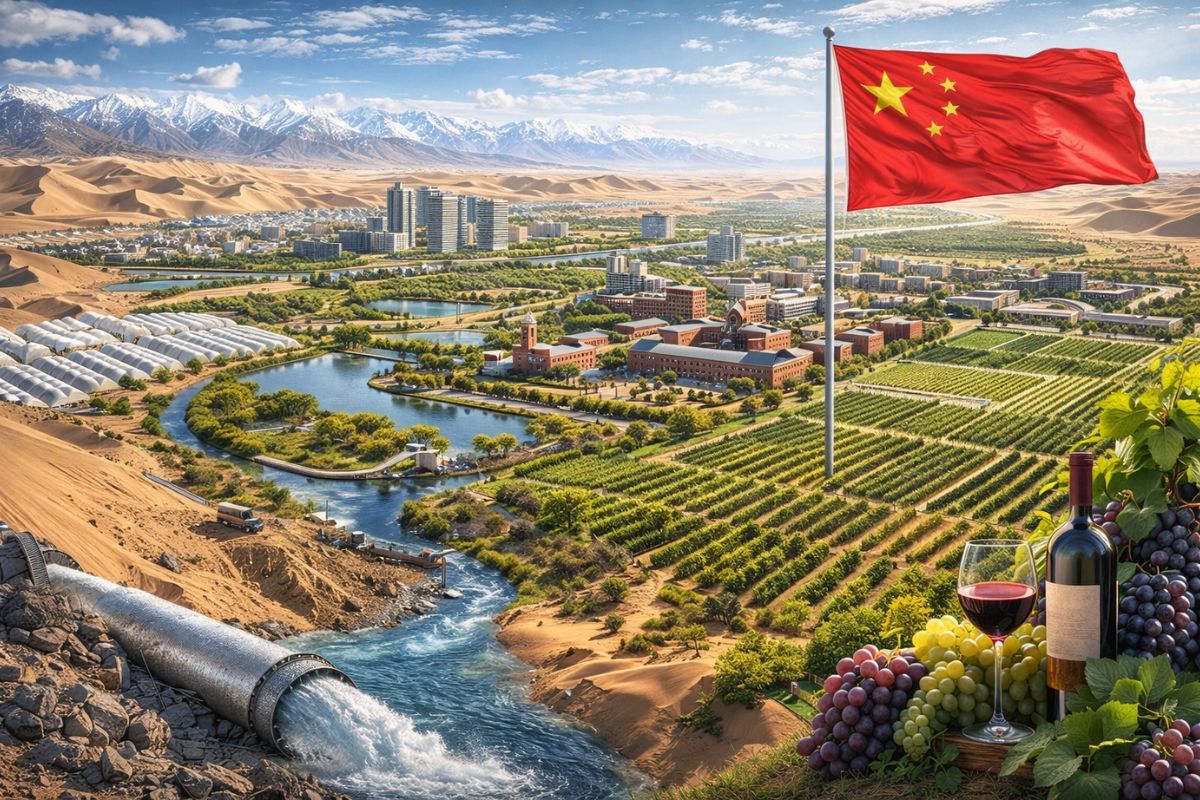
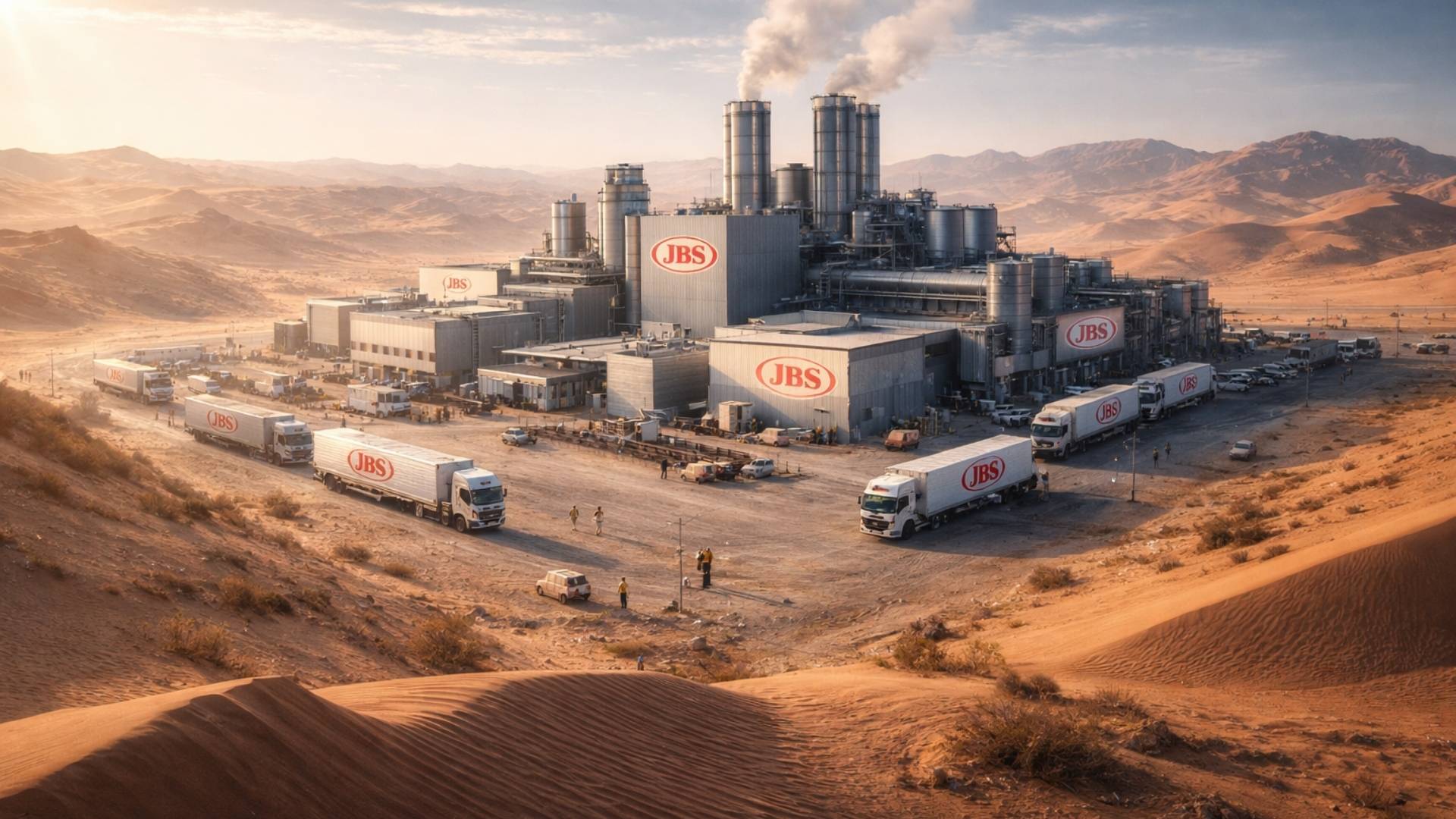
China transformed a stretch of desert once considered uninhabitable into a modern city of nearly 500,000 inhabitants called Shihezi. In the middle of the Gurbantünggüt desert, engineers built reservoirs, irrigation channels, and complete urban infrastructure using water from glaciers in the Tian Shan mountains, hundreds of kilometers away.
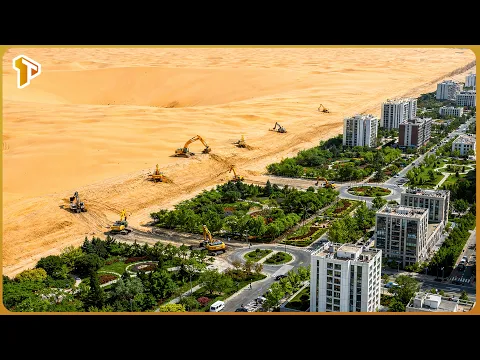
Where there was once only sand, constant winds, and temperatures exceeding 40 degrees in the summer, China erected an entire city. Shihezi, located in the Xinjiang Autonomous Region in the northwest of the country, sits on the edge of the Gurbantünggüt desert, the second largest in China, and today houses nearly 500,000 inhabitants, universities, industrial zones, productive farms, and even wineries that export to the international market.
The story of Shihezi is one of the most impressive examples of urban engineering in extreme environments. The city did not exist until the mid-20th century, when the Chinese government launched a project to transform arid lands into agricultural and urban centers. What made everything possible was a decision of audacious engineering: to capture water from melting glaciers in the Tian Shan mountains, hundreds of kilometers away, and transport it through a network of reservoirs and channels to the heart of the desert.
A land that no one believed could host a city

For centuries, the region where Shihezi was built was considered one of the most inhospitable places in China for any type of permanent settlement.
-
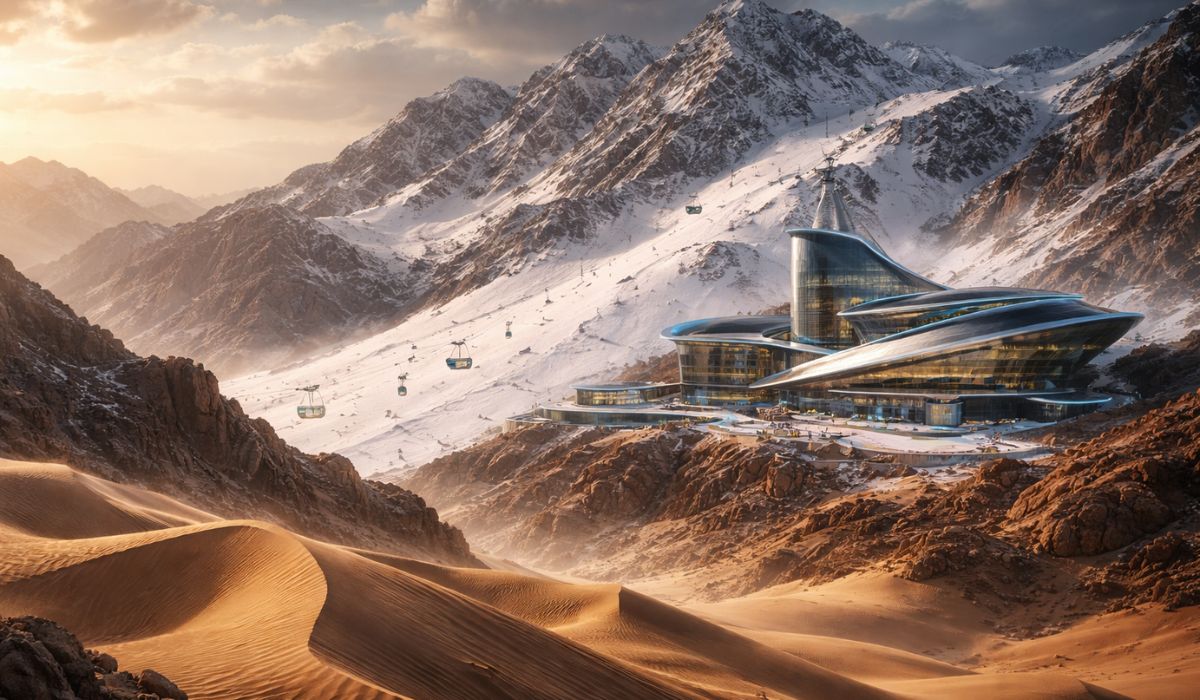
In the middle of the desert, Saudi Arabia wants to make it snow, build a billion-dollar ski resort on a 2,600-meter mountain, and prove to the world that even sand can become a luxury winter destination.
-
Without a button, sensor, or any electronic system, Harvard scientists create a solar device that autonomously decides whether to generate energy or heat and can transform energy use in homes and buildings.

-
Theories about UFOs have resurfaced strongly after an aerospace scientist and a general connected to the Roswell case mysteriously disappeared in the United States within a few months, and even the FBI was called in to investigate.

-
Neither in the refrigerator nor in the fruit bowl: this is the correct way to store lemons.

The average annual precipitation is only 150 to 200 millimeters, much less than in dry regions like Arizona or Nevada in the United States. Summers exceed 40°C, winters are harshly cold, and sand-laden winds blow practically all year round.
Before the project, the region hosted only small scattered agricultural oases, where life depended exclusively on water from rivers that originate in the Tian Shan mountains, hundreds of kilometers away.
There were no large-scale irrigation systems, no infrastructure, and no obvious reason for a city to arise there.
The layer of sand at the edge of the Gurbantünggüt desert can be between 10 and 30 meters thick and moves constantly with the wind, making even the construction of foundations a considerable technical challenge.
The project that China launched to conquer the desert

The turning point came in 1954 when China assigned the Xinjiang Production and Construction Corps, an organization that combined economic development with paramilitary functions, the mission to reclaim desert lands and build the first permanent settlements in the region.
The pioneers who arrived found a harsh reality: constant winds, limited water supply, and virtually no infrastructure.
Before any construction, engineers and urban planners conducted extensive geological surveys. Drillings were made at multiple locations to measure the thickness of the sand layers and identify areas with a solid enough base for buildings.
At the same time, scientists analyzed the river systems that originate in the Tian Shan mountains, where melting snow and glaciers provide billions of cubic meters of water each year. From this data, China designed an entirely new city, with agricultural zones, residential neighborhoods, industrial areas, and transportation corridors.
The glacier water that gave life to the desert
If there is a single factor that explains the existence of Shihezi, it is water. The main water source for the city comes from the melting glaciers in the Tian Shan mountains, which feed rivers and river systems that flow into the northern plains of Xinjiang.
To control and store this resource, Chinese engineers built large reservoirs, the most important being Kenwat, located about 70 kilometers from Shihezi.
The Kenwat reservoir has a capacity to store approximately 188 million cubic meters of water, equivalent to nearly 75,000 Olympic-sized swimming pools.
From it, water is distributed through a network of channels, pumping stations, and irrigation systems that extend for dozens of kilometers. The reservoir serves three critical functions: flood control of mountain rivers, water supply for agricultural irrigation, and support for electricity generation.
From barren sand to China’s cotton granary
With water secured, the next challenge was to transform sand into arable land. The soil at the edge of the desert is typically nutrient-poor, has high salt levels, and struggles to retain moisture. Agronomists and engineers initiated a large-scale land reclamation process, adding organic fertilizers and soil conditioners while building leaching systems to reduce salinity buildup.
Modern drip irrigation systems were introduced, delivering water directly to the roots of plants and reducing losses in an extremely arid environment. In just a few decades, tens of thousands of hectares of farmland were established around Shihezi.
The region has become one of China’s leading cotton-producing areas, with yields exceeding 1,500 kg of cotton fiber per hectare. The growth of agriculture attracted tens of thousands of workers and formed the economic base that allowed the city to expand.
A complete city where there was once nothing
As agriculture stabilized and the population grew, China built a complete urban infrastructure in Shihezi.
Boulevards 40 to 60 meters wide were erected, forming a transportation network that connects the city center to the surrounding agricultural and industrial areas. Electricity systems, treated water supply, gas, and sewage treatment were developed in a coordinated manner.
Today, Shihezi covers an area of approximately 460 km², comparable to the size of downtown Chicago, and generates an economic output of about 42.9 billion yuan per year, equivalent to nearly 6 billion dollars.
The city features residential districts, industrial zones, universities, and a modern transportation network that connects it to the entire northern region of Xinjiang. What was once a remote desert landscape has become a medium-sized economic and urban center.
From desert to glass: Shihezi also produces wine
One of the most surprising developments in the city is its wine industry. Shihezi is located near latitude 44° north, comparable to the Bordeaux region in France, and receives between 2,800 and 3,000 hours of sunshine per year, with low humidity and a large temperature range between day and night, ideal conditions for growing wine grapes.
Thanks to the irrigation systems that bring water from the Tian Shan mountains, vineyards thrive reliably even in the arid environment.
Drip irrigation technology saves between 30% and 50% of water and allows precise control over grape quality.
Today, the Shihezi region hosts large vineyards and wineries capable of storing hundreds or thousands of tons of wine. China is already among the top ten wine-producing nations in the world, and Shihezi is establishing itself as a new hub for this sector in the country.

With information from the portal of the State Council of the People’s Republic of China.
What do you think of the story of Shihezi? Do you believe that desert city projects are sustainable in the long term, or is reliance on glaciers a risk? Leave your opinion in the comments.





Seja o primeiro a reagir!