





 Português
  Inglês
  Espanhol
  3 min de leitura
  0 comentários


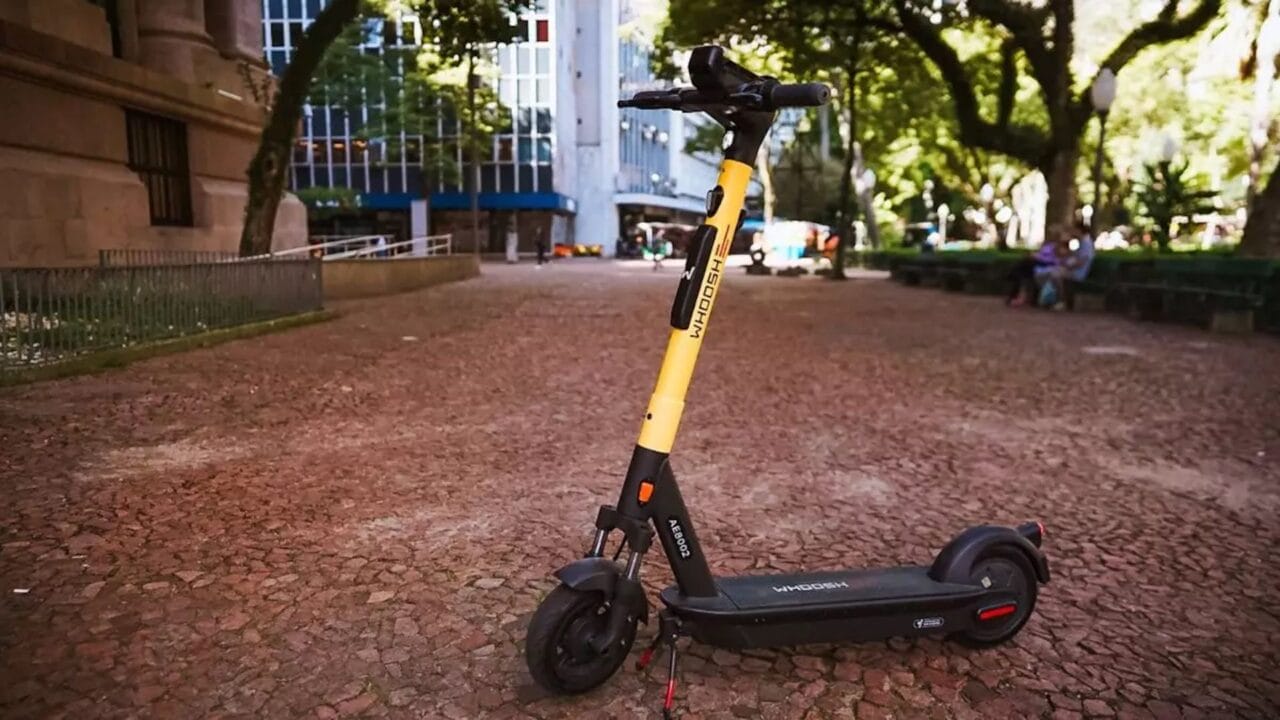
The Russian Startup Whoosh Is Determined to Establish Shared Electric Scooters in Major Centers, a Mission That Large Companies Have Attempted Without Success.
The companies that operated in Brazil failed not because of the market or regulatory issues, but due to poor management, and because the operational system of the scooters was inefficient.
According to Francisco Forbes, everything — from the model of picking up and returning the shared scooters to how the maintenance of the units will be carried out.
Florianópolis, fixed points, battery swapping,
-
OMODA & JAECOO grows in Europe in 2026 with an integrated strategy of sales, innovation, local production, and technological advancement in the United Kingdom, Italy, and Spain.
-
OMODA & JAECOO expands after-sales service in Brazil with competitive maintenance, a 7-year warranty, and high availability of parts for technological SUVs.

-
OMODA & JAECOO appoints Alessandra Souza as executive marketing director in Brazil and accelerates brand expansion with a focus on innovation, networking, and hybrid portfolio.

-
Jaecoo 7 with super hybrid SHS system exceeds 1,200 km of combined range with a 1.5 turbo engine, high-density battery, and intelligent energy management.


Betting on the Return of Electric Scooters, Russian Startup Whoosh Arrives in Brazil
What do companies like Lime, Grow, Yellow, and even Uber have in common with Whoosh, the Russian-origin startup that has just arrived in Brazil? They all share the dream of popularizing the use of a fast, clean mode of transport that can help reduce traffic in the country: shared electric scooters.
- Important Points for Using an Electric Scooter
- Lambretta is Reborn with Electric Version, Quick Recharge, and Good Range
After three unsuccessful attempts since 2019 to make electric scooters a viable option for urban mobility in Brazil, it is now time for this eastern European startup to invest in the business. The executives at Whoosh Brazil are optimistic about this venture.
“Brazil has several urban centers with more than 1 million inhabitants, all facing mobility problems due to unplanned growth, and scooters represent a quick, easy-to-implement, and effective tool that provides an immediate reduction in pollutant gas emissions,” explained Francisco Forbes, CEO of Whoosh in Brazil, to the website Startups.
Forbes also explained why he chose the Southern Region of the country, especially Florianópolis, to start operations. The city of Santa Catarina already has 1,300 electric scooters, while Porto Alegre, the capital of Rio Grande do Sul, has 1,200 in operation.
“We opted to start in Florianópolis due to the urban infrastructure and topography. The city has many bike lanes and flat areas, making it suitable for scooter use. Furthermore, the safety is high, and the size of the city is ideal – not as large as São Paulo, but bigger than many other municipalities,”
After 2024, the plan is to expand outside the Southern Region and offer shared electric scooters in major centers like São Paulo and Rio de Janeiro, which suffer greatly from heavy traffic.
Whoosh relies on a straightforward strategy to avoid failing in the Brazilian market, unlike the companies that previously attempted to implement the service: avoiding repeating the mistakes of the past.
“The companies that operated in Brazil failed not because of the market or regulatory issues, but due to inadequate management, and because the operational system of the scooters was inefficient,” he commented.
And what will Whoosh do differently? According to Francisco Forbes, everything — from the model of picking up and returning the shared scooters to how the maintenance of the units will be performed.
Forbes revealed that the pickup and return of the scooters could be done at fixed points established by Whoosh, instead of a free system where they were left anywhere in the cities, increasing the risk of damage and theft, even with satellite monitoring.
Forbes also confirmed that periodic maintenance will focus more on battery swapping, not replacing the entire scooter, since current technology allows for this. As all units will always be concentrated in the same place (the fixed points), maintenance will be faster, and the fleet will be available to users for a longer time.
Source: Startups
Source: Canal Tech









Seja o primeiro a reagir!