





 Portuguese
  English
  Spanish
  4 min of reading
  0 comments


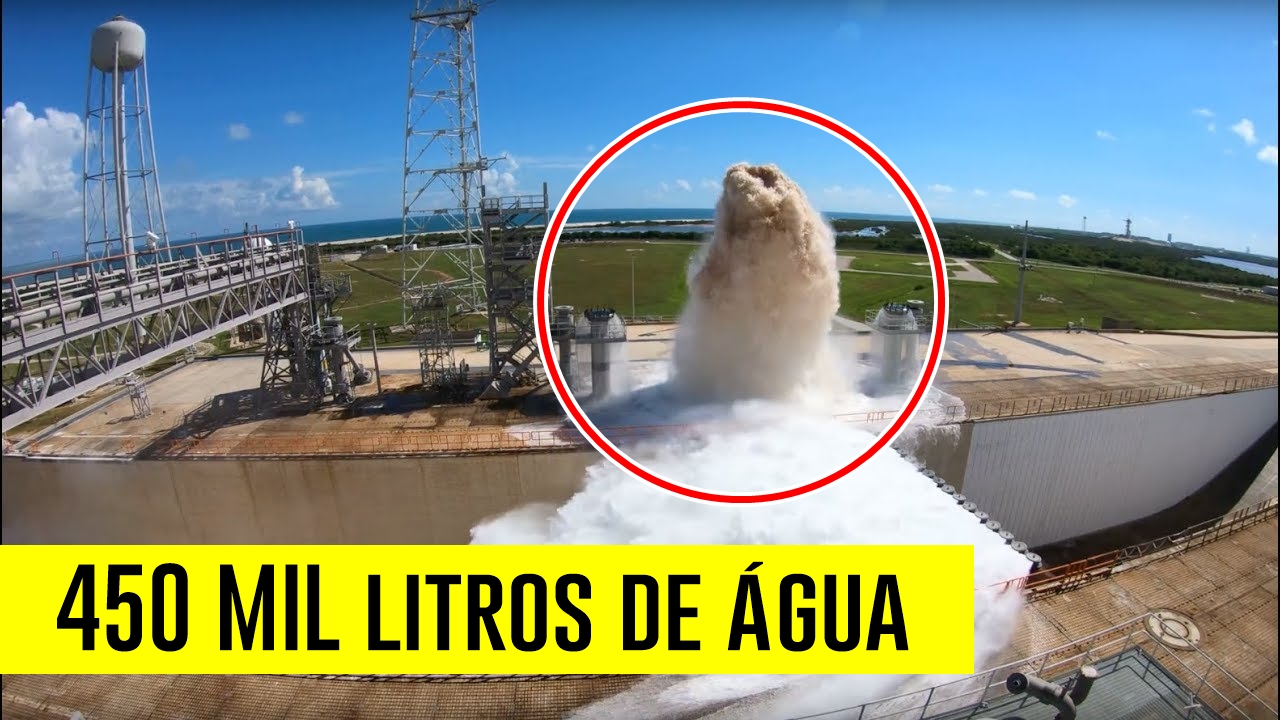
NASA Uses a System That Ejects Half a Million Gallons of Water During Rocket Launches. Learn How This Technique Protects the Structure and Reduces Sound Impact.
Space launches are grand events, but few imagine the amount of resources needed for each mission. Recently, NASA used 450,000 gallons of water in just 60 seconds during the launch of its powerful NASA rocket in the Space Launch System (SLS). This impressive number raises an interesting question: why does launching a rocket require so much water?
The Role of Water in NASA’s Rocket Launches
The scenes of dense vapor engulfing a spacecraft at launch have two main origins. The first is the rocket’s fuel itself. Most use a combination of liquid hydrogen (H₂) and liquid oxygen (O₂), maintained at extremely low temperatures. When these super-cooled liquids start to turn into gas, part of the vapor we see is the result of natural condensation around the rocket.
The second and most significant source of vapor comes from the sound and fire suppression system of the launch platform. Before any rocket is launched, tons of water are sprayed over the structure. This process serves two critical functions:
-
Motorola launched the Signature with a gold seal from DxOMark, tying with the iPhone 17 Pro in camera performance, Snapdragon 8 Gen 5 that surpassed 3 million in benchmarks, and a zoom that impresses even at night.

-
Satellites reveal beneath the Sahara a giant river buried for thousands of kilometers: study shows that the largest hot desert on the planet was once traversed by a river system comparable to the largest on Earth.

-
Scientists have captured something never seen in space: newly born stars are creating gigantic rings of light a thousand times larger than the distance between the Earth and the Sun, and this changes everything we knew about stellar birth.

-
Geologists find traces of a continent that disappeared 155 million years ago after separating from Australia and reveal that it did not sink, but broke into fragments scattered across Southeast Asia.

- Prevent acoustic damage to sensitive equipment.
- Minimize the risk of fires caused by extreme heat.
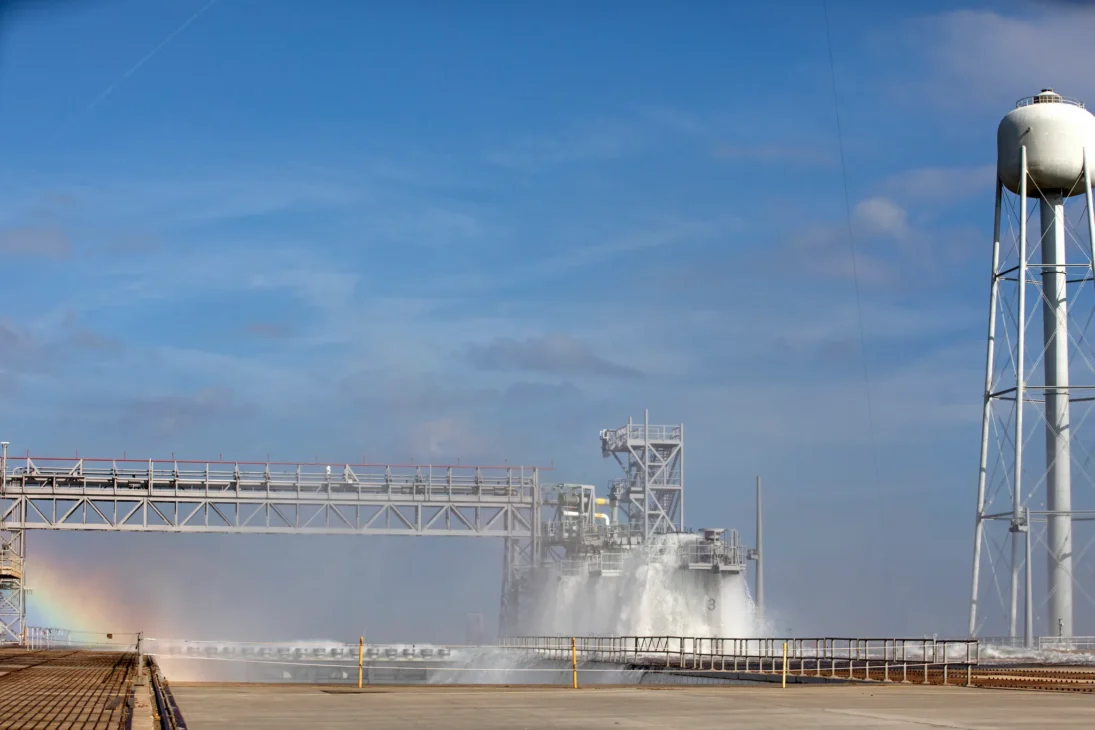
Photo Credit: NASA/Kim Shiflett
The Challenge of High-Intensity Sound
NASA engineers have identified that the acoustic energy generated by a launch can be devastating. When the rocket lifts off the pad, intense sound waves ripple through the environment. To better understand, sound travels through the air as waves with two main characteristics: frequency and amplitude.
- Frequency: measures how many times the sound wave oscillates per second. It defines whether the sound is low or high.
- Amplitude: indicates the strength of the wave, responsible for the intensity of the sound.
When a rocket generates a thrust of 8.4 million pounds (about 3.8 million kilograms), the sound vibrations can cause irreparable damage to equipment and even to the structure of the pad. This is where water comes into play, acting as a natural damper for these sound waves. As the waves pass through the water, they lose a significant amount of their intensity, reducing the impact on critical components.
Thanks to this system, NASA is able to keep acoustic levels around 142 decibels (dB), a safe limit for onboard equipment. For comparison, this is louder than a heavy metal concert, but controlled enough to ensure the safety of the launch.
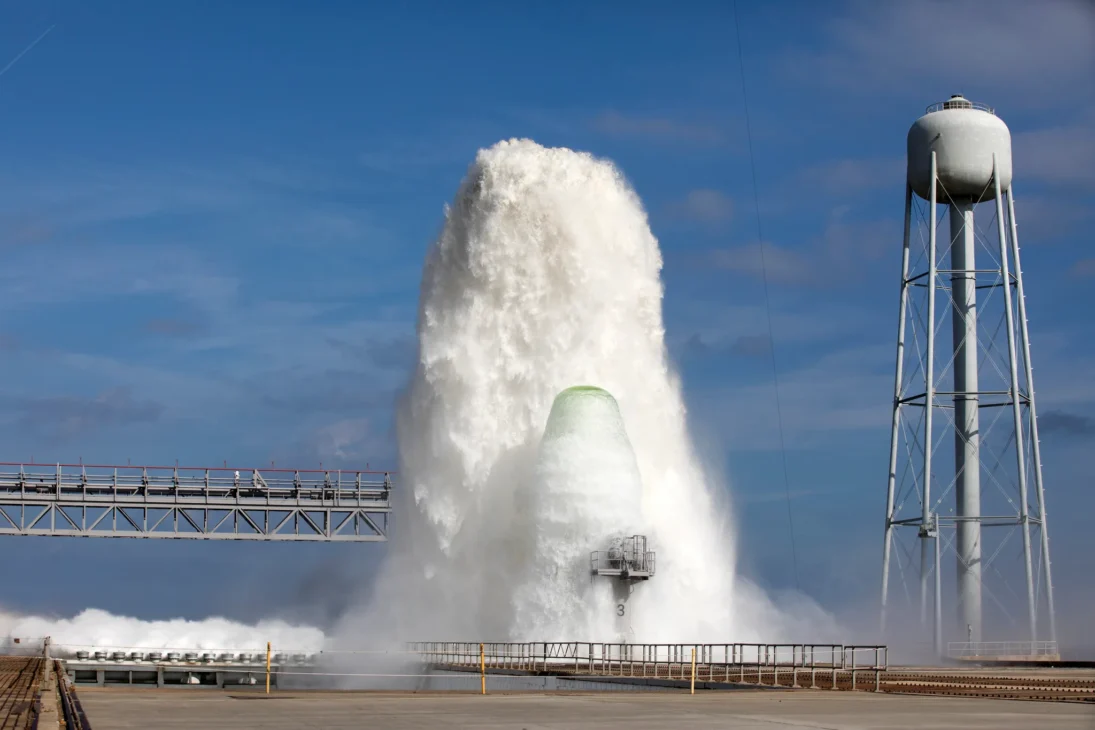
Photo Credit: NASA/Kim Shiflett
The Technology Behind the IOP/SS System
The new SLS rocket required significant upgrades to NASA’s sound suppression system. The system, called Ignition Overpressure Protection and Sound Suppression (IOP/SS), can release 450,000 gallons of water in one minute. This is equivalent to supplying a small town of 100 people for almost six days.
But why is so much water necessary? Simply because a large portion of it evaporates instantly upon contact with the extreme heat of the rocket’s exhaust.
Without this liquid barrier, the vibrations and thermal radiation could compromise not only the success of the launch but also the safety of the ground crew.
Sustainability and Water Resources
While the volume of water used may seem excessive, NASA is aware of its environmental impact. The agency maintains a dedicated program for sustainable water resource management, working on initiatives such as:
- More accurate water flow forecasting in watersheds.
- Studies on the effects of climate change and overpopulation on global water supply.
These efforts demonstrate NASA’s commitment to balancing its operational needs with environmental preservation.
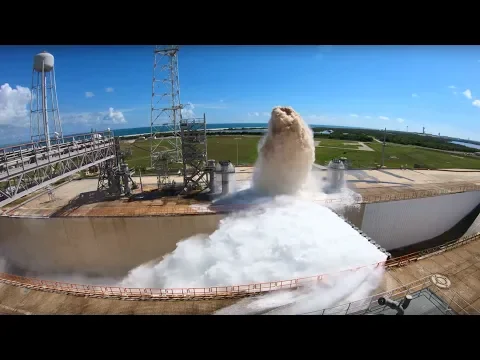

NASA Rocket Launch That Makes Noise
Even with all technological advancements, launches remain high-impact events. Interestingly, the sound generated does not only affect the immediate environment but also our ears.
The noise at such high frequencies can cause permanent hearing damage if heard without proper protection. Therefore, operations require strict safety protocols.
In the end, every drop of water used in these launches is essential. Without it, exploring space with the efficiency and safety we know today might not be possible.








Seja o primeiro a reagir!