





 Portuguese
  English
  Spanish
  3 min of reading
  0 comments


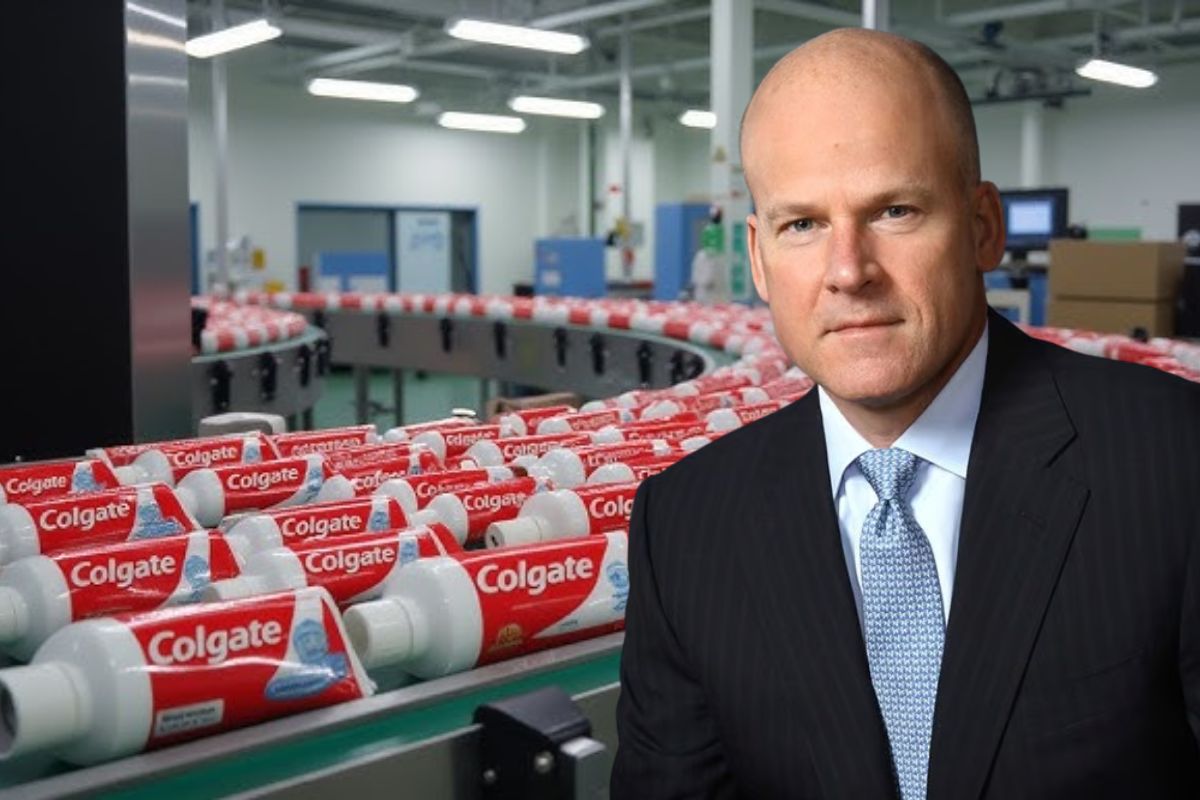
Get To Know The Story Of William Colgate, The Young Englishman Who Overcame Poverty, Wars, And Crises To Create The Brand Synonymous With Hygiene And Trust In The World.
Colgate. A name present in over 200 countries. Valued at over US$ 70 billion. Synonymous with cleanliness and trust. But the story began simply. With a poor immigrant boy. His hands were burned by caustic soda. He was William Colgate. Without inheritance or diploma, he saw in soap the chance to create an empire. Discover his unbelievable journey.
William Colgate was born in January 1783, in England. He was the son of a humble farmer and candle maker, Robert Colgate. His father was a critic of the monarchy and a Baptist follower. This stance put him at risk. Fearing arrest for sedition, Robert fled with his family to the United States. William was only 15 years old. The crossing of the Atlantic was difficult. They arrived in Baltimore poor and exhausted. The family struggled against financial instability in Maryland and New York. In this scenario, the young William Colgate began to work in whatever he could find.
The Vision At The Soap Factory: The Opportunity To Create A Brand
At 21, in 1804, William moved alone to New York. The city was an emerging hub but hostile to those without resources. He got a job as an apprentice in a soap and candle factory. The work was hard, with caustic soda and the smell of fat.
-
A couple buys an old chalet, breaks the kitchen floor for renovation, and finds over a thousand coins of gold and silver hidden since the English Civil War over 4 centuries ago.

-
Rigid bags with their days numbered: new trend prioritizes comfort in 2026.

-
YouTuber creates an excavator equipped with a giant 4.5-meter sword to challenge his brother to a rematch, and the invention quickly goes viral on social media.

-
The U.S. Army surprises the world by presenting the UH-60MX Black Hawk helicopter capable of flying without pilots, controlled by a tablet, featuring the MATRIX system, smart sensors, and full autonomy in real combat and rescue missions.


But William Colgate was observant. He wrote down processes, ingredients, and negotiations. He noticed that soap and candles were sold in bulk, without standards or brands. He had a vision: his product could have consistent quality, trust, and an identity, a name. His name.
William Colgate & Company
Even poor and unknown, William Colgate saved up. In 1806, at the age of 23, he rented a space on Dutch Street, Manhattan. With simple tools and a borrowed kettle, William Colgate and Company was born. He produced handmade soap and candles. He sold to small merchants and hotels. And he made a point of stamping his name on the boxes. An unprecedented detail that initiated a brand revolution. William Colgate focused on consistency of quality, scent, and durability.
The Resilience That Built Trust In The Brand
Growth demanded hard work. William Colgate did almost everything: he produced, packaged, and delivered. By 1812, he was supplying several states. But the War of 1812 (US vs. England) brought difficulties. Raw materials became expensive. Many closed down. William Colgate responded strategically. He diversified suppliers and maintained stable prices. He gained respect and trust. After the war, he expanded.
He opened a new factory in 1820, also producing starch and extracts. By the end of the 1820s, a fire destroyed part of the factory. He rebuilt, improving structure and safety. In the 1830s, he faced another economic crisis prudently, avoiding debts and reinvesting. His pillars were: quality, ethics, and consistency.
The Legacy Of William Colgate: Succession, Innovation, And Global Conquest
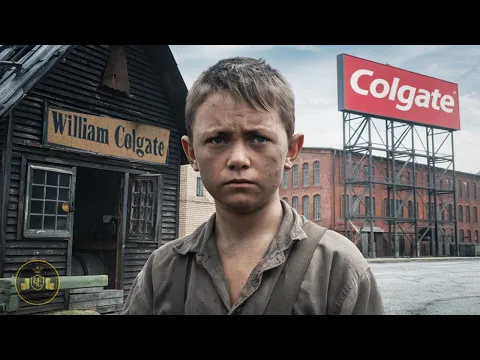

In the 1840s, William Colgate’s company was a reference in the Northeast US. At 60, he prepared his son, Samuel Colgate, for succession. Samuel learned every step of the business. In 1847, William Colgate had a mild stroke. In 1848, at 65, he passed control to Samuel. William Colgate passed away in 1857, at 74 years old. The company was renamed Colgate & Company.
Under Samuel’s leadership, Colgate innovated. In 1873, it launched the first flavored toothpaste in jars. In 1896, it was the first to sell toothpaste in tubes. The brand solidified during World War I, present in soldiers’ hygiene kits. In 1928, it merged with Palmolive-Peet, creating Colgate-Palmolive. It expanded globally, survived World War II, and became a world leader. Today’s empire, valued at over US$ 70 billion, was built on William’s principles: purpose, constancy, trust, and ethics.








-

Uma pessoa reagiu a isso.