





 Portuguese
  English
  Spanish
  6 min of reading
  0 comments


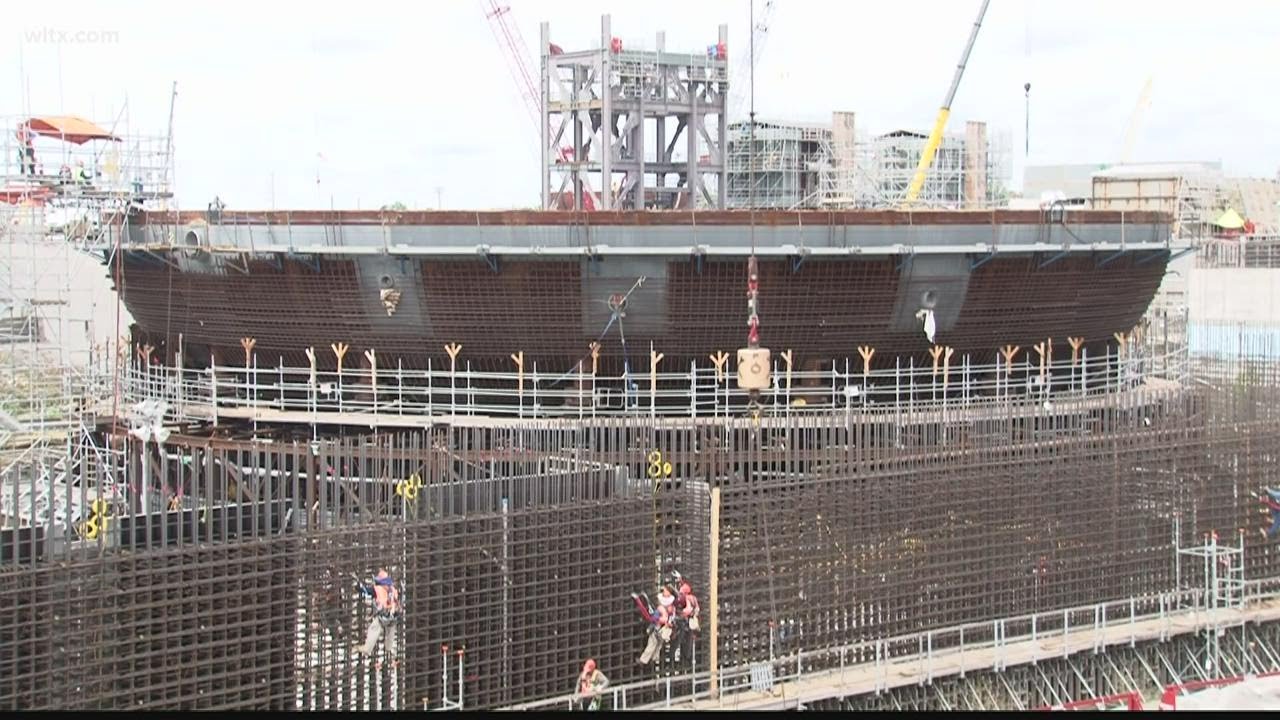
V.C. Summer Nuclear Plant: 9 billion invested, fraud, bankruptcy of Westinghouse, and consumers paying for energy that never existed
On July 31, 2017, the utilities SCANA and Santee Cooper officially announced the abandonment of the construction of two AP1000 nuclear reactors at the V.C. Summer plant, located in Jenkinsville, South Carolina. According to a report from IEEE Spectrum, the project had started with an estimated budget of 9.8 billion dollars and a completion forecast for 2016. At the time of cancellation, costs had already exceeded 25 billion dollars, and none of the reactors were close to becoming operational. The case became known as Nukegate and established itself as the largest business failure in South Carolina’s history, involving corporate bankruptcy, fraud, and direct impacts on consumers.
AP1000 Nuclear Project: promise of clean energy and reduced cost
The original proposal for the V.C. Summer project was to meet the growing energy demand in South Carolina with a solution considered modern and efficient.
The AP1000 reactors, developed by Westinghouse Electric Company, were presented as a new generation of nuclear plants, with greater passive safety, lower construction costs, and improved operational efficiency.
-
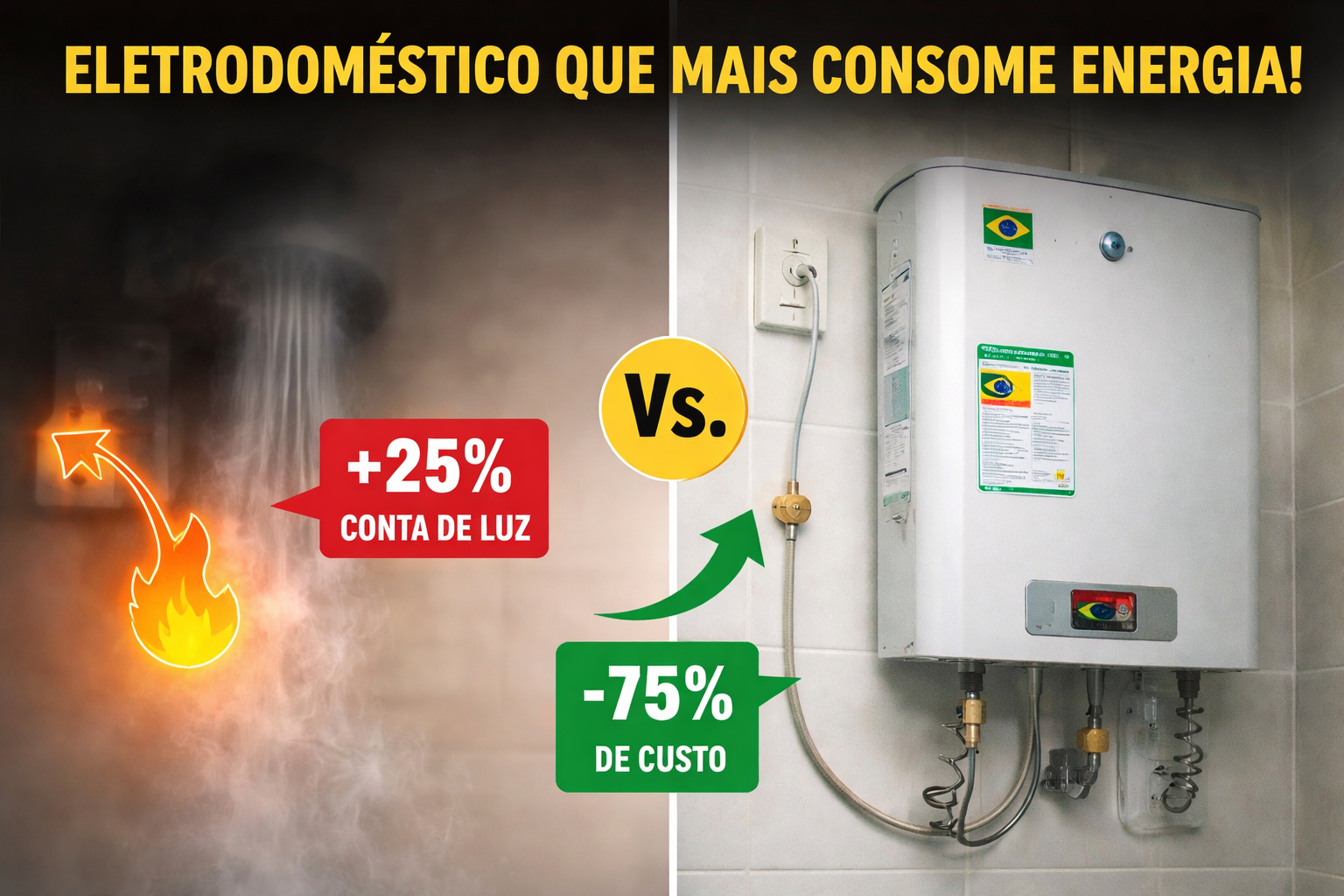
The household appliance that consumes the most energy in Brazilian homes is not the air conditioner; it is located in the smallest room of the house, is used daily, and can account for up to 25% of the electricity bill, while an alternative in the same outlet can reduce this cost by up to 75%.
-
Son of a seamstress from the rural area of Ceará who did not speak English wins a scholarship of over 2 million reais at Williams College, one of the top 10 universities in the United States, covering everything including dormitory, meals, and annual trips to Brazil.

-
Bill Gates revealed that the true secret behind every great achievement is not a brilliant leap but rather small improvements repeated over the years, and the data from his own career and the fight against climate change prove that he is right.
-
With 22 thousand tons of steel, a height nearly three times greater than the Eiffel Tower, and a cost of R$ 1.6 billion, China is building the highest bridge on the planet over a colossal canyon, reducing a crossing time of over 2 hours to just over 2 minutes.
In March 2008, South Carolina Electric & Gas, a subsidiary of SCANA, applied to the Nuclear Regulatory Commission for a combined license for construction and operation. Santee Cooper, a state-owned utility, took on 45% of the project. In May 2008, a contract was signed with Westinghouse, establishing the initial cost at 9.8 billion dollars.
The project was conceived as a long-term strategic solution, but it quickly transformed into one of the largest financial collapses in the U.S. energy sector.
Nuclear plant construction site turns into mega-structure with thousands of workers
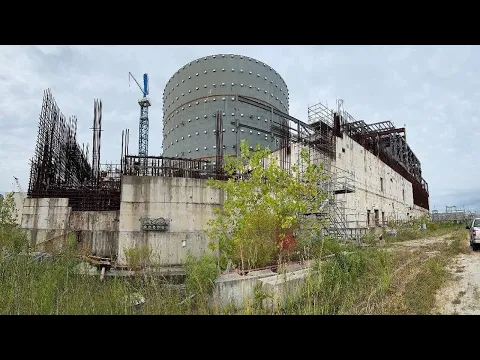
During the peak of construction, the V.C. Summer site employed about 5,000 workers. To enable the construction of the reactors, two concrete plants were installed on-site, ensuring a continuous supply for the structure. A seven-story building was constructed exclusively for the assembly of prefabricated structural modules.

However, critical problems began to arise. The delivered modules had manufacturing defects and did not fit properly. Electrical and mechanical designs were drafted by professionals without proper licensing, and Westinghouse claimed that its federal authorization exempted it from state legislation.
The lack of an integrated schedule and engineering failures completely compromised the execution of the project, resulting in continuous delays and exponential cost increases.
Cost explosion: nuclear budget jumps from 9.8 billion to up to 25 billion dollars
The initial budget of 9.8 billion dollars quickly proved unrealistic. In 2015, an audit conducted by Bechtel revealed that the reactors would not be completed in time to secure 2 billion dollars in federal tax credits, deemed essential for economic viability.
However, the final version of the report had this conclusion removed after legal intervention related to the utilities. Based on the altered document, the South Carolina Public Service Commission approved an 800 million dollar increase and authorized a fixed-price contract with Westinghouse.
By 2017, the estimated cost for completion varied between 20 and 25 billion dollars. The project had become financially unsustainable, supported by questionable regulatory and corporate decisions.
Westinghouse’s bankruptcy in 2017 triggers collapse of the nuclear project
On March 31, 2017, Westinghouse Electric Company filed for Chapter 11 bankruptcy protection under U.S. law, citing accumulated losses of 9 billion dollars on the V.C. Summer and Vogtle projects in Georgia.
The bankruptcy had a global impact on the nuclear sector. Controlled by Toshiba, Westinghouse was one of the leading reactor builders in the Western world. With its insolvency, it became clear that the fixed-price contract would have no practical validity. Without the financial capacity to fulfill the contracts, Westinghouse led the V.C. Summer project to a definitive collapse.
Judicial investigations revealed that SCANA executives were aware of the project’s collapse years before the official announcement. Nevertheless, they concealed information from regulators and investors.
During testimonies, it was revealed that executives presented manipulated images of the construction site to support the narrative of progress. This strategy allowed the company to keep its stock value high, sell over 1 billion dollars in bonds, and justify rate increases.
Former CEO Kevin Marsh was sentenced to two years in federal prison for conspiracy to commit mail and wire fraud. Former Vice President Stephen Byrne received a fifteen-month sentence. Jeffrey Benjamin, a former Westinghouse executive, was charged with multiple financial crimes.
The case was formally named Nukegate by the FBI, symbolizing one of the largest corporate scandals in the North American energy sector.
Consumers pay for a nuclear plant that never generated energy
One of the most controversial aspects of the case involves the direct impact on consumers. The state law Base Load Review Act, passed in 2007, allowed utilities to charge upfront for the construction costs of nuclear plants.
In practice, South Carolina residents financed the project through their electricity bills for years. When the construction was abandoned, consumers had already paid about 2 billion dollars for a plant that never produced electricity.
The regulatory model transferred the financial risk of the project to the public, even without the delivery of energy.
Customers still pay for the V.C. Summer nuclear plant nearly a decade later
By 2026, approximately 800,000 customers of Dominion Energy, which acquired SCANA in 2019, continue to pay for the project’s costs.
The fee represents about 5.6% of the monthly residential electricity bill, equivalent to approximately 8 dollars per month per household. The remaining debt is estimated at 2.3 billion dollars, with a repayment forecast extending over the next 15 years.
Santee Cooper maintains a total debt of 7.2 billion dollars, much of which is related to the nuclear project, with refinancing extending at least until 2056.
Even without generating a single watt of energy, the plant continues to financially impact hundreds of thousands of consumers.
Vogtle Nuclear Project in Georgia shows contrast with V.C. Summer
While the V.C. Summer project was abandoned, the sister project in Vogtle, Georgia, continued to completion. Utilizing the same AP1000 technology and facing similar challenges, the project was completed at costs exceeding 30 billion dollars.
The reactors went into operation in 2023 and 2024, becoming the first new nuclear reactors built in the United States in over three decades.
The comparison highlights that, although technically feasible, the construction of modern nuclear reactors involves extreme financial risks.
Economic impact: thousands of jobs lost with project cancellation
The announcement of the cancellation, made on July 31, 2017, had an immediate impact on the workforce. About 5,000 workers abruptly lost their jobs.
Regions near Jenkinsville, which economically depended on the flow generated by the construction site, suffered a severe contraction. Restaurants, suppliers, and small local businesses were directly affected. The project’s collapse not only generated financial losses but also triggered economic ripple effects in the region.

The two unfinished reactors remain on-site, near Unit 1 of V.C. Summer, which has been operating normally since the 1980s. There is no definitive plan for repurposing, dismantling, or converting the structures. The site remains a large unfinished concrete complex visible even in satellite images.
The site has become a physical symbol of failures in governance, planning, and execution of large energy infrastructure projects.
Lessons from Nukegate: regulatory, technical, and financial failures in the nuclear sector
The V.C. Summer scandal exposed failures at multiple levels: underestimated technical planning, insufficient regulatory oversight, compromised corporate governance, and legislation that allowed cost anticipation for consumers.
The South Carolina Public Service Commission, which approved successive budget increases, was not held accountable. The Base Load Review Act was partially reformed, but it still remains a reference in debates about energy infrastructure financing.
The Nukegate case has established itself as a warning landmark about the structural risks of large-scale nuclear projects in the United States.







Seja o primeiro a reagir!