





 Portuguese
  English
  Spanish
  6 min of reading
  0 comments


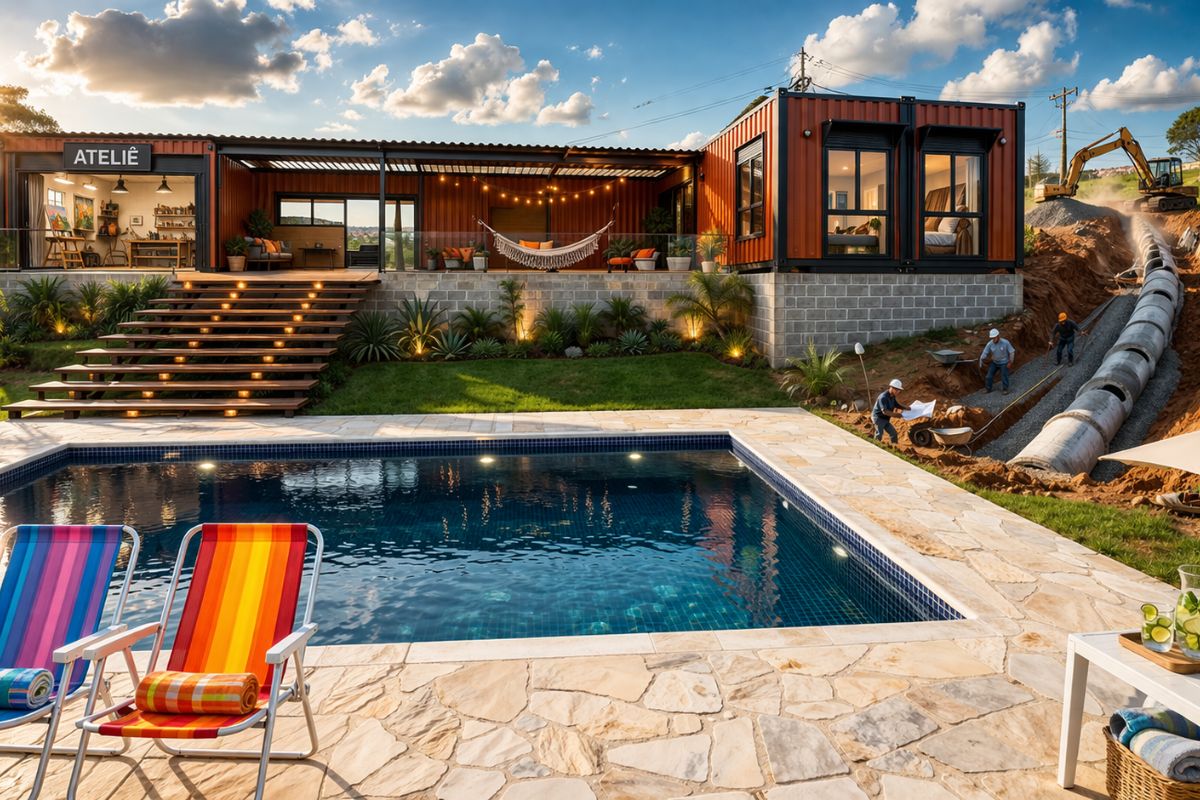
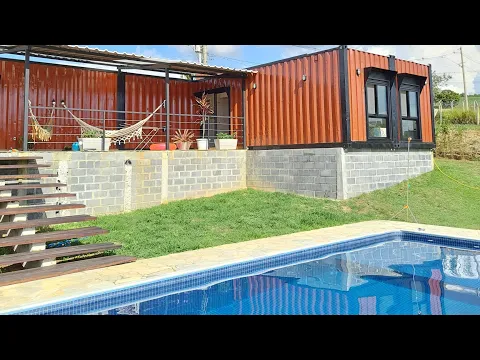
The house delivered in Sarapuí, in the interior of São Paulo, brings together 4 containers, about 130 m² of main area, a 15 m² atelier, a pool, and a spacious configuration that catches the eye for the internal space and the finishing.
The house was delivered to the clients in December, but the recording took place later, when the civil construction part on the outside was already more advanced and the space less messy. This allowed for a better showcase not only of the final result but also of the successes and problems faced throughout the work.
From the first glance, the house draws attention for its size. There are four 40 HC containers, organized in two blocks on each side, in addition to a custom-made addition to form the entrance hall. The set creates a spacious, ventilated residence with a strong visual presence, reinforced by the exterior color in a Colorado tone with black details.
House with 4 containers bets on spaciousness and well-defined use

The main structure of the house is around 130 m². Additionally, the project includes a 15 m² atelier, designed to meet the routine of the resident, who needed a specific space to create and produce her pieces.
-
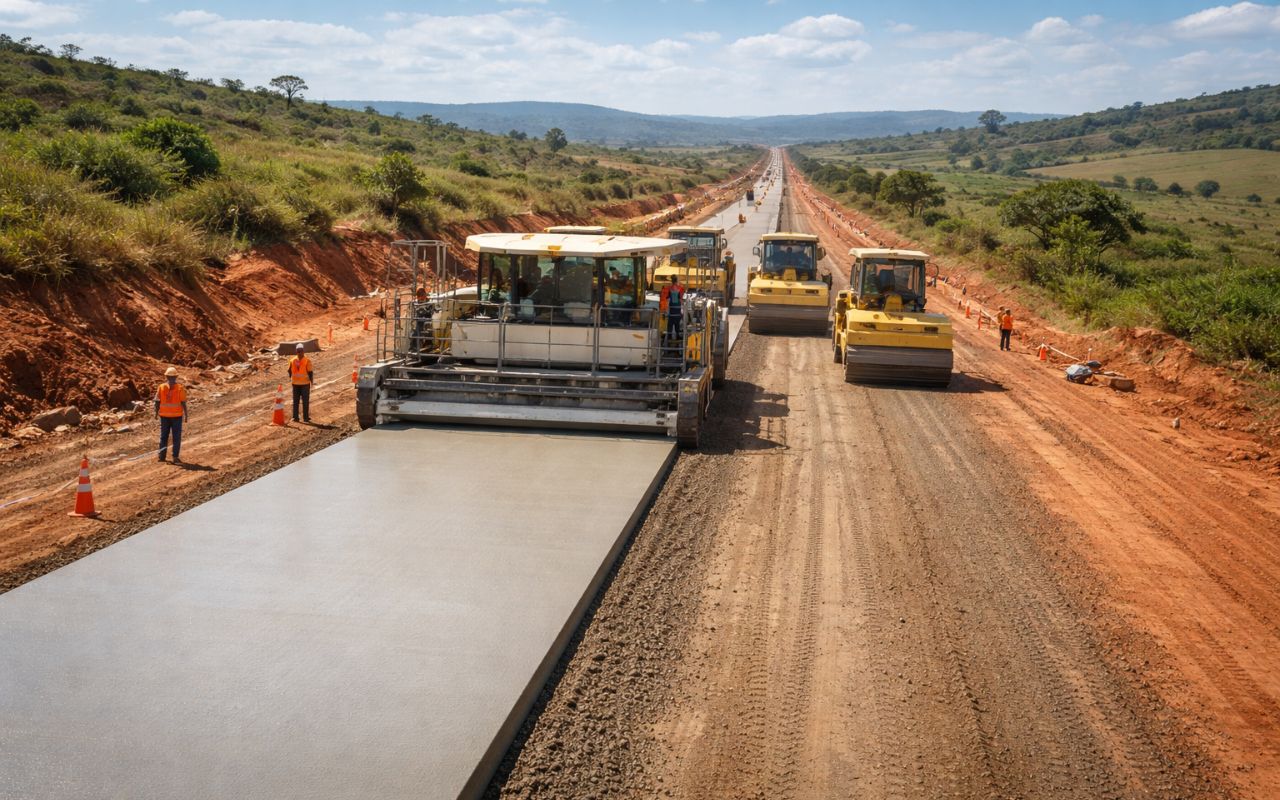
New CCR concrete paving technology promises roads up to 3x more durable, less maintenance, and cost reduction in Brazil.
-
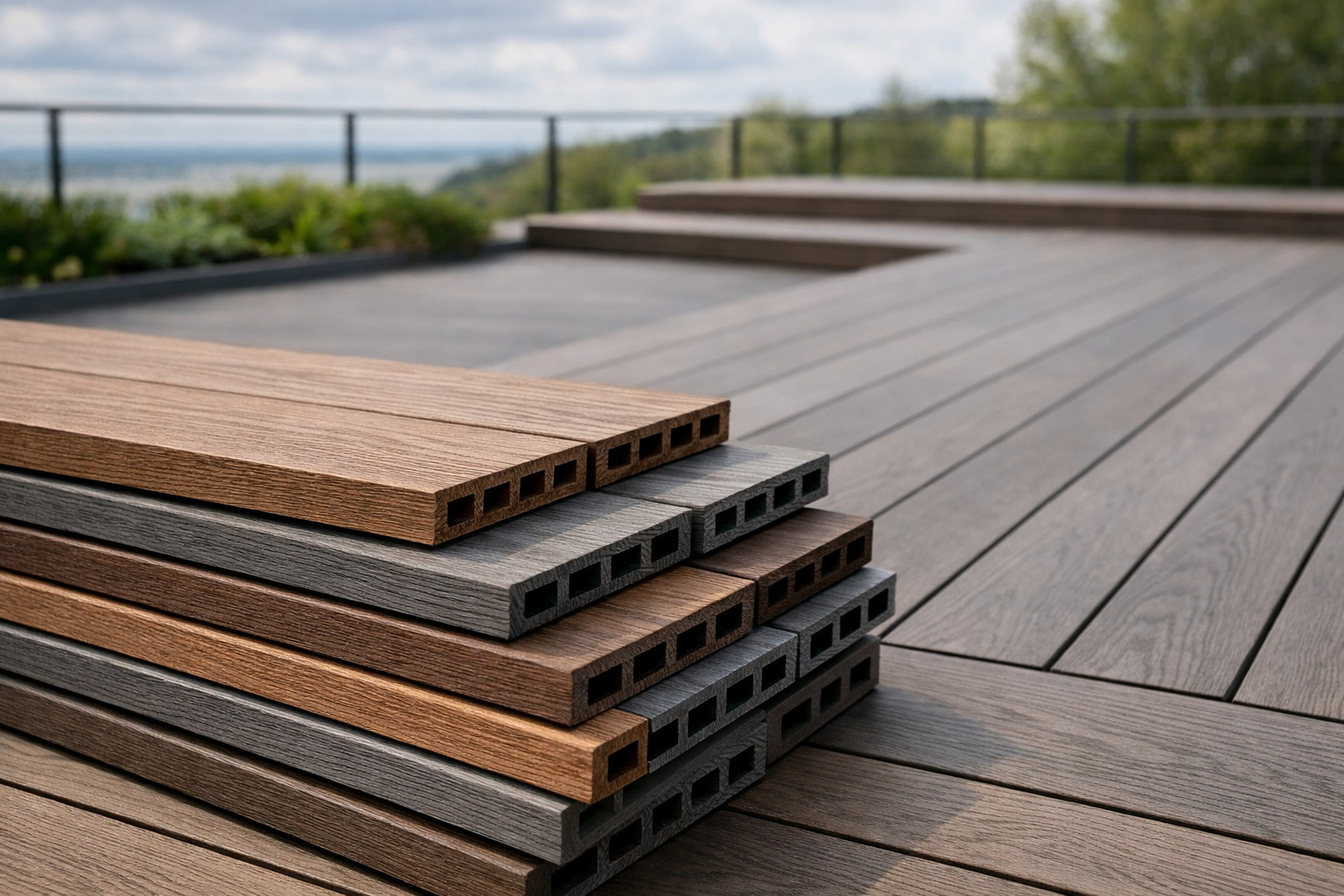
Made from recycled plastic, plastic wood is gaining space in the construction industry because it does not rot, resists moisture, and reduces maintenance costs over the years.
-
Florianópolis will receive a million-dollar BRT that will begin construction in 2026 with nearly 400 million in funding from the federal government and the Inter-American Development Bank, and the map already shows the routes for the exclusive bus corridors.

-
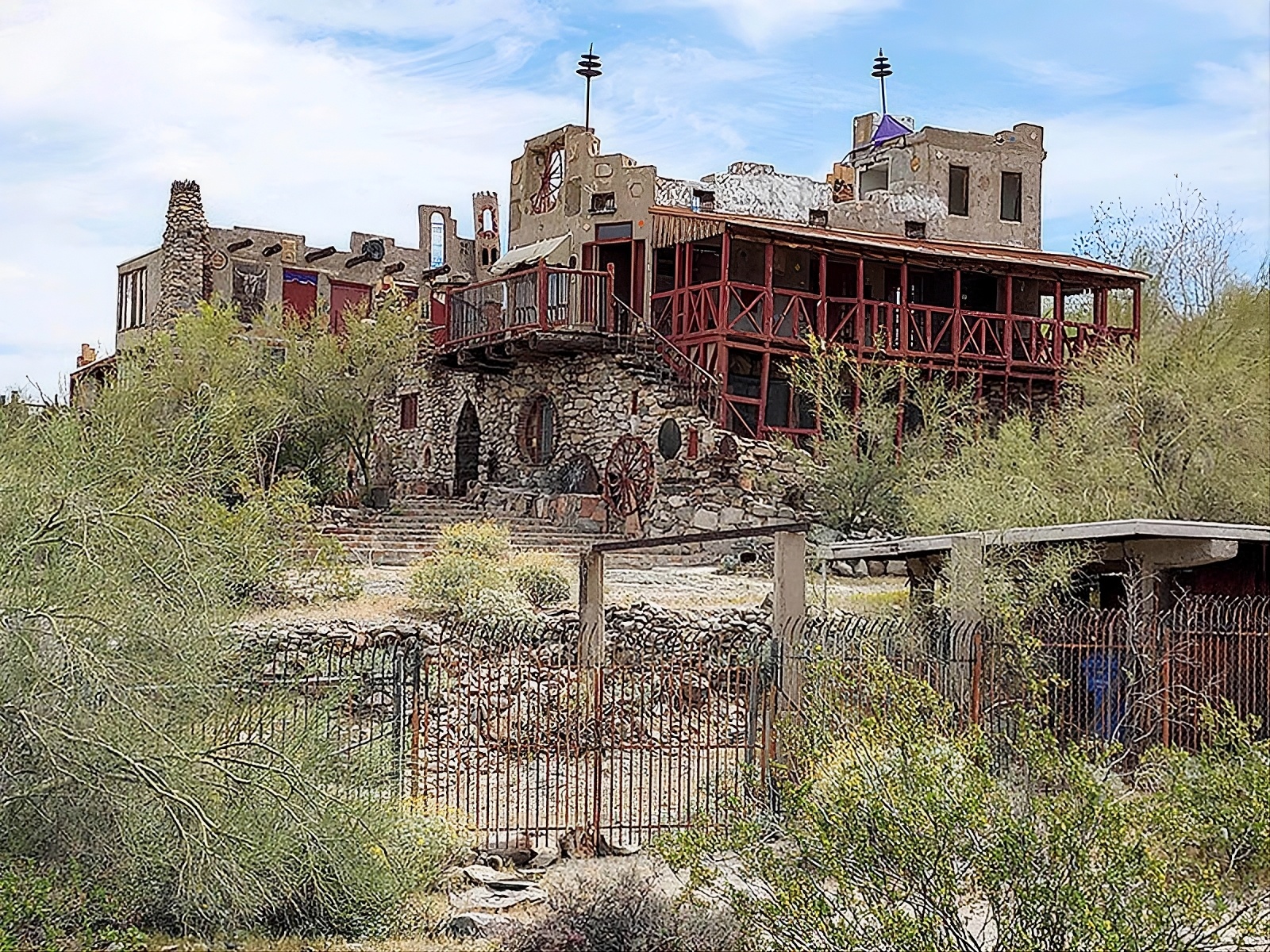
Without a blueprint, without an engineer, and using scrap from the dump, a father spends 15 years building an 18-room castle for his daughter, featuring tram tracks, 13 fireplaces, and over 700 m², which may now be demolished.

In practice, this makes the house go beyond a compact or experimental residence. The project distributes the spaces well and creates clear uses for each area.
There is a living room, kitchen, lavatory, two bedrooms, a social bathroom, and a suite, in addition to the hall with a glass ceiling. It is a house designed to function in daily life, without giving up comfort and spaciousness.
The 2,000 square meter lot also helps reinforce this sense of scale. The residence is situated on a higher part, with an open view of the external area, where the pool, stairs, porch, and other complementary structures are located.
The decision about the lot weighed on the cost of the house

One of the most striking points of the project was the initial choice to keep the natural lot. The proposal aimed to respect the original slope instead of making a larger earthmoving intervention right at the beginning.
In the evaluation presented during the visit, this decision had a direct consequence on the budget. The part executed by masons, including stairs, retaining walls, and other external solutions, became too expensive.
The cost of this area almost reached the cost of the house itself, which turned the external work into one of the most sensitive parts of the entire project.
The subsequent reading is quite clear. If the option had been to cut the lot and do the earthmoving from the start, the savings could have been significant. Still, the space generated underneath ended up being utilized and became an extra useful area, with a game room, bathroom, and a small room next to the pool.
The external area of the house mixes view, pool, and improvised solutions

The external part of the house helps explain why the project has such a visual impact. As the residence is situated higher on the lot, the view became one of the highlights of the set. Below, the pool area enhances the feeling of leisure and makes good use of the available space.
There is also a separate atelier, with a sink, washing machine, drywall, and workbenches already set up.
The space is also expected to receive future improvements, such as a pergola in front, but it is already in use. This shows that the house was not only designed for living but also for producing and living the routine with autonomy.
Not everything went exactly as planned. The external staircase, for example, was supposed to be masonry, but problems with the mason changed the course of the work. In the end, the wooden solution was adopted and ended up being quite pleasing in the final result.
Around the house, the porch, deck, metal railing, and sandwich tile roof help compose a robust living area.
The final result shows that even with setbacks, the project managed to maintain aesthetic and functional coherence.
The interior of the house bets on ventilation, light, and strong finishing
Inside, the house reinforces the feeling of spaciousness. The living room and kitchen occupy a generous free span, with more than 10.5 meters in length by 4.70 meters internally, forming an integrated and well-ventilated environment.
The entrance hall, created with a module made from container sheet, received a glass ceiling with a film to block heat.
This point became one of the most striking elements of the project. The house gains personality right at the entrance, with a space that combines natural lighting and architectural identity.
The black aluminum frames appear throughout the residence, with integrated blinds and, in the bedrooms, mosquito screens.
Ventilation is enhanced by the presence of large openings, including a large glass door in the social area.
Another highlight is the 90×90 porcelain tile, with a look that resembles burnt cement. According to the construction report, this flooring played an important role in the final result and helped elevate the perception of finishing in the house.
Bedrooms, suite, and view of the pool reinforce the house proposal

The intimate part of the house can be isolated by a sliding door. In this sector are the first bedroom, the social bathroom, the second bedroom, and, at the back, the suite.
The bedrooms already appear furnished, with good light and ventilation. In the suite, two windows expand the opening to the external area, including the view of the pool.
This integration between interior and exterior helps add more value to the project, especially on a large lot like this.
The distribution also shows a practical concern. The hall separates the flows well, the social area remains open, and the bedrooms are kept more private. This way, the house manages to balance coexistence, privacy, and comfort.
Project in Sarapuí shows how a container house can gain real scale
The visit makes it clear that this house is not just a curiosity for being made with containers. The project has gained the dimension of a spacious residence, with well-resolved areas, tailored solutions, and a strong combination between metal structure and on-site complements.
At the same time, the experience also exposes an important point. The external work can weigh as much as, or almost as much as, the main structure when the lot requires more complex interventions and the execution deviates from the plan.
In this case, the house impresses both for the result and for the lessons learned during the construction process.
In the end, the project delivered in Sarapuí brings together space, view, pool, atelier, and standout finishing, but it also carries a story of difficult decisions and costs that deviated from the initial plan.
This makes the house an example of a strong visual result, but also of how the external stage can completely change the budget of a construction.
Would you consider building a house in a container even knowing that the external work can weigh so much on the budget?









Seja o primeiro a reagir!