





 English
  Francês
  Alemão
  Italiano
  Japonês
  Norueguês
  Portuguese
  Spanish
  4 min of reading
  0 comments


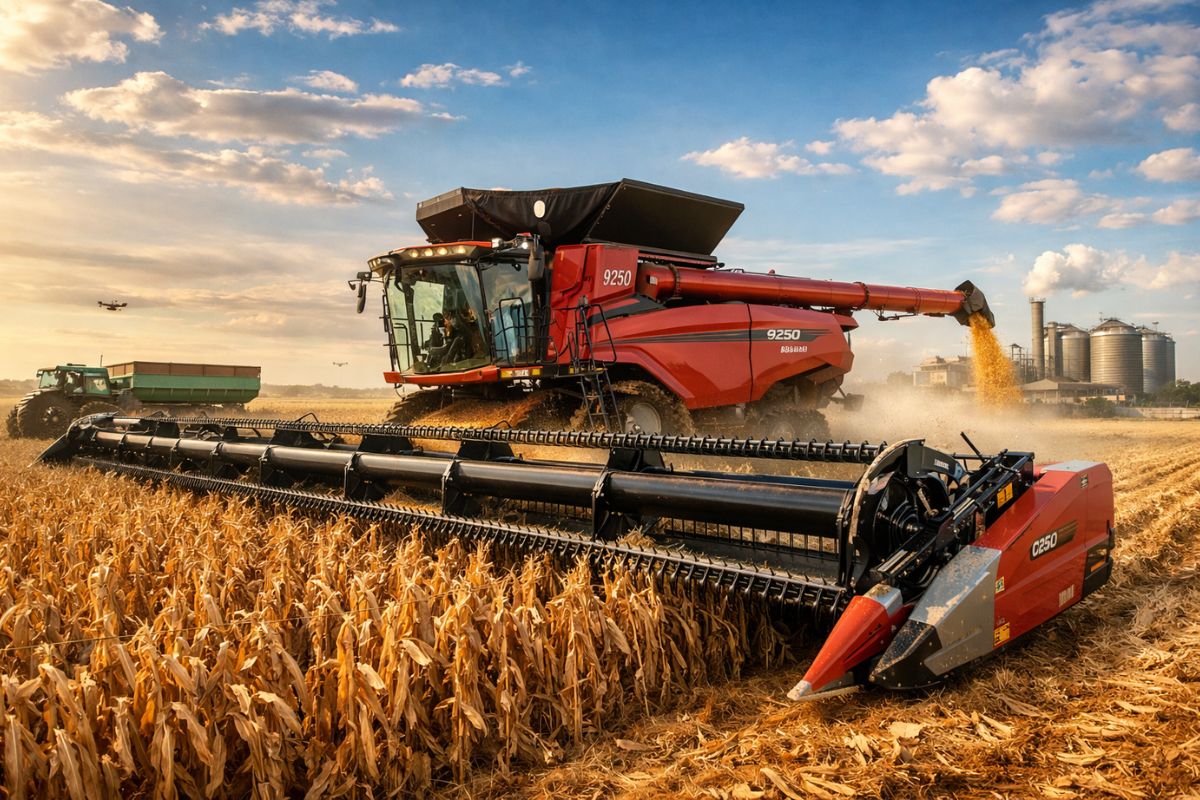
The Axial-Flow AF10 Automation harvester arrives in Brazil as the largest axial in the world, with a 775 hp engine, capacity for platforms of up to 61 feet, and a technological package aimed at large-scale operations in the field.
The new harvester was presented as a solution for those who need to gain efficiency in increasingly tight harvest windows. The proposal combines power, high material processing, and autonomous features to reduce operational effort and increase productivity.
The arrival of this machine draws attention because it goes beyond size. The harvester brings together a set designed to accelerate harvesting, enhance efficiency, and sustain large volumes of work with more stability in the field.
More than just a showcase of power, the launch reinforces a clear trend in agriculture. Mechanization enters a phase where size, embedded intelligence, and automation go hand in hand to respond to the pressure for more performance in less time.
-
Forgotten region becomes a powerhouse in the heart of Brazil, transforming unproductive lands into fortune and making MATOPIBA the new billion-dollar agricultural empire that almost no one saw being born.
-
With 18 million feet, giant farms, and 2.2 million sacks per year, a mining group is building a coffee empire in Brazil with heavy mechanization, giant silos, and exports to various continents.
-
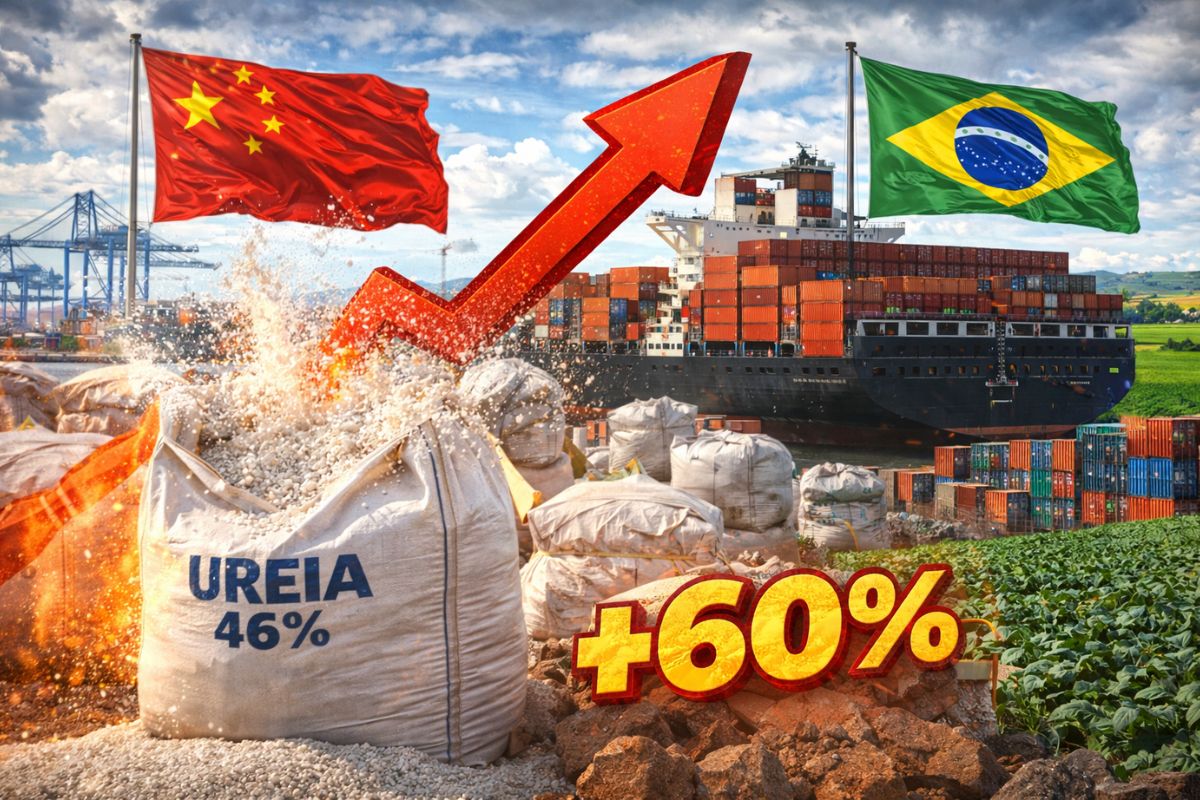
China and Russia suspend fertilizer exports, prices soar, and Brazil is already at real risk of shortages in the fields.

-
Brazilian soybeans feel little impact from the surge in oil prices, and producers see part of their profits vanish due to higher freight costs, pressured expenses, and uncertainty in sales for the 2025/2026 harvest.

Harvester was presented as a highlight at the agriculture fair
The harvester AF10 Automation appeared among the main highlights of Case IH during the Show Safra 2026, in Lucas do Rio Verde, Mato Grosso. The machine was positioned as a high-performance solution for producers working on a large scale and needing high yield during harvesting.
This context helps to understand the significance of the launch. This is not a common machine for any operation profile, but equipment designed for large areas, high processing demand, and intense productivity.
775 hp engine and 61-foot platforms enhance work capacity
The most striking feature of the new harvester is its 775 hp engine. This power is associated with the ability to operate with platforms of up to 61 feet, which increases the covered area and favors a more aggressive harvesting pace.
In practice, this means more operational capacity in less time. When the working width increases and the power follows, the machine gains momentum to harvest more area with fewer interruptions, something crucial during critical moments of the harvest.
Industrial system seeks to improve flow and cleaning of the material
The new harvester also stands out for its industrial set. The equipment features a feeder synchronized with the rotor, the largest sieve area on the market, with 8.7 m², and the X-Flow system, aimed at uniformizing the mass of material for cleaning under different field conditions.
This point is important because performance does not depend solely on brute force. A large harvester needs to maintain stable flow and efficient processing, especially when working with a large volume of material at the same time.
20,000-liter tank and fast unloading enhance productivity
Another highlight of the harvester is the 20,000-liter grain tank. The machine also features an unloading rate of 212 liters per second, a combination that reinforces the proposal for high performance in the field.
This type of capacity has a direct impact on operational routine. The larger the stored volume and the faster the unloading, the less time is lost with stops, which helps sustain the promise of harvesting more in less time.
Automation 2.0 aims to reduce operator effort
The harvester AF10 comes equipped with the Automation 2.0 System, described as a feature aimed at efficiency and reducing the effort needed to process large quantities of material. The logic is to make the machine take on more adjustments throughout the operation.
This gain becomes even more relevant when self-regulation through sensors is introduced, associated with machine learning and artificial intelligence. The proposal is to allow the harvester to make constant real-time adjustments, reducing the dependence on repetitive human interventions.
Autonomous features enhance intelligent harvesting
The new harvester also incorporates automatic headland maneuvering, map sharing between machines, GPS-guided autopilot, and remote performance monitoring. These features were designed to facilitate operation even at higher speeds and with wide platforms.
In practice, this reduces fatigue and improves work predictability. When the machine can exchange data, maneuver better, and organize the operation with more autonomy, harvesting tends to gain fluidity and yield.
New monitors make operation faster and more intuitive
The harvester features a dual monitor and the new generation of Pro 1200 monitors, with greater processing capacity. Operating on an Android system, these devices were presented as faster, user-friendly, and easy to configure.
This package helps transform the cabin into a more efficient control center. The operation becomes more connected, more visual, and more practical, which favors both decision-making and monitoring the machine’s performance.
Harvester was designed for large scale with more controlled costs
The AF10’s proposal also revolves around the total cost of ownership argument. The machine was presented as a solution capable of delivering high processing capacity without necessarily proportionally increasing the operational cost compared to smaller machines.
This point attempts to show that size does not only mean higher expenses. The harvester was designed to combine capacity, automation, and yield, with the promise of making operations more efficient in large areas.
Arrival in Brazil reinforces a new phase of agricultural mechanization
The AF10 arrives in the country as a symbol of a new stage of mechanization in agriculture. Power, connectivity, self-regulation, and processing capacity are integrated into a single piece of equipment aimed at intensive operations.
In the end, the central message of the new harvester is clear. Harvesting more, faster, and with less operational effort becomes the main focus of a machine designed to elevate the pace of harvesting in Brazil’s large fields.
Do you think a harvester of this size can really change the work pace in large Brazilian crops?
Information from Compre Rural








Seja o primeiro a reagir!