





 Portuguese
  English
  Spanish
  3 min of reading
  0 comments


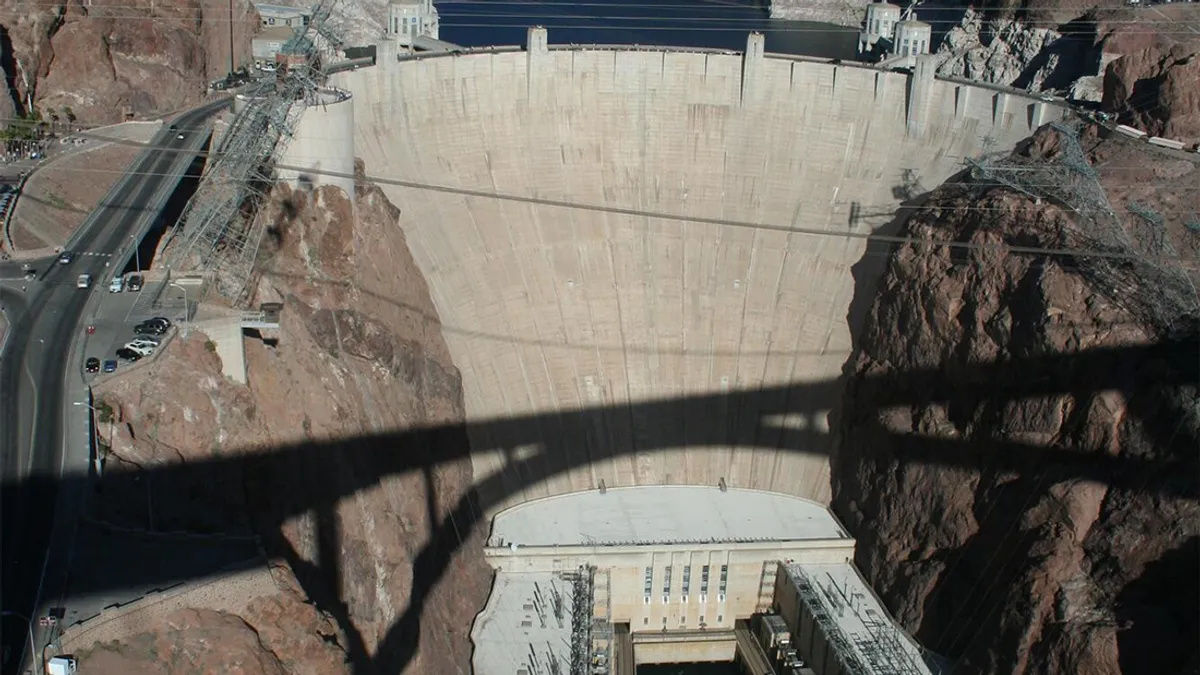
At Hoover Dam, a phenomenon caused by winds that can exceed 80 km/h in Black Canyon makes the water thrown from the edge rise back and hit tourists, in a real scene that seems to defy gravity and went viral on social media
On certain days at Hoover Dam, an unusual scene catches the attention of visitors: when trying to throw water from the edge of the structure, part of the liquid returns and hits the thrower, in an effect that seems to contradict gravity.
The phenomenon occurs under specific wind conditions in Black Canyon and is linked to the natural characteristics of the location and the functioning of air flow in the region.
Hoover Dam is a gravity dam built between 1931 and 1936, standing 221 meters tall. This type of structure relies on its own weight and the wide concrete base to withstand the pressure of the water stored behind it.
-
The opening of the bar in Ceará becomes an impressive phenomenon, drawing crowds to the water’s edge and transforming the meeting of the river with the sea into one of the most electrifying fishing events.
-
Mystery returns to Praia Mole after 8 years, new images reignite the case of the supposed ET from Floripa and put UFOs back at the center of the island of magic.

-
Could the Titanic have been saved if it had collided head-on with the iceberg? The theory that has resurfaced 113 years later changes everything that many people have always believed about the sinking.

-
Rare document reveals surprising age of Brazilian and investigation could change official records.


In addition to its size, the structure plays a central role in providing power to three U.S. states. According to available information, the structure can generate up to 2,080 megawatts for California, Nevada, and Arizona.
How wind affects water behavior at the dam
The effect observed by tourists is not related to any failure of the dam, but rather to the force of the wind in the region. Doug Hendrix, spokesperson for the Bureau of Reclamation, the agency responsible for managing the structure, stated that the area can experience very strong winds and that the canyon often acts like a funnel.
On particularly windy days, the speed in Black Canyon can exceed 80 kilometers per hour. When this wind hits the canyon wall, the air loses lateral exit and is pushed upward, creating an updraft.
Phenomenon is known as ridge lift
This movement of air is called ridge lift or slope lift. The phenomenon is known to be utilized by hang gliders and other non-motorized gliders to gain altitude.
The Soaring Society of America explains that this lift depends on the wind blowing against mountains, hills, cliffs, or ridges. In this situation, the flow of air is deflected upward and, depending on the intensity, can rise hundreds of meters above the top of the elevation.
At Hoover Dam, this process forms quickly and receives additional help from the cooler air present above the stored water. The large volume retained in the dam contributes to the formation of these specific conditions on certain days.
Dam capacity and limit of the effect
When full, the dam can store up to 9.2 trillion gallons of water. Even with this capacity, the effect that makes the water return to the faces of visitors only occurs when the wind is strong enough to sustain the upward deflection of the liquid.
Outside of these conditions, throwing water from the edge does not produce the same result. On calmer days, the gesture represents merely the dumping of a small amount of water into a structure designed to handle trillion-gallon volumes, without the visual impact that made the scene popular on social media.







Seja o primeiro a reagir!