





 Portuguese
  English
  Spanish
  4 min of reading
  0 comments


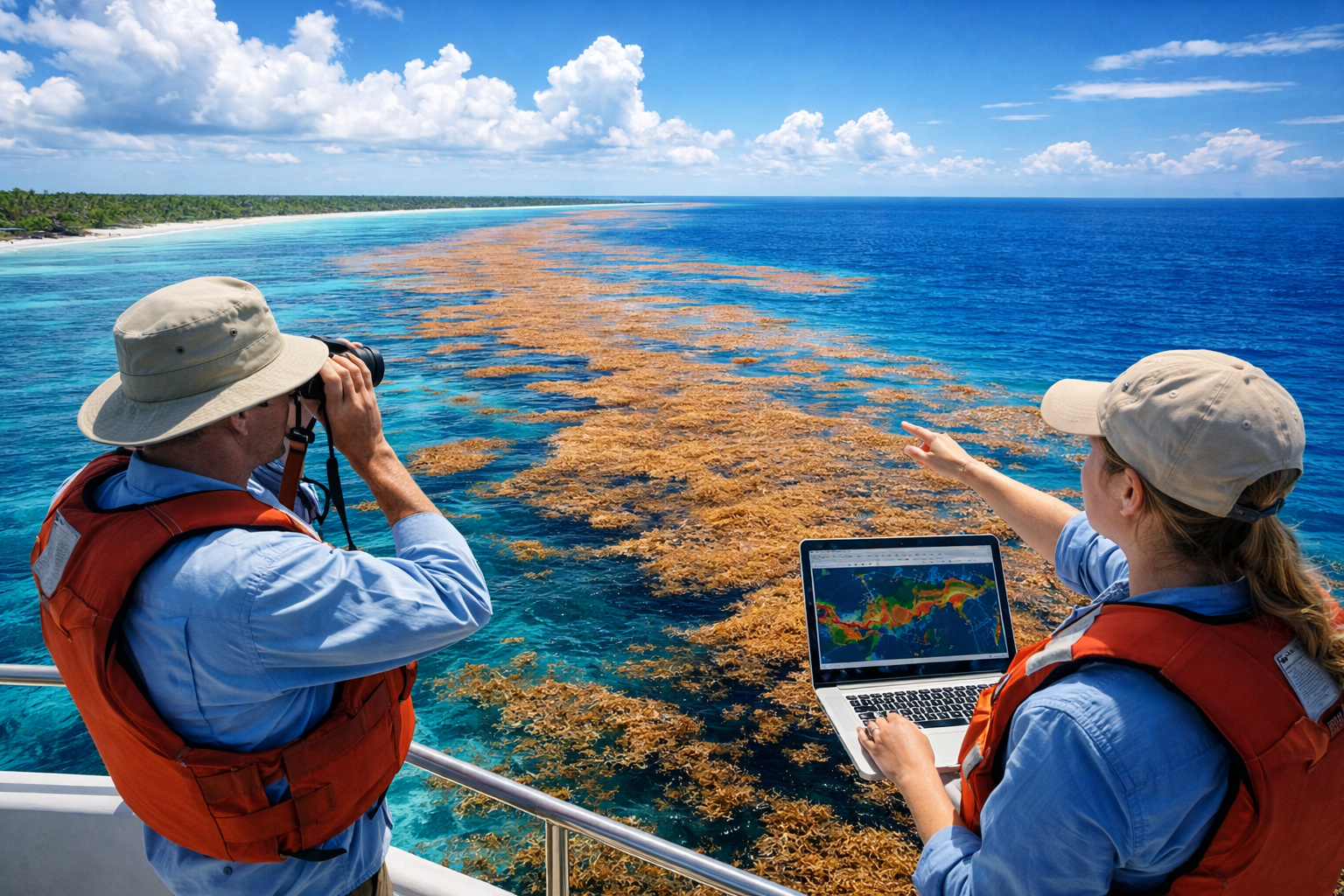
Growth of the giant seaweed mass, the Sargassum belt, in 2026 worries researchers due to the high volume of seaweed in the Atlantic, with direct effects on the environment, tourism, and the health of populations near the coast
The advance of the Sargassum belt in the Atlantic returns to the spotlight in 2026, with high volumes and continuous expansion offshore. The enormous mass of floating seaweed already totals millions of tons and continues to grow, following patterns observed in recent years.
The information was released by University of South Florida, an American institution specialized in ocean monitoring by satellite, which has been tracking the evolution of the phenomenon since its large-scale identification. The current scenario indicates intensification in the Central Atlantic and possible impact on coastal areas in the coming months.
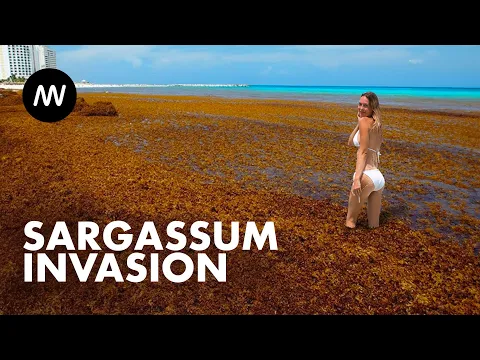

Besides the impressive size, the phenomenon raises concerns due to its effects on human health, tourism, and marine ecosystems, especially when the seaweed reaches beaches.
-
A couple buys an old chalet, breaks the kitchen floor for renovation, and finds over a thousand coins of gold and silver hidden since the English Civil War over 4 centuries ago.

-
Rigid bags with their days numbered: new trend prioritizes comfort in 2026.

-
YouTuber creates an excavator equipped with a giant 4.5-meter sword to challenge his brother to a rematch, and the invention quickly goes viral on social media.

-
The U.S. Army surprises the world by presenting the UH-60MX Black Hawk helicopter capable of flying without pilots, controlled by a tablet, featuring the MATRIX system, smart sensors, and full autonomy in real combat and rescue missions.


What is the Sargassum belt and why does it keep growing
The Great Atlantic Sargassum Belt is formed by floating brown algae, mainly Sargassum natans and Sargassum fluitans, which group into extensive mats in the ocean.
Detected on a large scale for the first time in 2011, the phenomenon has shown recurring growth over the years. During peak periods, the volume can reach between 20 and 38 million tons, transforming large areas of the Atlantic.
This increase is associated with greater availability of nutrients from rivers such as the Amazon, as well as changes in ocean currents and warming waters.
Current volume already exceeds millions of tons in 2026
In March 2026, the belt registers about 9.5 million tons, with accelerated growth observed in recent weeks.
The University of South Florida, an academic center that monitors the seaweed belt in the Atlantic, points out that levels were already above normal in February, indicating a trend of expansion until April.
This behavior has been observed in previous years, such as 2022, when the volume reached 24 million tons, reinforcing the growth pattern of the phenomenon.
How seaweed crosses the ocean until it reaches coastal areas
The sargassum masses originate off the west coast of Africa and move westward propelled by ocean currents.
This movement carries the seaweed to the Caribbean, Gulf of Mexico, and the east coast of the United States, including regions of Florida. Authorities use satellite monitoring, including systems from NOAA, to predict the arrival and possible impacts.
Forecasts indicate that areas such as Eastern Florida and the Florida Keys may experience damage in the coming weeks or months.
Health risks increase with the decomposition of sargassum
When sargassum reaches the beaches and begins to decompose, it releases hydrogen sulfide, a gas responsible for the strong odor similar to rotten eggs.
Exposure can cause irritation to the skin, eyes, nose, and throat, as well as affect the respiratory tract. People with asthma or lung diseases tend to be more sensitive.
The seaweed can also contain bacteria such as Vibrio, associated with symptoms like diarrhea, vomiting, and infections.
Economic and environmental impacts are already being observed
The accumulation of seaweed on beaches requires constant cleaning operations, raising costs for coastal cities and affecting tourism.
In the marine environment, sargassum serves as habitat for fish, turtles, and birds. However, in excess, it can reduce oxygen in the water and cause the death of marine organisms.
Another impact involves the covering of turtle nesting areas, making it difficult for these species to reproduce.
Monitoring tries to predict the advance of the belt
Environmental authorities continue to monitor the phenomenon with satellite technology to anticipate the arrival of the seaweed to coastal regions.
The recommendation is to avoid direct contact with the material and to follow local alerts, especially in areas already affected by the accumulation.
The continuous advance of the Sargassum belt reinforces the need for attention to the environmental and social impacts associated with the phenomenon.
The growth of the Sargassum belt shows how environmental changes can generate large-scale effects in the ocean. With millions of tons already present in 2026, the phenomenon continues to expand.
The possibility of new accumulation episodes on beaches keeps authorities and researchers alert, while coastal communities prepare to deal with the impacts.
Did you already know about this phenomenon or have you seen beaches affected by this seaweed? Share this news and join the conversation.







Seja o primeiro a reagir!