





 Portuguese
  English
  Spanish
  4 min of reading
  0 comments


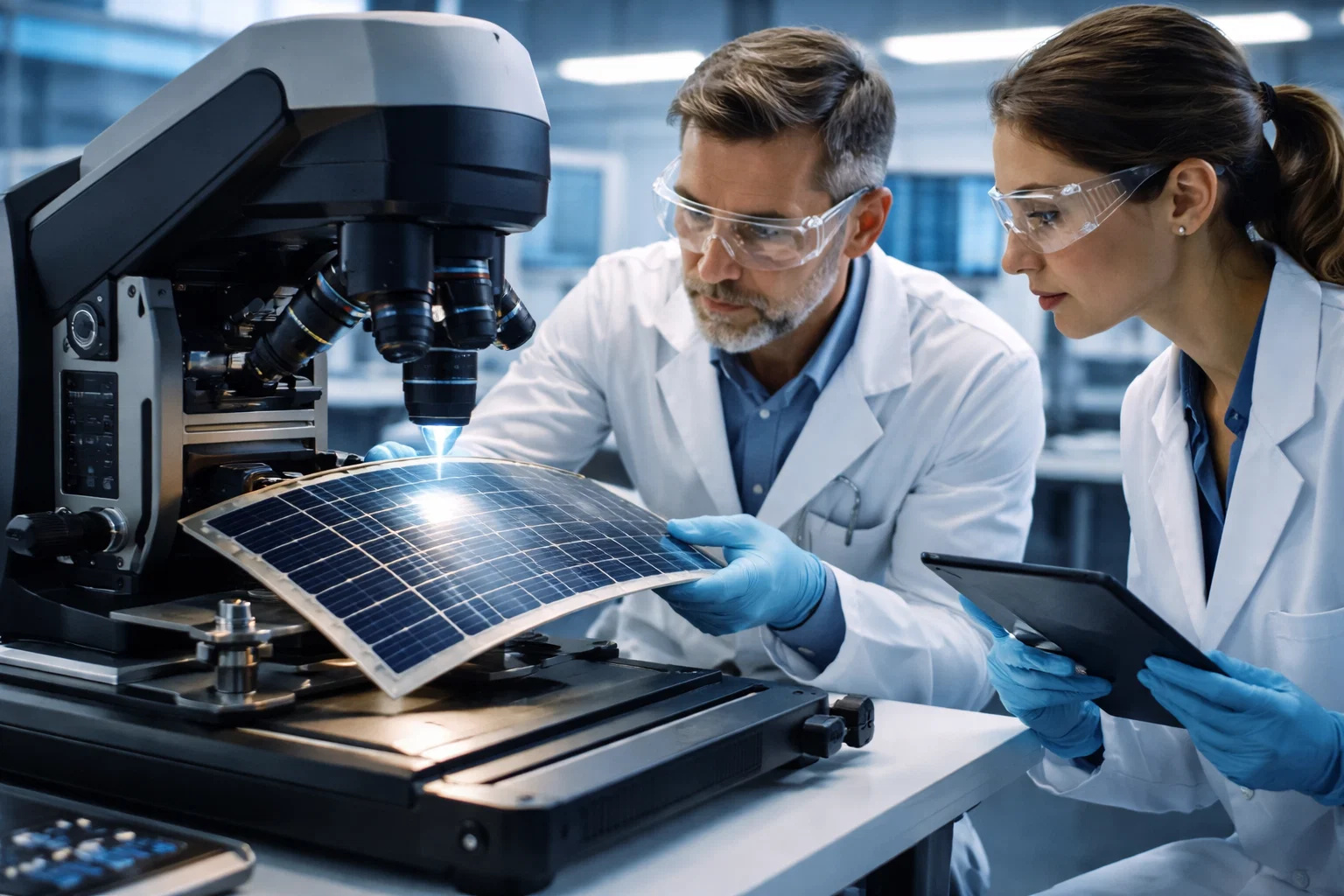
Technology uses water to switch functions and deliver energy or heat automatically, without depending on any button or electronic device, according to the temperature of the environment
A new solar device from Harvard has intrigued the public by doing something unusual. It can autonomously choose between generating electricity or heating the environment, without any human control. The proposal could change the way homes and buildings use energy throughout the year, as the system adapts to the climate automatically.
The information was presented by Harvard University, one of the most important research institutions in the world. The most surprising aspect is that there is no button, sensor, or electronic system. The ambient temperature itself determines what the device will do.
How the Harvard solar device decides what to do on its own
The operation of the device is based on something simple, the change of state of water.
-
Theories about UFOs have resurfaced strongly after an aerospace scientist and a general connected to the Roswell case mysteriously disappeared in the United States within a few months, and even the FBI was called in to investigate.

-
Neither in the refrigerator nor in the fruit bowl: this is the correct way to store lemons.

-
It has only 11 thousand residents: Brazilian Tuscany impresses everyone with mountains of 1,900 meters and wide views of valleys.

-
What seemed like waste has turned into a barrier, and now human hair collected from salons helps retain debris in the water of ancestral channels in Latin America.

Inside the equipment, there is a cavity with water. When the weather is warm, this water turns into steam. At this moment, sunlight is directed to a solar cell that generates electricity.
When the temperature drops, the water returns to its liquid state. This changes the path of the light, which stops going to the cell and starts entering the environment as heat.
This process happens naturally, without any external intervention.
Technology solves common limitation of current solar energy
Traditional solar systems usually have only one function. Solar panels produce electricity even when the environment needs heating. Thermal systems continue to generate heat even during intense heat periods.

The Harvard solar device breaks this pattern. It automatically adapts to what the environment needs at each moment. The very structure of the equipment makes this adjustment, which reduces waste and improves energy use.
Simple structure hides an intelligent operation
Despite the innovation, the device was developed with materials considered simple. Among the components are a special lens, a sealed cavity with water, and a photovoltaic cell. This combination allows the system to function as a natural switch.
Harvard University, a global reference in science and technological development, demonstrated that just the change of state of water is enough to completely alter the behavior of light within the system.
This eliminates the need for any electronic technology to control the operation.
Efficiency draws attention and can reduce waste
The tests showed results that caught the researchers’ attention. In heating mode, the system can utilize about 90% of sunlight to generate heat within the environment.
This performance can be much superior to systems that use electricity for heating, as it avoids common losses in this process.
Moreover, the device was able to automatically adjust throughout the year, alternating between energy generation and heating according to weather conditions.
Limitation still exists and researchers seek to improve
Despite the advances, the equipment still faces a significant challenge. Performance depends on the angle of sunlight. When the sun is not in a favorable position, the system tends to function more as a heater.
The responsible team continues to study ways to extend the time during which the device can efficiently generate electricity. The idea is to make the technology more versatile and ready for large-scale use.
Applications can range from homes to building facades
The researchers are already thinking of different ways to use the device. It can be integrated into windows, building facades, greenhouses, and even vehicles. This greatly expands the potential of the technology in daily life.
The proposal is to create accessible and scalable solutions that can, therefore, be used in different types of construction. The Harvard solar device presents a different way to harness solar energy, adapting production to what is truly necessary at each moment.
The possibility of alternating between electricity and heating without human control can help reduce waste and improve comfort in indoor environments.
If this technology advances, it could then become common in homes and buildings, bringing more efficiency in the use of solar energy.
Did you like this innovation? Comment on what you think about this technology and share it with others interested in energy and innovation.







Seja o primeiro a reagir!