





 Portuguese
  English
  Spanish
  3 min of reading
  0 comments


Discovery In Bolivia Reveals Temple Of The Tiwanaku Civilization, With Commercial And Religious Links Preceding The Inca Empire In The Andes
Along the southern shore of Lake Titicaca in Bolivia, an archaeological discovery has brought to light a forgotten part of Andean history. A temple belonging to the Tiwanaku civilization has been identified by researchers from Penn State and Bolivia.
This society is considered one of the first organized cultures in the Andes, a predecessor to the Inca Empire. Despite its significance, its collapse around 1000 AD remains wrapped in mystery.
The temple was located about 209 kilometers south of the ceremonial center of Tiauanaco, a region known for the monuments left by this ancient civilization.
-
Motorola launched the Signature with a gold seal from DxOMark, tying with the iPhone 17 Pro in camera performance, Snapdragon 8 Gen 5 that surpassed 3 million in benchmarks, and a zoom that impresses even at night.

-
Satellites reveal beneath the Sahara a giant river buried for thousands of kilometers: study shows that the largest hot desert on the planet was once traversed by a river system comparable to the largest on Earth.

-
Scientists have captured something never seen in space: newly born stars are creating gigantic rings of light a thousand times larger than the distance between the Earth and the Sun, and this changes everything we knew about stellar birth.

-
Geologists find traces of a continent that disappeared 155 million years ago after separating from Australia and reveal that it did not sink, but broke into fragments scattered across Southeast Asia.

According to Professor José Capriles, the research leader, the Tiwanaku left behind pyramids, monoliths, and terrace-temples. Even so, little is known about the society’s reach and actual control over distant territories.
Forgotten Temple On The Hilltop
The newly discovered temple was hidden on a modest hill, already known to local farmers but ignored by archaeologists.
The site holds strategic importance: during the height of the Tiwanaku civilization, it served as a junction between three major trade routes.
These routes connected Lake Titicaca to the north, the Altiplano to the west, and the fertile valleys of Cochabamba to the east.
This crossroad of routes indicates that the area facilitated trade, the exchange of ideas, and the flow of people. To investigate the site, researchers used satellite imagery and drone flights (UAVs).
Through photogrammetry—a technique that creates 3D models from photographs—they managed to record details of the topography and structure.
Structure Reveals Rituals And Trade
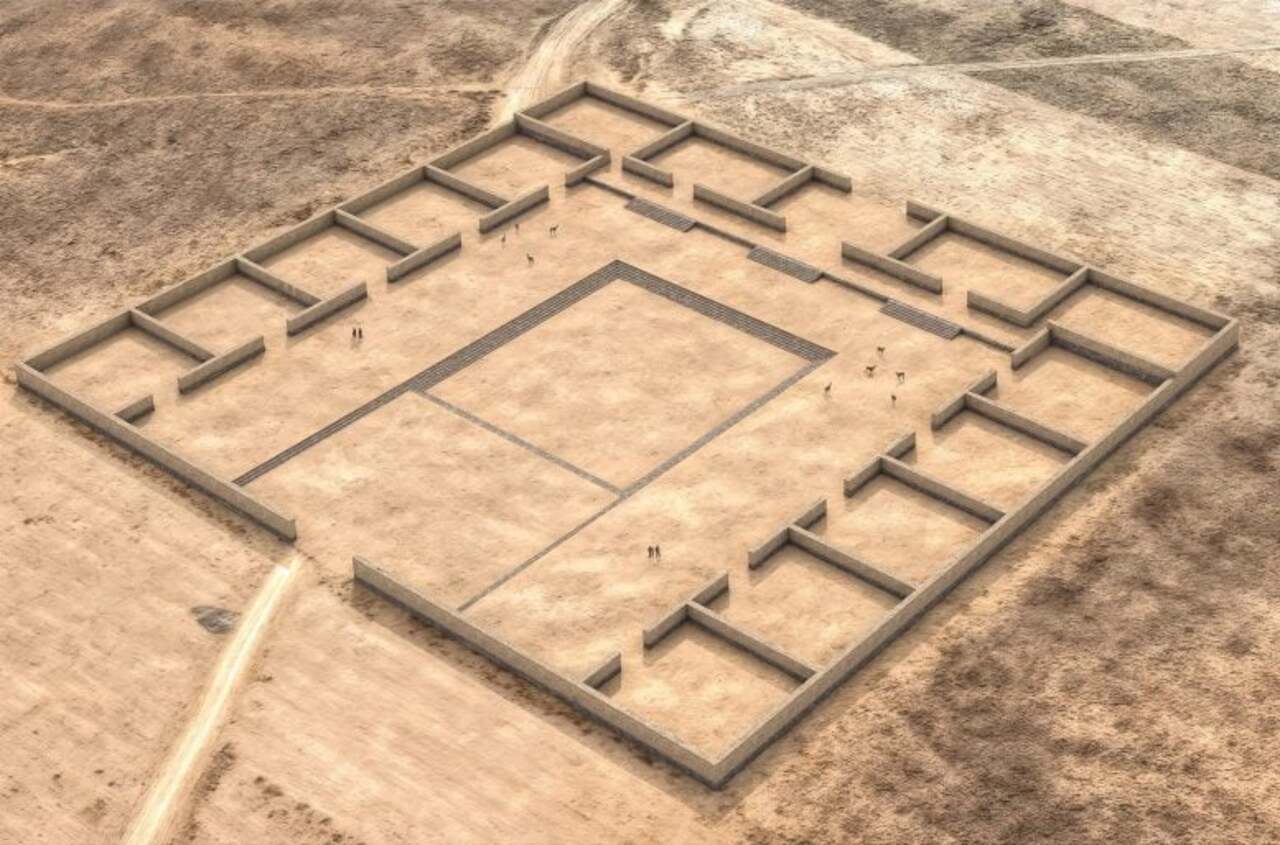
The temple, named Palaspata, measures 125 meters by 145 meters, equivalent to the size of an urban block.
It features 15 rectangular chambers surrounding a central courtyard. Researchers noted that the temple was aligned with the solar equinox, indicating a ritual function connected to sun observation.
At the site, fragments of keru cups were found, used for drinking chicha, a traditional corn beer.
The presence of these objects points to agricultural festivities and religious practices. Corn, in turn, was cultivated in the valleys of Cochabamba, showing that there was a network of exchanges between regions.
Capriles highlighted that the temple united religious and commercial practices. It is believed that political and economic transactions occurred under the mediation of divinity.
Religion, according to him, was the common link between different social groups, serving as a tool to promote cooperation.
Local Community Celebrates The Discovery
For the residents of the region, the discovery was unexpected. Justo Ventura Guarayo, mayor of Caracollo, the municipality where the temple is located, celebrated the importance of the find.
He stated that the archaeological site represents a crucial aspect of local heritage that had previously been ignored.
Ventura Guarayo declared that the city is in contact with state and national authorities to ensure the preservation of the site. The idea is to protect the area and encourage cultural tourism, valuing the region’s rich history.
Joint Work And Future Perspectives
The research involved collaboration with the Ministry of Culture, Decolonization, and Depatriarchalization of Bolivia.
Samples from the site were taken for analysis and dated at the Penn State Radiocarbon Dating Laboratory. The data confirmed the antiquity of the structure and reinforced its historical value.
Capriles stated that the temple offers clues about how the Tiwanaku society organized trade and political power.
He emphasized that many remains may still be hidden in plain sight, awaiting investigation.
For archaeologists, the discovery of the Palaspata temple is another step toward understanding the pathways connecting cultures in the Andes.
For the local community, it represents an opportunity to reconnect with the past and open doors to the future.
With information from Sci Tech Daily.







Seja o primeiro a reagir!