





 Portuguese
  English
  Spanish
  8 min of reading
  4 comments


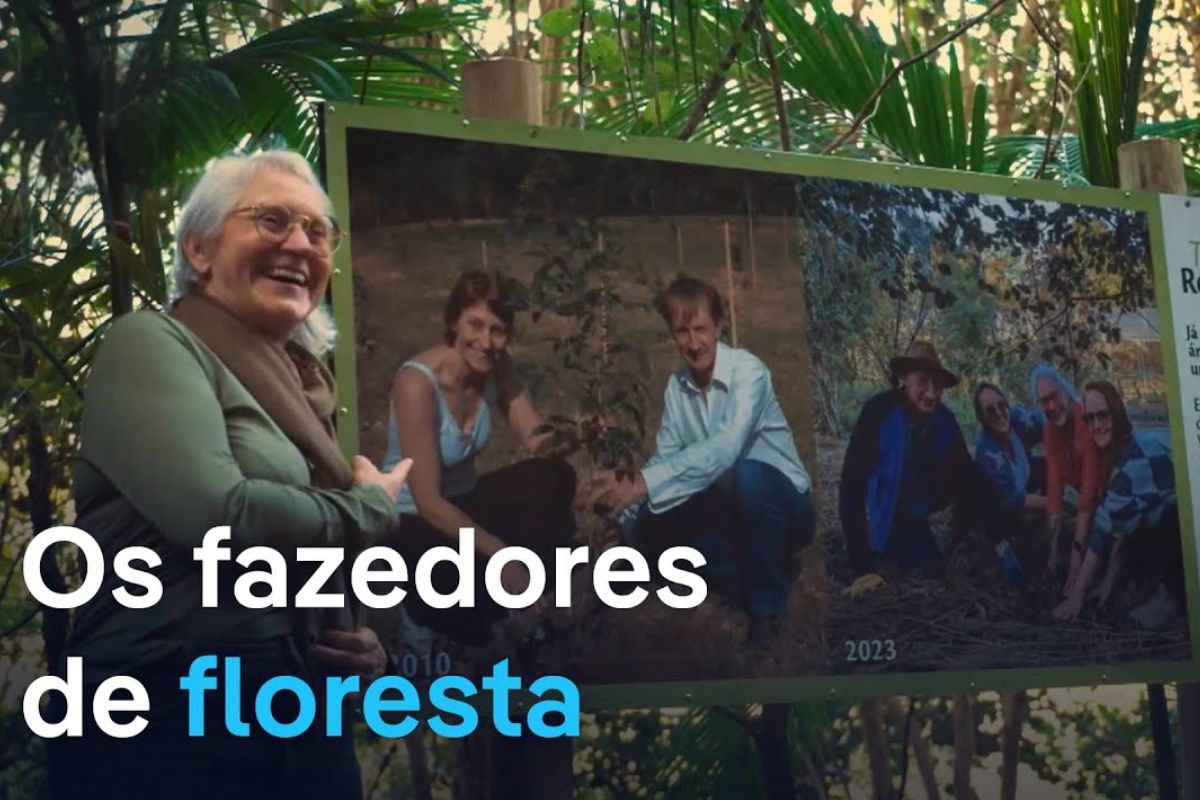


After The Historical Flood Of November 2023 In The High Valley Of Itajaí, The Legacy Of 10 Million Trees Planted By The Family Of Carolina Cháfara Gained Scale With Premave, Paying Producers In Euros To Fence Springs, Restore Atlantic Forest And Sell Carbon Credits In Small Farms.
In November 2023, a historical flood hit the High Valley of Itajaí in Santa Catarina, uprooting the araucarias that Carolina Cháfara’s grandfather had planted decades earlier. From mourning those trees came the decision to transform the legacy of 10 million trees planted by the family into a concrete response to the climate crisis that is already knocking at her door.
According to a report from DW Brasil, nearly 40 years after her parents helped approve the Atlantic Forest Law in 2006 and faced resistance against deforestation in Santa Catarina, Carolina took over Premave and brought the work to a new phase. What began as a local struggle became a project that pays euros for rural producers to fence springs, keep cattle out, and recover the forest, connecting reforestation, clean water, and the carbon market.
From The Flood Of 2023 To The Plan To Restore The Atlantic Forest

In Carolina’s hometown in southern Brazil, the scene is of an Atlantic Forest with 90% of the original area destroyed, but with potential for recovery.
-
The Argentine government celebrates the lowest poverty rate in 7 years, but experts warn that the methodology has changed, real wages have fallen, unemployment has risen, and the number of people on the streets of Buenos Aires has increased by 57% since Milei took office.

-
7.8 magnitude earthquake in Indonesia frightens the population, triggers tsunami alert, and hits an island with over 200,000 inhabitants this Thursday.
-
Google will finally let you change that embarrassing Gmail address you created in your teenage years without losing any accounts, logins, or old emails: the feature is already available in the United States.

-
Heading to Brazil in a Bonanza F33 single-engine aircraft: a couple departs from Florida on a visual flight, makes technical stops in the Caribbean to refuel and organize paperwork, and begins the staged crossing until they reach the country.

On trails that today look like dense forest, groups of visitors discover that that green simply did not exist 20 years ago.
It is the result of systematic plantings that, over the decades, total close to 10 million trees planted by Premave and its partners.

The flood in November 2023 was the personal turning point. Alone at home when the water rose, Carolina received the news that the araucarias planted by her grandfather, when her father was still a teenager, had come crashing down the hill.
“It was living the catastrophe of climate change within the heart,” she sums up. The response came in the form of more restoration, more partnerships, and more pressure for the forest to reclaim degraded areas.
Today, the family operates on properties that, by law, should have strips of 5 to 8 meters of vegetation along riverbanks, but are still overrun by pastures.
The goal is simple yet ambitious: to transform private areas into permanent natural reserves, increasing year by year the area covered by native forest in Santa Catarina.
Producers Paid In Euros To Fence Springs And Keep Cattle Out Of Water

On the 25-hectare farm of producer Vanderlei Mess, the scene was typical: a bit of corn, onion, soybeans, cattle, few trees, and soil compacted by over 50 years of animal trampling. With the arrival of Carolina’s team, the logic changes.
The cattle are now kept behind the fence, and the springs, once trampled, gain protection from native trees.
In a single day, over 130 seedlings are planted there, all native species from the Atlantic Forest, selected from more than 40 different types.
In the first row, the yellow ipê, with its intense blooming, was chosen on purpose: the beauty of the tree helps to win over the producer and the neighborhood to the idea of reforestation.
The package offered to Vanderlei and his wife, Josefa, includes everything: seedlings, technical knowledge from the team, and even the fence that keeps the cattle away from the spring.
They pay nothing. The funding comes from a European partner who uses the areas to offset CO2 emissions, within a structured project that, at the end, guarantees annual payments in euros for the farmers committed to restoration.
The reforestation study is done property by property. Then, Premave sends all the project description to an international certifier, which mobilizes independent auditors. They check in the field if what is on paper is really happening.
This is how the 10 million trees planted by the organization also become a climate asset in a global carbon market.
In Vanderlei’s case, the contract already guarantees 500 euros per year for the 6 hectares included in the project. He admits that he still finds it “strange” for a European company to pay him to plant trees and keep them standing, but acknowledges that without this financial incentive, he would hardly have made the change.
Microcorridors, 28 Producers And The Goal Of 7,000 Hectares Restored

Historically, Premave has always worked with small rural producers in the region. The strategy is to create microcorridors of biodiversity on a municipal scale, connecting fragments of forest that were isolated.
This approach directly relies on the history of 10 million trees planted in areas that were once pasture.
With the arrival of a major conservation project financed by European partners, the scale has changed. If previously the goals spoke of 300 hectares restored, now the conversation is about 7,000 hectares.
Currently, 28 producers are already participating in this network, receiving funds to restore springs, fence riverbanks, and allow the forest to reclaim degraded areas.
The local progress adds to a broader national goal. Brazil has committed to restoring and reforesting 12 million hectares of degraded areas, and international studies point to the Atlantic Forest as one of the biomes with the highest recovery potential due to its combination of biodiversity and fragmentation.
The logic is clear: if the country restores just 15% of the strategic areas, it could prevent up to 60% of the species loss projected for the coming decades while alleviating the pressure on the climate.
“Empty” Forests, Threatened Species And The Calculation Of Stored Carbon
Much of the remaining Atlantic Forest in Santa Catarina is today described as “empty forest.” There is a lack of food, a lack of protection, a lack of diversity, and wildlife can no longer find shelter. On a property boundary, Carolina walks with her father. On one side, the forest restored by the family. On the other, areas still suffering from degradation.
35 years ago, when Carolina was born, the restored area was basically pasture. Cattle roamed freely, and there were hardly any young trees.
By planting and preventing cattle entry, the family saw the forest advance to a stage now considered of advanced regeneration.
It is living proof that, with minimal protection and proper management, trees can reclaim the lost space.
In areas recently acquired with funds from the carbon market, the team measures CO2 storage in detail. They mark plots of 10 by 30 meters and count all trees with more than 15 centimeters in circumference.
They record species, circumference at breast height, and total height. These data feed formulas that estimate wood density and carbon content.
In one of the surveys, an endangered cinnamon tree appears with 10 meters in height and 72 centimeters in circumference. Next to it, the understory is still dominated by bamboo, ferns, and regenerating plants under 1 meter.
The technicians expect that, in the next five years, this lower stratum will grow rapidly, significantly increasing the amount of carbon stored per hectare.
It is this type of measurement that transforms the 10 million trees planted by Premave into carbon numbers comprehensible to companies and certifiers, connecting the specific tree in the field to the credit negotiated in international contracts.
Carbon Market Under Suspicion, But With Jobs And Taxes In The Region
The carbon market in which Premave operates is controversial. There have been cases of projects that sold offsets without delivering the promised restoration.
Carolina does not ignore this distrust and claims that staying in this market is, precisely, a way to confront projects involved in scandals, showing that it is possible to do things differently.
The focus is on proving concrete results: planted trees, protected springs, areas purchased exclusively for conservation, and rural communities receiving income to keep the forest standing. The benefits go beyond CO2. There is a direct impact on biodiversity, water, and quality of life on the properties.
The financial predictability brought by carbon contracts allows Premave to plan several years ahead. Today, the organization is responsible for about 40 employees and various small service providers, becoming one of the main employers in the region and the largest contributor of service taxes to the municipality.
Carolina describes her daily life as a mixture of family and work. She acknowledges the privilege of working alongside her parents, figures recognized for their defense of the Atlantic Forest, but admits that there are generational and vision clashes.
The challenge is to learn to listen, negotiate, and, when necessary, step out of the comfort zone to keep the project on the desired course. The responsibility of not deviating from the family legacy weighs as heavily as the commitment to the people who now live from reforestation.
Nursery: The Heart Of The 10 Million Trees Planted
The nursery is the nerve center of everything. There, only about 10% of the seedlings fail to thrive after planting, a rate considered low for projects of this size.
Over the years, the team has accumulated technical knowledge, tested species, adjusted methods, and managed to take to the field close to 10 million trees planted on different properties.
The start was modest. The nursery used simple plastic containers, beds on the ground, and a lot of manual labor. In 2019, technology changed. Today, seedlings are produced in paper containers that can be planted together with the tree, allowing the roots to pass through the material unrestricted. A machine fills up to 2,000 containers per hour, replacing the effort that was previously done by hand.
Carolina describes the routine of watching trays of seedlings grow as a constant source of energy. She says that each tree, whether in an urban backyard or in a large reforestation, “makes a difference” and helps to keep alive the willingness to continue despite difficulties.
The work of Premave has already inspired others to set up their own nurseries, create small projects, or simply plant the first tree of their lives.
Carolina’s mother often says that “those who plant trees are usually happy people”. The collective plantings organized by the team, where producers, neighbors, and partners come together to put the seedlings in the ground, have become moments of celebration in communities that once saw the forest merely as an obstacle to production.
From The Backyard To The Global Goal Of Restoring 12 Million Hectares
As Premave expands its operations to over a thousand hectares already managed and aims for goals of thousands of hectares ahead, Brazil is trying to fulfill the commitment to restore 12 million hectares of degraded areas.
The Atlantic Forest appears in international studies as one of the regions where this effort yields the highest return in biodiversity and climate, alongside the Amazon basin, the Congo basin, and wetlands in various parts of the world.
Scientists calculate that if the planet restores just 15% of the priority areas, it will be possible to avoid up to 60% of the species loss that is currently projected.
In Santa Catarina, Carolina’s and Premave’s experience shows how this global statistic gains a face, a family name, and a flood story when it reaches the level of a specific valley, with real producers, local springs, and contracts in euros that allow the farmer to stop cutting the tree that protects the water he himself uses.
At the center of this story are the 10 million trees planted that connect the work started by a couple of environmentalists decades ago to the practical response of a daughter who saw her grandfather’s araucarias come crashing down the hill in 2023.
With each seedling that leaves the nursery, a part of this trauma transforms into forest, jobs, income, and preserved water for those who produce.
And you, if you could receive payment to fence springs and recover degraded areas in your region, would you join a reforestation project like Carolina’s and Premave’s?








Magnífico!
Acredito tambem que poderia se fazer um estudo para desviar todos os dejetos humanos para reflorestamento e plantio de eucaliptos para produsir celulose .
Parabéns ! Excelente iniciativa .